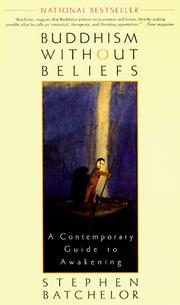
Living with the Devil, A Meditation on Good and Evil andBuddhism Without Beliefs, Stephen Batchelor: I got into Batchelor's writing because I was attracted to the cover of Living With the Devil (human being, check it out). What I found inside was, as much as I hate to resort to cliche, a revelation. Like Brad Warner, Batchelor espouses a version of Zen Buddhism that doesn't so much strip away mysticism as make realism magical. In LWtD, he begins by explaining the importance of learning to "encounter the raw, unfiltered contingency of life itself":
...Contingency reveals a chaotic freedom at the heart of of causally ordered events. However tempting it is to invoke the hand of God, karma, or destiny to inject a hidden order into what seems random, embracing contingency requires a willingness to accept the inexplicable and unpredictable instead of reaching for the anesthetic comfort of metaphysics.
The opposite of "contingency" is "necessity." No matter how ephemeral and insignificant I recognize this human life of mine to be, I cannot shake off an intuitive conviction that, deep down, my existence is necessary in the scheme of things. By paying close and sustained attention to the contingent nature of experience, the practice of Buddhist meditation challenges the instinctive feeling that we are, in the words of Milton's Satan, "self-begot, self-raised / By our own quick'ning power." In eroding this sense of our own necessity, we come to see how the unprecedented and unrepeatable person we are emerges from a sublime matrix of myriad contingent events-- no one of which need have happened either. Insight into the emptiness of self is achieved not by eliminating self but by understanding it to be contingent rather than necessary.
In BWB, he takes this freedom from necessity further by applying it directly to Buddhism and stating that "the dharma is not something to believe in but something to do." The book begins with one of the most definitive of quotes from the Buddha's Kalama Sutta:
"Do not be satisfied with hearsay or with tradition or with legendary lore or with what has come down in scriptures or with conjecture or with logical inference or with weighing evidence or with liking for a view after pondering it over or with someone else's ability or with the thought 'The monk is our teacher.' When you know in yourselves: 'These things are wholesome, blameless, commended by the wise, and being adopted and put into effect they lead to welfare and happiness,' then you should practice and abide in them."
Both books encompass so much more than their titles suggest, and both have become manuals of a sort for me to use in navigating the pitfalls of both life and my own nature. Most concretely, Batchelor's meditation instruction was what it finally took for me to get my ass on the mat and begin a daily practice (well, almost daily. Let's say every other day). Settling my monkey-mind has been a serious challenge, as it is for so many others, and focusing on the breath has been more a distraction than a means to open into emptiness. The light bulb went off while reading LWtD, though, when Batchelor wrote:
The trick is to remain fully aware of the breath without awareness impeding its natural ebb and flow... One way to do this is to wait for the breath to happen. After each inhalation and exhalation, there follows a brief pause as the muscles change gear, as it were, before releasing the pent-up air or drawing a fresh breath. The self-consciousness of breathing is most pronounced at these two moments: suddenly it feels as though "I" must inhale or exhale. To dispel this sense of agency, during each pause remain a disinterested observer, curious to notice when and how the muscles will engage of their own accord to initiate the next inbreath or outbreath. Just wait for the next phase in the breathing to kick in: with no expectation as to when it should start, no preparation for it to be deep or shallow, no anticipation for it to be forceful or gentle.
I still often find the breath to be like Schrodinger's Cat-- being conscious of it does affect its nature, no matter how long I wait for that inhalation. But Batchelor's advice is something specific to practice, and that has made all the difference.
The change in my mood and equilibrium since finding these two books has been subtle yet profound. As Batchelor himself puts it, "life [has become] less of a defensive stance to preserve an immutable self and more of an ongoing task to complete an unfinished tale." And that's tremendously freeing.
(My impressions of Brad Warner's books can be found here, for anyone who's interested.)
A Year in the Maine Woods, Bernd Heinrich: The linked review is an excellent summation of this book, but I disagree strongly with its criticisms. I just re-read AYitMW for about the fourth time, and the elements that so disturb the reviewer are exactly what I love about it. It's to the point that, like Inman in Cold Mountain, randomly opening up his copy of Bartram's Travels and finding peace within the pages, I can open Heinrich's book to any page and become immersed. I did this recently when I found myself between books and unsure of what I was in the mood for, beginning sometime mid-winter both in the book and in the real world outside. When I reached the last page at spring-time, I went back to the start and continued into the beginning of summer. And all the while that I read about the return of song-birds and blossoming of leaves on trees, it was bitterly cold outside my window (thought nowhere near the minus temperatures Heinrich experienced in the Maine winter). The fact that the narrative follows the seasons rather than a linear story-line gives the book a circular quality that easily allows it to be read in this way, and Heinrich's descriptions are so explicit that the reader is transported and doesn't even realize the amount of scientific information being digested and tucked away. Anyone looking for a deeper connection to the natural world would do well to pick this one up.
The process of awakening is like walking on a footpath. When we find such a path after hours of struggling through the undergrowth, we know at last that we are heading somewhere. Moreover, we suddenly find that we can move freely without obstruction. We settle into a rhythmic and easy pace. At the same time we are reconnected to others: men, women, and animals who have walked here before us. The path is maintained as a path only because of the tread of feet. Just as others have created this path for us, so by walking on it we maintain it for those who will come after us.
(Stephen Batchelor, Buddhism Without Beliefs)
As always, I read those words through the prism of my own experiences and mind-set, and used them as a springboard for self-analysis.
Paths are a common feature in my life, from the Buddhist path I've been attempting to follow to the literal paths I tromp through the woods. Along each of these sorts of paths, the greatest source of conflict for me has been that connection to others to which Batchelor refers. I've written before (ad naauuuuseaum) of how I go through periods of connection, when I find a handful or so of people with whom I can relate and try to develop friendships, and, at other times, through periods of solitude. Invariably, at some point, the periods of connection contain moments of inconvenience, annoyance, frustration, and/or anguish. It's often hard for me to balance all of that against the moments of fun, sharing, learning, and/or growth that are also part of connection. And the periods of solitude can be full of richness and contentment, yet at the same time feed my egoistic misanthropy.
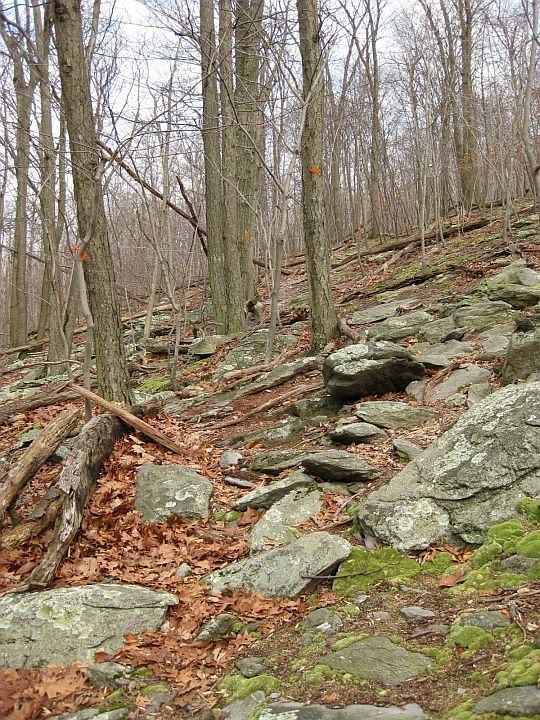
In the woods, on those literal footpaths, I'm also frequently annoyed by the presence of others, and not just the noisy, oblivious folks who are so busy making sure they say "Hi!" that they scare away the deer I've been watching for five minutes... First, an example of that type: I recently headed up to a state park that allows hunting in season, hoping that would deter most other hikers. The trail I planned to hike is aptly named Old Misery. It's short, but ascends 500 feet or so within the first half-mile, through a series of switchbacks so rocky it's sometimes hard to follow where the trail's headed.
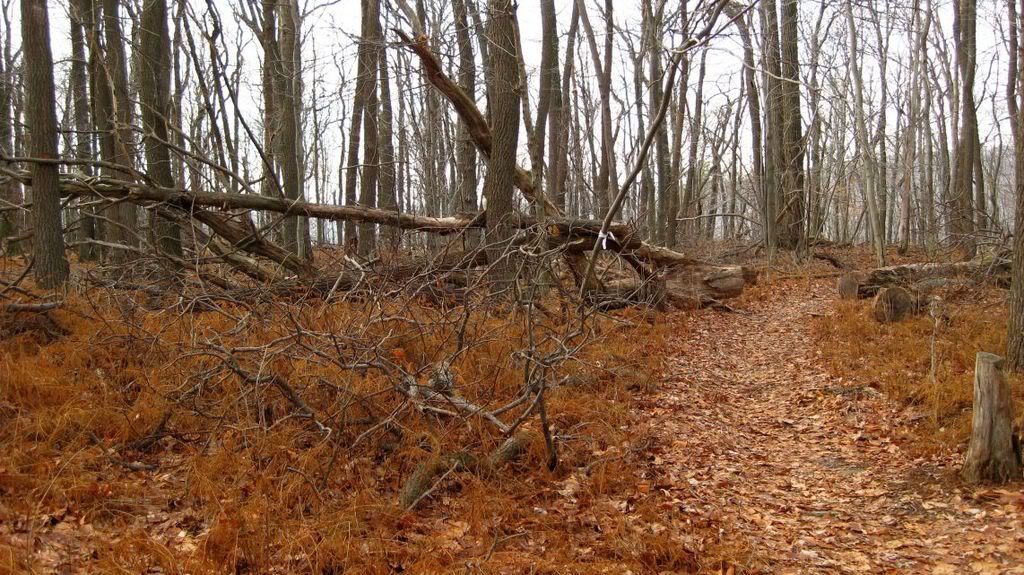
Beyond this, though, it levels out along the top of the ridge and passes through a dense fern sea.
Picture all of that orangey-red growth as lush green ferns in the summer-time...
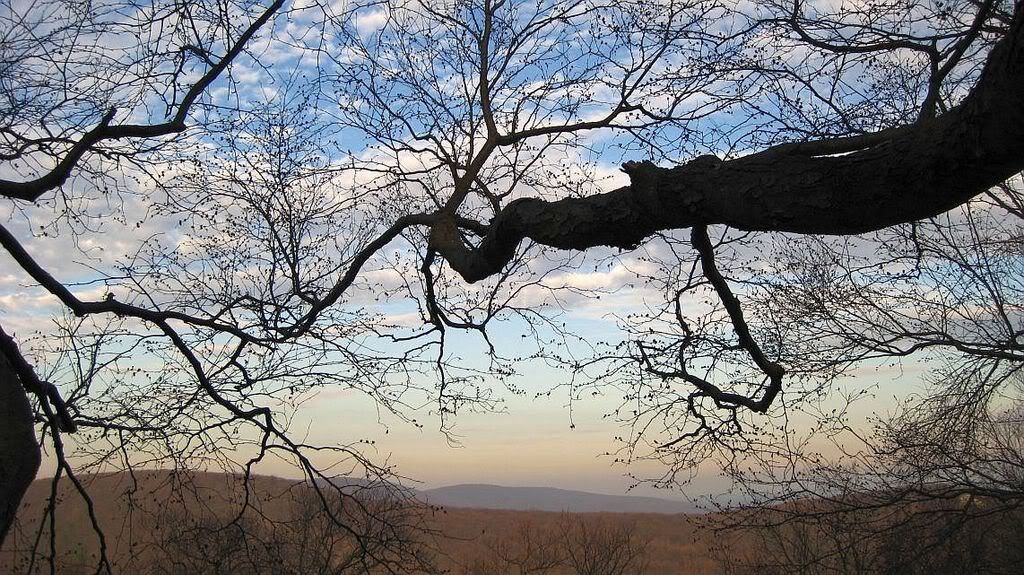
It then skirts the edge of the ridge and at one point runs next to a talus slope that overlooks the spine of the mountains heading north.
That's where I was, relaxing in the crook of a low-growing tree limb and taking in the vista. From behind, I suddenly heard "Hey! Hey there!" I turned and traded the beautiful view for the sight of a yuppie doofus in what appeared to be ski tights, big-ass shin-high climbing boots, and a backpack. He stood in the middle of the trail and called down the hill to ask me what was ahead. We went back and forth for a while as I tried to orient him to the area in order to explain what his options were. Three times I asked which way he had come to get to the trail (i.e. along what road), and three times I was told that he had come from the Old Misery trailhead down by the lake. No duh, dude, that's only way you could have come on the trail considering the direction you were headed. The equally big-booted teen-aged boy with the guy (who at least wore his big-ass boots with plain old jeans) finally spoke up and I was able to describe to him what other trails they would meet and where those led. But I spent the rest of my hike wondering what someone like that guy was doing out in the woods. What could he get out of it? Laughably over-equipped, he didn't know where he had come from and was clueless where he was going. Being so incredibly oblivious, what sort of connection could he possibly have with his surroundings, what intimacy with nature, if any? That boggles my mind.
Even when physically absent, the implied presence of other people on the trail irks me. As the population in the mid-Atlantic has grown, attendance in local parks has increased along with it. The result is trails that were once the width of my two feet are now side-walk wide. And trail stewards in the parks suddenly feel obliged to mark these trails with painted blazes every hundred feet or so. I assume this helps limit their liability, as there's less chance of oblivious types wandering off and getting lost if they can always see at least five blazes away into the distance and follow them like beacons. But for those of us who are more comfortable in the woods, such thoroughly defined trails spoil much of the fun. The tread of others may maintain the trail, but also diminishes the sense of discovery. Early on, I picked up a habit of bush-whacking-- wandering off the established trail to follow animal paths, or just picking a break in the trees and plunging in. The occasional struggle through the undergrowth was a challenge that could exhilarate at the same time that it frustrated. And, more often than not, these solitary, off-the-beaten-path wanderings have led to fantastic discoveries-- a gorgeous overlook, a small cave, a bleached turtle shell or deer antler.
So, just what sort of metaphor is this for the figurative path I've been stumbling along? What does it mean that I prefer the unbeaten path, the road less taken, or even no trail at all? Can I find just as many treasures on my own as I would through personal connections? Or can I awaken only by following the paths trod by others? I'd like to think that there's a middle ground to the Middle Way, that I can spend time on both sorts of paths, that I can be both "out of the line and indivisible", and yet still find my way to some semblance of enlightenment.
A Crow Left of the Murder
Unlearn me. Ditch what I read Behind what I heard.
Look. Find. Free. Yet! Do you get it yet? Do you get it?!
From here on it's instinctual, Even straight roads meander. Every piece contains a map of it all! It all!
Evidence In the march of the ants, Pulse of the sea.
Look. Find. Free. Yet! Do you get it yet? Do you get it?!
From here on it's instinctual, Even straight roads meander. Every piece contains a map of it all! It all!
Out of the line and indivisible, A crow left of the murder. Every piece contains a map of it all! It all!
Everything I wanted, Wanted to know... Everything I wanted, Wanted to see. Unlearn me...
Do you get it yet? Look, find, free. Do you get it yet?
All images and text herein (excepting song lyrics, quoted material, and otherwise attributed images) are licensed under a Creative Commons Attribution-Noncommercial-No Derivative Works 3.0 Unported License. Feel free to use my words or photos, but please link back to the post from which you pulled them. Like anyone else, I find it gratifying to be acknowledged for my work. Thank you.

 Living with the Devil, A Meditation on Good and Evil and Buddhism Without Beliefs, Stephen Batchelor: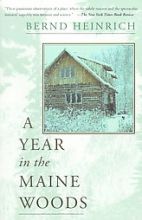




 Posts
Posts


