Showing posts with label Art. Show all posts

January 4, 2015

Another day at the museum: Exploring synchronicity through Setlists for a Setting Sun

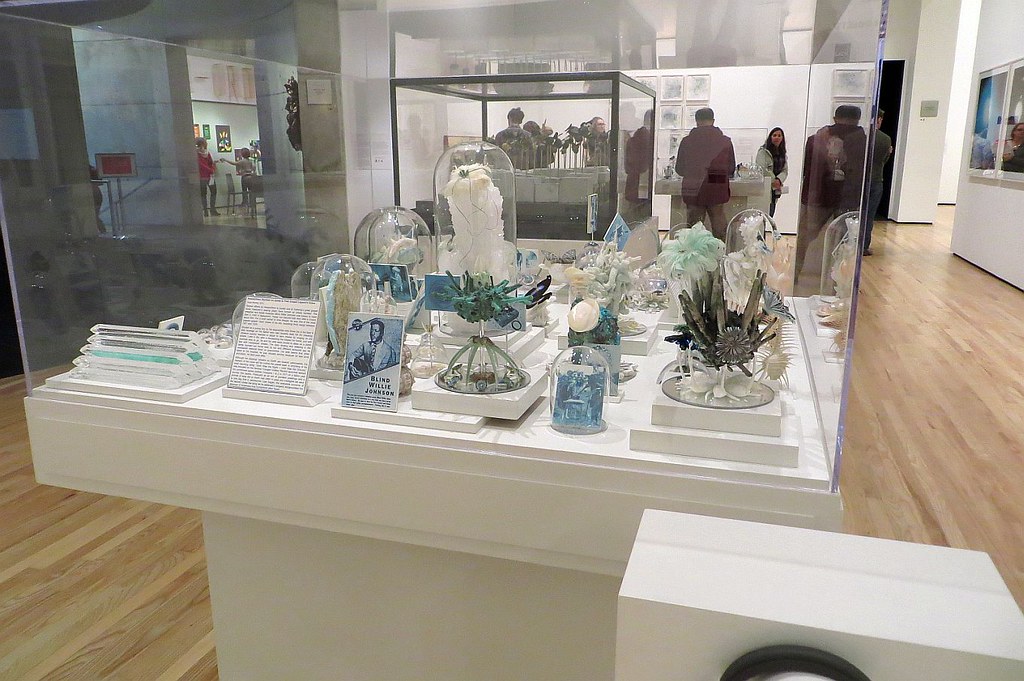
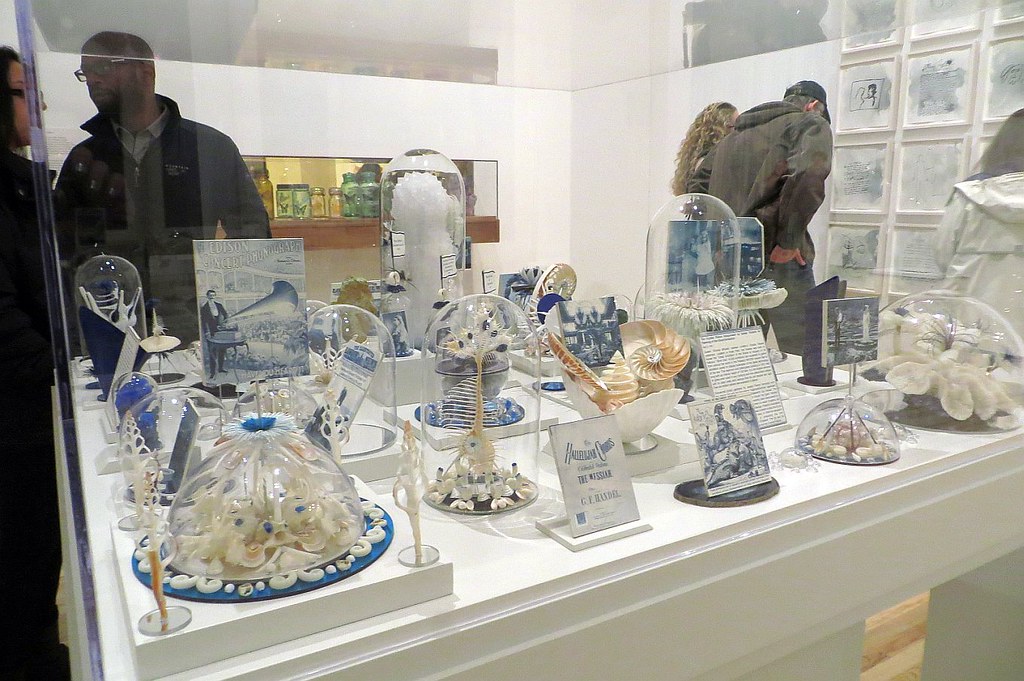
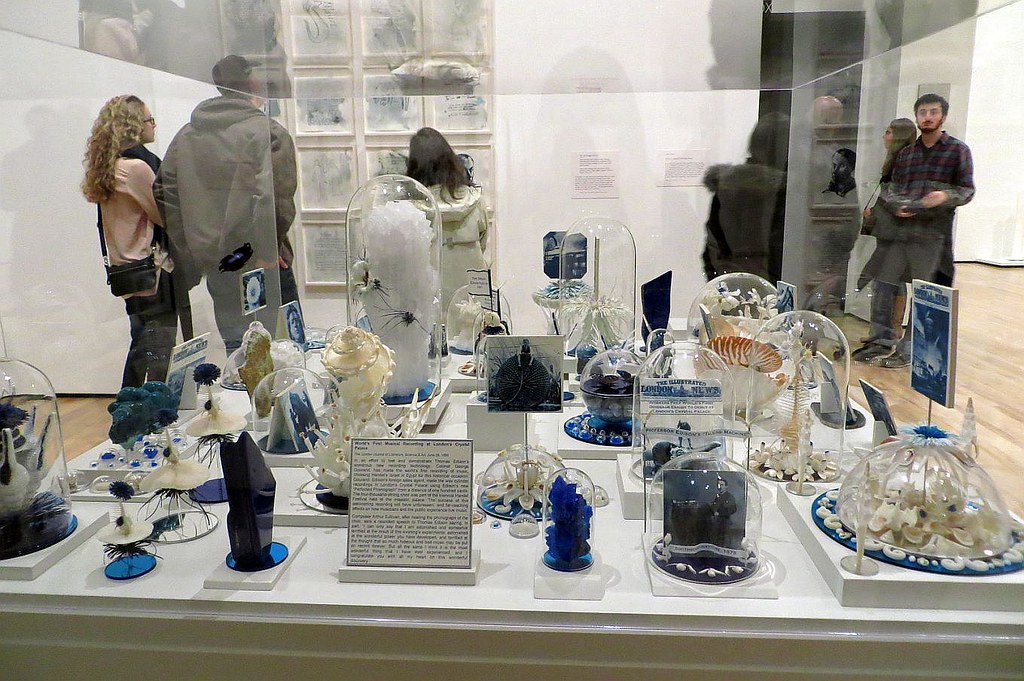
On one side of the room, one Setlist for a Setting Sun, The Crystal Palace.  Blues and whites and bone beiges. Glass domes over crystals and shells and butterfly wings.  A Victorian palace inaugurated by Victoria herself.  Four thousand voices singing Handel phoned in via Edison's phonograph. Hearing crystal-clear reality through a scrim of staticky needle scratches is still startling even now. Cylinder rotations thumping like heartbeats or, as John Fahey said, the furious beating of angels' wings. Is this what angels' voices would sound like to our human ears?


A couple of photos I snuck when the museum guard's back was turned.  For more views, go here.

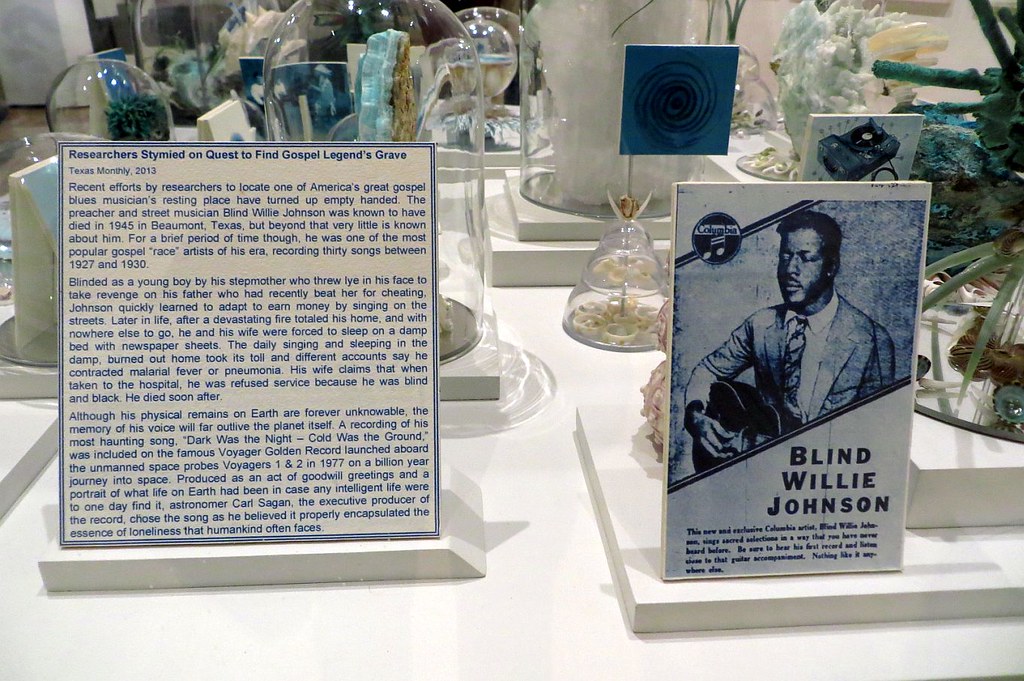
On the other side of the room, another Setlist for a Setting Sun, this time Dark Was the Night.  Still blue and white, with more crystals, shells, and iridescent wings under glass, but this time with rockets taking off for the dark expanses of space. A Voyager in search of other voyagers, carrying the sounds of a man who could only see darkness. We've kept track of Voyager all these years, but have no idea where Willie Johnson, whose spectral humming and eerie bottleneck are an angel's song of a different sort, ended up.  
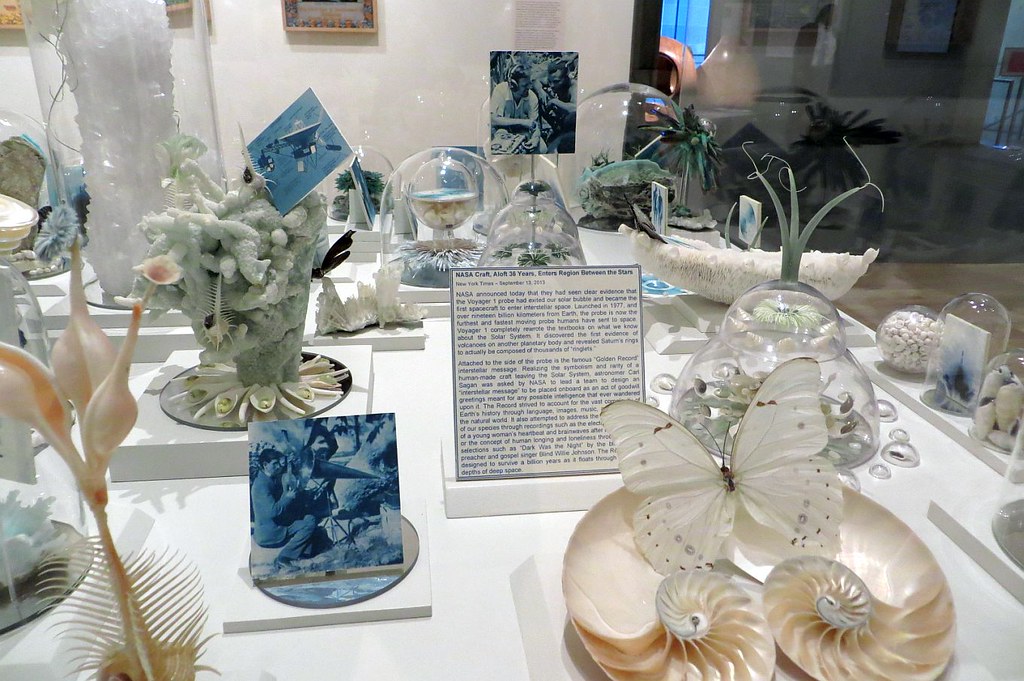


Again, my own surreptitious photos. More from the artist's site here. 

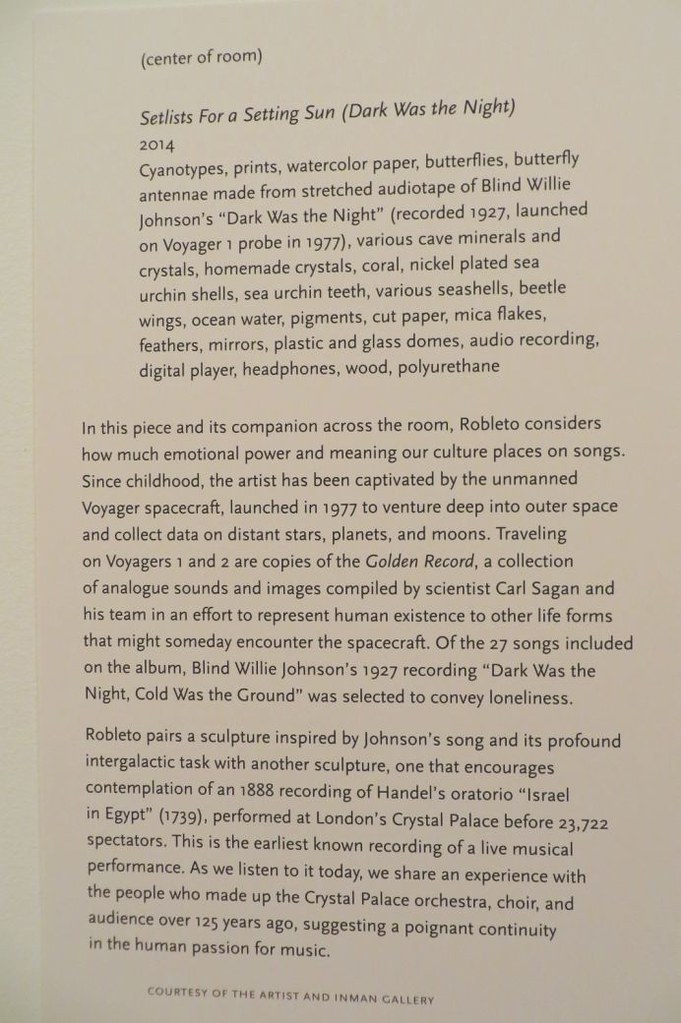
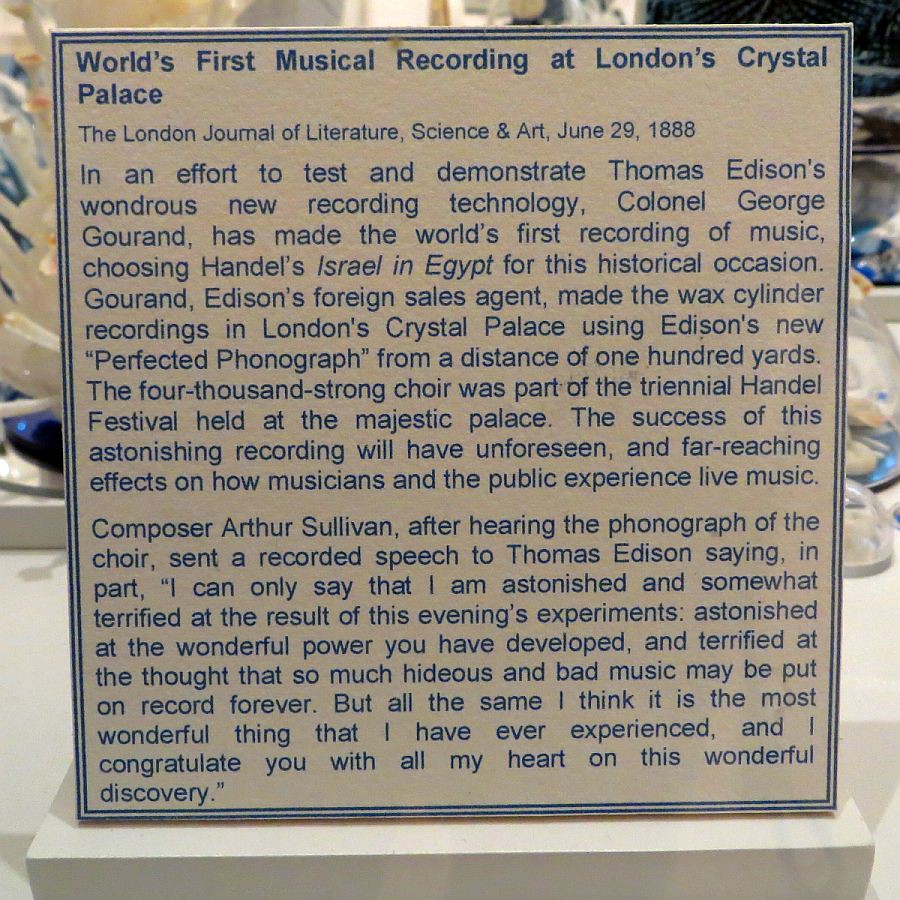
It's always exciting to me when I run into things that are meaningful to me presented in entirely knew contexts.  Dario Robleto's current exhibit at the Baltimore Museum of Art is a perfect example and I got a bit giddy when the pieces came together. At a distance, it's just an assortment of shells and glass and bits of stuff inside a pair of plexiglass cubes and I almost walked past without taking the time to catch the connections.  Fortunately, I stopped long enough to read the little card about the Edison phonograph recording of Handel's oratorio at the London Crystal Palace.  You see, it wasn't too many months ago that I read a book called Perfecting Sound Forever, by Greg Milner, which begins with accounts of several of Thomas Edison's "tone tests" such as took place at the Crystal Palace. So to read that card, then to pop on the headphones hanging next to the exhibit and hear what that London audience heard was fairly amazing. It was a digital copy I was listening to, yes, but still, the effect it must've had on those people, people who were hearing for the very first time an early, unsophisticated version of the recorded sound that we take for granted, was so easy to imagine.  

And then I stepped across the room and put on a second pair of headphones and heard Blind Willie Johnson's Dark Was the Night, Cold Was the Ground, a song I first heard a couple of years ago, early on in my exploration of blues music, and one that immediately defined the blues for me.  And here it was, this primal, innately human sound, linked with man's attempts to communicate with alien species.

What was the one thing that tied all of these elements together and made them significant to me?  If you've read more than a few entries here, I'm sure you can guess. Yup, that's right, it all comes back to Jack White.  The musician who was my gateway to blues music, without whom I'd never have heard of Blind Willie Johnson or known that Johnson's song was chosen by Carl Sagan for inclusion on Voyager's Golden Record (I'd learned about this originally in the companion book to Martin Scorsese's PBS series, The Blues, and it coincidentally came up again recently in an interview that Dan Rather conducted with Jack). Whose songs have inspired a craving in me to learn how music is made and whose mention of Milner's book led me to pick up a copy and learn about the effect of those early phonograph recordings on concert-hall audiences.  Is this meaningful synchronicity or the delusions of apophenia?  I know it seems maddeningly myopic but, from my perspective, it's just the opposite-- The things I've been exposed to through Jack have opened up a whole world for me and broadened my appreciation of so many forms of music and art and even science. If not for my obsession with him, I would have walked right past those plexiglass cubes at the BMA and thought, "Shells and shit under glass. Pretty, but how is this really art?"  I would have missed the connections that made me stop long enough to understand the message of Dario Robleto's art.  The message itself wouldn't have meant as much to me.

And Robleto's message is important. The need to communicate is one of mankind's earliest and most primary. We've been using art and music as means of communication since we could speak, if not even earlier. And we're using music now to try to communicate with species beyond our own world. Art such as Robleto's reminds us of this, makes us understand how music can bring us together and connect us, and how vital it is to not take the need or the method for granted.  Words are great for getting a point across, but music can communicate feelings so much more succinctly.


Excellent review of the exhibit from Baltimore's City Paper, here.

November 22, 2014

This is Baltimore: Puerh, pierogi, and plique-a-jour

Within the  past week or so, two different articles about the dark side of Baltimore have popped up in my news feed.  One about Leakin Park's notoriety as a dumping ground for corpses, the other about the difficulty of overcoming the negative image created by shows like The Wire and the new podcast, Serial.  I'd heard the reputation of Leakin Park before I ever rode my bike through it along the Gwynns Falls Trail and, yes, I'll admit to moments of paranoia in a few spots, especially opening the door of the public restroom in Leakin where a murder victim had been found just a year before my first ride there.  But on that ride and others since, I've not once experienced anything more alarming than having a homeless person yell at me as I blew past him in the tunnel near Carroll Park Golf Course.  I've not yet listened to Serial, but I have watched The Wire and have driven many times through neighborhoods that feature prominently in it. I've seen kids hanging out around those corner convenience stores who very well could have been dealing drugs just like the kids in The Wire. But mostly I've seen working class folks whose circumstances force them to live in down-trodden neighborhoods that are unfortunately subject to a high level of crime. Those are the same folks I've seen on the last Friday night of the  month when the Baltimore Bike Party rolls past their row-houses, sitting out on their front stoops and smiling while their children line the sidewalk to cheer and high-five us crazy, mostly white, cyclists as we ride by.  The more gentrified neighborhoods we pass through never give us that sort of greeting.

I've gotten to know a pretty large portion of this city, and yet I still feel like there's so much more to explore in its widely varied neighborhoods.  Today I stuck with some old standbys yet still managed to have new experiences.  Started the morning with brunch at Teavolve, a place I've watched evolve from a teeny little tea shop in Fells Point to a terrifically popular restaurant in Harbor East that serves from breakfast through dinner, tea through cocktails, and that has a vibrant connection to the local music and art scene.  Their staff hustles and the brunch maitre'd, Gary, always gets me quickly seated in a nice cozy spot. With a pot of Puerh tea and an Eden omelet (sorry, no food porn photos, I was too busy eating), accompanied by a good book, I have trouble imagining a better spot for breakfast anywhere in the city.


From there I headed over to Canton for some shopping.  It was on the way back towards downtown, passing alongside Patterson Park on Eastern Avenue, that I made an impulsive and fortuitous stop. I've been entranced for years by the golden onion domes of St. Michael the Archangel Ukrainian Catholic Church. 

Image source

For a few years now, I've thought of stopping to see if I could go inside. A place sitting in the middle of Baltimore with such fantastical architecture would have to have an interesting interior, right?  But I just never got around to it.  Until today, when a sign in front of the church reading "PyrohĂ˝ sale 10 - 2" forced me to grab the nearest parking space and bolt across the street.  The wooden doors at the front of the church were locked tight, but in a little annex down some steps next door, I found a small dining hall and kitchen where they were selling boiled potato, cheese, and sauerkraut pierogi from the kitchen service window.  After handing over $16 for a dozen potato and hearing from the woman manning the window about her recently broken tooth, I asked if the church was open.  She said no but asked if I wanted to see inside. When I said I'd love to, she turned around to a gentleman in a sweat suit and said, "Father, this lady would like to see inside the church".  Next thing I know, I'm following the casually-dressed priest back up the steps to a side door of the church, which he unlocked and then ushered me through into a small space so beautifully painted with icons that it literally made me gasp.

Image source
In a Ukrainian accent so thick I only understood about two-thirds of what he was telling me, the priest described scenes painted on the two side walls and the row of icons of saints martyred during the Stalinist era. I must've looked like a wide-eyed fool over it all, it was so gorgeous, but he was very obviously proud of showing it to me and invited me to come back for Sunday mass to hear the church choir-- "No music, only voices like angels", he said. I may very well go back some other weekend, but via the magic of the interwebs, I found a taste of them--


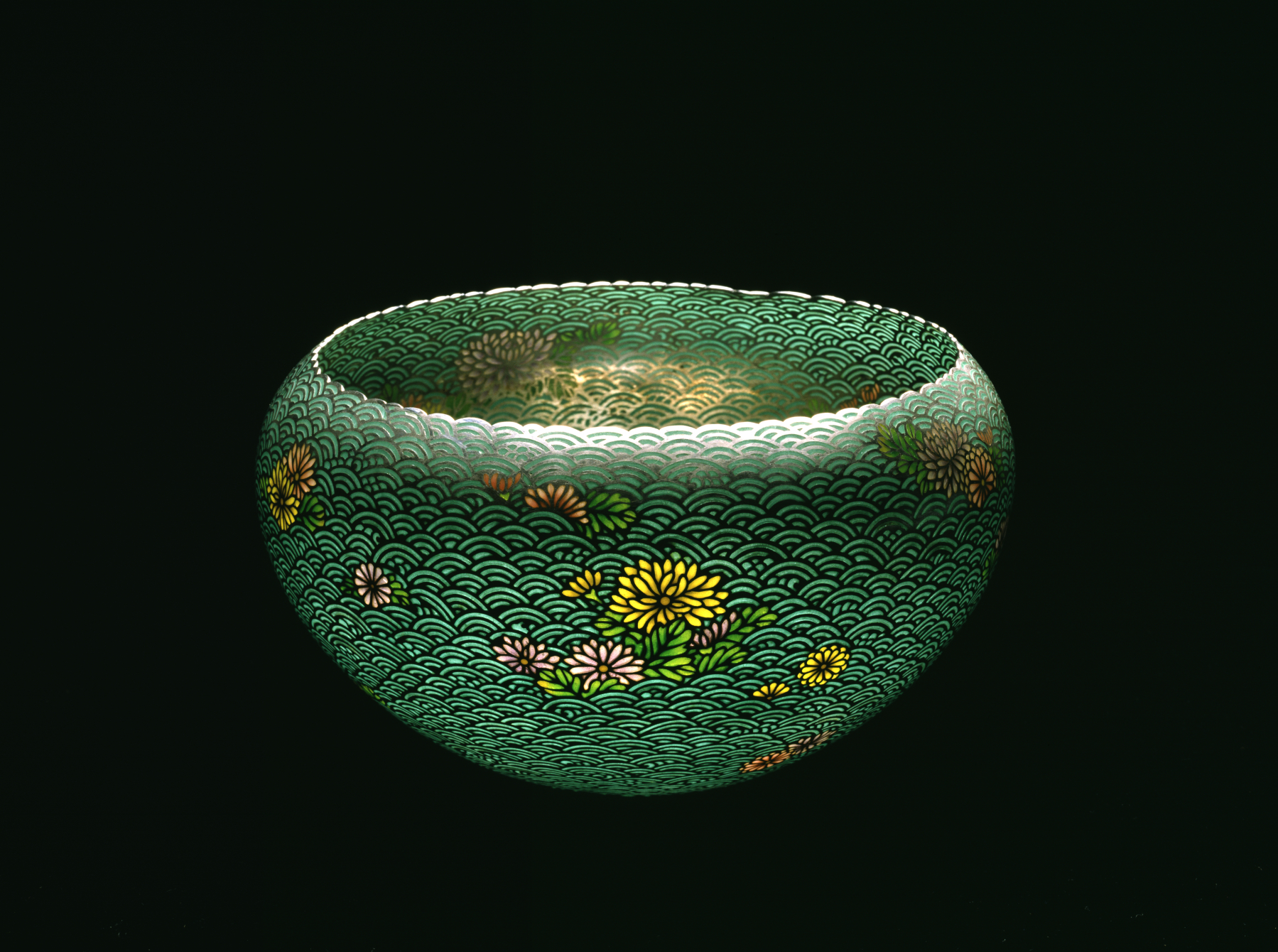
After that impromptu stop, it was back to the day's planned itinerary, which meant heading up Charles Street to the Walters Art Museum to check out the current exhibit on the history and breadth of the collection that William and Henry Walters gifted to the city.  That gift is an incredible treasure.  One of only two free museums in Baltimore (the other being the BMA), it's a labyrinthine building combining 19th century and modern architecture, full of surprises from ancient cultures, through the Baroque, and into the 18th and 19th centuries.  I've a handful of favorite rooms and items there, but today was struck by a piece I've never seen before.  In a dark blue side-room of the From Rye to Raphael: The Walters Story exhibit, I found a deceptively simple little Japanese bowl made of silver and plique a jour.  I've seen plique a jour before, both in the Walters collection and in the vintage estate cases of the jewelry store where I work.  It's a form of enameling that allows light to shine through the enamel and create a luminous effect.  But I'd not seen any like this before. Usually it's in small pieces of jewelry, cigarette cases, small bowls or dishes, sometimes larger dishes on stands.  Louis Comfort Tiffany, famous for his stained glass, also worked in plique a jour, so you may've seen it, too. But this simple Japanese bowl was so very different. It looked to have been made of a single sheet of silver molded into the shape of the bowl, and then pierced with hundreds, I mean hundreds, of small scallop-shaped slivers interspersed with many-petaled chrysanthemums, some singly and some in small groups.  Into the scallops was inlaid pale grass-green enamel.  Into the chrysanthemums, tender gradations of pink and soft bright yellow.  The lighting in the gallery was almost criminally wrong for truly showing off the beauty of this bowl, as it shone straight down from a fixture in the ceiling so that much of it was blocked by the inward curve at the top of the bowl.  You could see the silver framework of the design and the prettiness of the colors, but in order to see the luminous glow of the enamel you had to crouch down next to the display case and look up at the bottom sides of the bowl. But that crouching was worth it, as the thing left me stunned.  Much plique a jour is created like stained glass, with bars or wires of metal laid down in a frame-work and soldered together.  If one piece gets messed up, it can be removed or fixed without disturbing the rest.  But the walls of this bowl were smooth, inside and out. There were no separate sections, no solder.  The artist who created it obviously took the initial solid silver bowl and pierced through the metal to create those hundreds of slivers and petals.  If he'd messed up one, he'd have had to scrap that bowl, melt down the metal, and start all over.  The craftsmanship of it was so exquisite and subtle that it made the Lalique and Tiffany pieces in the same room look ham-fisted and over-wrought in comparison.

And once again, via the magic of the interwebs...

Image source.  For a larger view, click here and then click again.

Don't ever, ever let anyone convince you that Baltimore is a scary place with nothing worth seeing. 


January 31, 2010

A Day at the Museum(s): Rodin and the Underground

Drove to Philly through the snow yesterday for a visit to the Rodin Museum and a Poe-related twilight tour at Laurel Hill Cemetery.  It had just begun snowing when I left and the drive up was fun for watching the flakes swirl in paisley patterns across the roads, and for zooming along I-95 past Baltimore only to find that the city skyline had disappeared behind a wall of foggy clouds. 

Danaid - The Source


The Awakening


How does this appear to you?  As peaceful repose?  Erotic abandon?  She was originally intended to be part of Rodin's masterwork, The Gates of Hell, but ended up being sculpted life-size on her own.  Seen whole, the tension in her pose becomes apparent and she takes on a much different meaning.  Rodin named her The Martyr.

A few more images here.
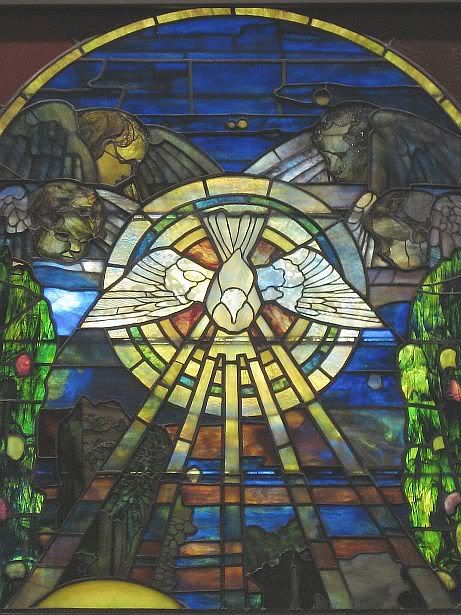

Arrived at the tiny Rodin Museum with nary a flake in the overcast Philly sky, but after my half-hour wander-through found that flurries had begun.  By the time I grabbed something to eat, the snow was again swirling and gathering on the roadways and getting to the cemetery was sketchy.  So very worthwhile, though, as the Underground Museum (as Laurel Hill is called) is truly one of the most fantastic cemeteries I’ve been to.  Built on the grounds of what were once three estates on the border of Philly, it’s a city unto itself, with boulevards lined by family plots and obelisks for skyscrapers.  The Poe connections mentioned on the tour - graves of people he’d known and/or worked with during his short time in Philly - were really unnecessary.  Seeing the place in the snow was reason enough to be there.  The lights of downtown Philly reflected between the cloudy sky and the snowy ground to create a rosy-golden glow in the air that contrasted with the dark grey and white-shrouded monuments.  Unfortunately, it was both too dark and too cold to attempt photos, so the best I can do to convey the beauty of the place is a handful of shots from past rainy-day visits.


The day began early and ended very late and, despite the snow-extended driving time, was full in a way that makes it feel long in a satisfying way.  Which, unfortunately, will make today feel lethargic and brief in comparison.  Always a trade-off...

July 10, 2009

The addiction dance

Addiction is a powerful thing. I don't think anyone could deny that, yet I do believe that most people don't realize that we're all, each and every one of us, susceptible to it. It's so very obvious in the form of compulsive, physical craving for drugs, alcohol, child porn, or even caffeine. But how often do we explore its less obvious forms?

My own strongest addictions take the forms of the intarwebs and driving fast. Like many other folks out there, I see the 'net for the time-suck that it is. And yet, there's just so much out there to explore, so many people from all over the world to converse with at almost any time of the day. With every new social networking site, every new message board or blog, I give more of myself and my time to it. Like a junkie I sit, jumping from tab to tab, refreshing pages, looking for that next fix, all the while knowing that I need to get my ass away from the computer to do housework, or sleep, or get ready for work, or just plain get outside.

Driving, on the other hand, has a tremendously narcotic effect, which I've described before. There's been many a day I've sat at my desk at work, or stuck in rush hour traffic, when I've found myself almost literally aching to be on some back road in West Va, swooping around curves and flying along straightaways. I had enough accidents in my younger years to fully realize the potential dangers of this craving, but I can't fight the excitement that arises when I picture my favorite roads under a sunny blue sky and I know I'll continue to indulge as often as I can.
I wish I could say that I'm addicted to physical movement, but what I have is really more of a deep appreciation that's easily overwhelmed by an apparently stronger appreciation of sloth. But I've always loved movement. Ballet class at 5 years old, a month on the middle-school track & field team, short-lived dance classes again in my teens, cycling, martial arts, vinyasa yoga... The flow of movement is both soothing and invigorating.

That deep appreciation that stops just shy of compulsion is what's behind an annual addiction to which I've succumbed: the reality/contest tv show, So You Think You Can Dance. Most people I know have gotten hooked on SYTYCD's elder sibling, American Idol, which I've never watched. But I happened to channel surf past SYTYCD a few seasons ago and stopped to check it out. One episode was all it took, and now I plan my weeknights in July and August around its air-times. And, yippee!, it'll now grow to a bi-annual addiction, as they're adding a second season later this year.
The show has all the elements of every other reality/contest show: Beautiful young hopefuls who put their heart and soul into claiming the title of "America's Top Dancer", and a suitably sympathetic, magnificently appareled emcee who shepherds them past a panel of sometimes annoying, yet always quirky judges. But it's also intentionally being used as a platform to introduce the viewing public to the art of dance. They've included expected styles such as jazz, hip-hop, and tango, but also surprises such as paso doble, Bollywood, and Russian folk dancing. And each season contains at least one performance that is flat-out, amazingly impressive, technically fantastic yet also emotionally moving. This week's episode included one of those sequences, the addiction dance...


Choreographed by Mia Michaels and performed by Kupono Awaeu and Kayla Radomski
, this routine is a perfect example of just what makes dance an art. Purely through movement and expression, these two young dancers tell a story that so many of us can identify with, if we've looked deeply enough into our selves, or into the souls of those around us. From the first moment that Kayla runs to him and he wraps his arm around her, Kupono incredibly embodies the way that addiction controls us. She's drawn to him, and he in return man-handles her, plays the puppet master, tossing her around, taunting and stifling her, soothing then throttling her, all with a chillingly dispassionate expression on his face. And when she desperately tries to break free, to reach up and away from her craving, he grabs hold and shows her, with condescending ease, just how much stronger he is. Malevolent, one of the judges called Kupono's performance, and that's exactly what addiction is, in all its forms.

I'm addicted to this dance.

October 25, 2008

Another day at the museum: The BMA, 10/25/08

Rainy day today, so I hit the Baltimore Museum of Art again. Since "a picture's worth a thousand words", I'll throw up a bunch before I toss out much in the way of my own words... (Be forewarned, this is a long'un)

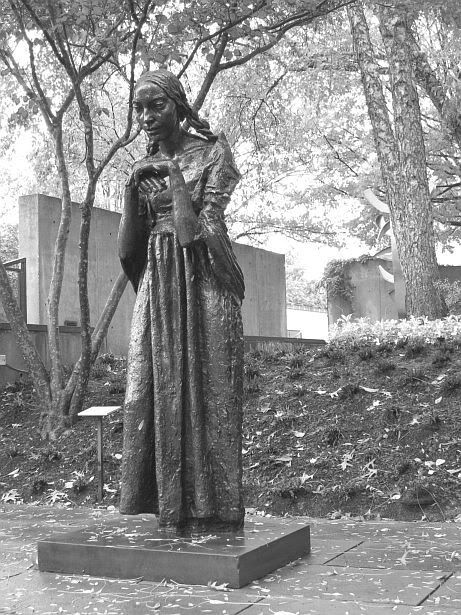
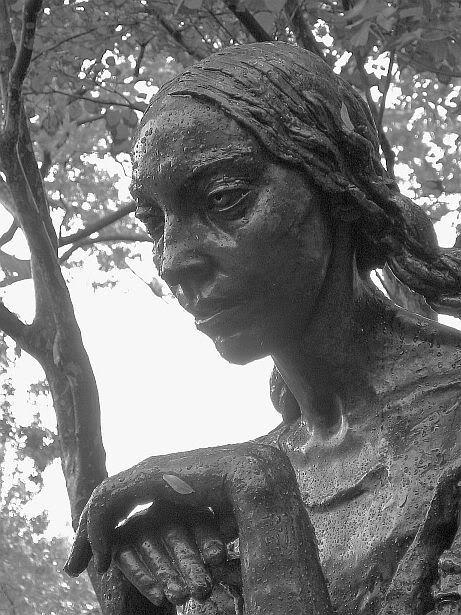
The Visitation


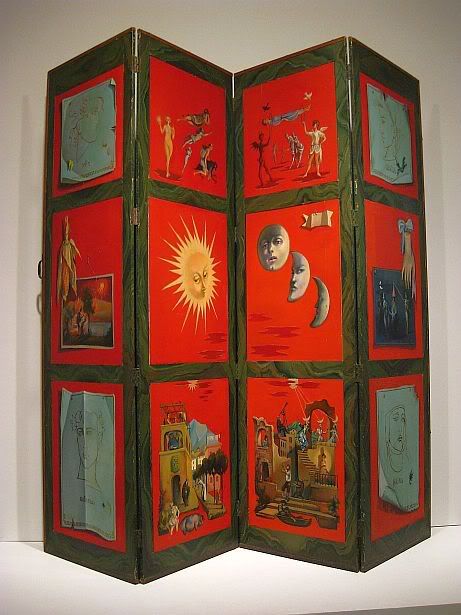
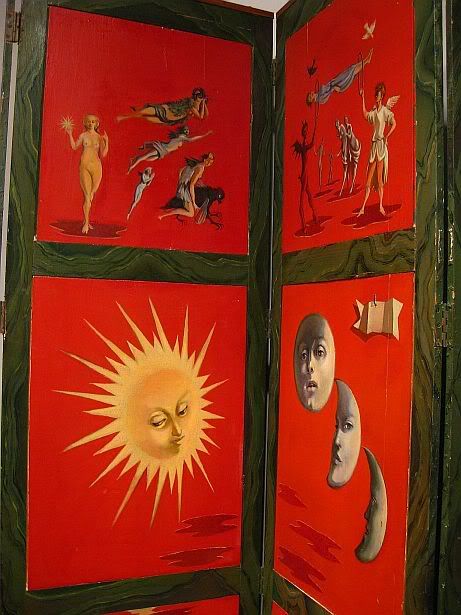
Four-panel folding screen depicting the effects of the phases of the moon by Dario Cecchi, 1948


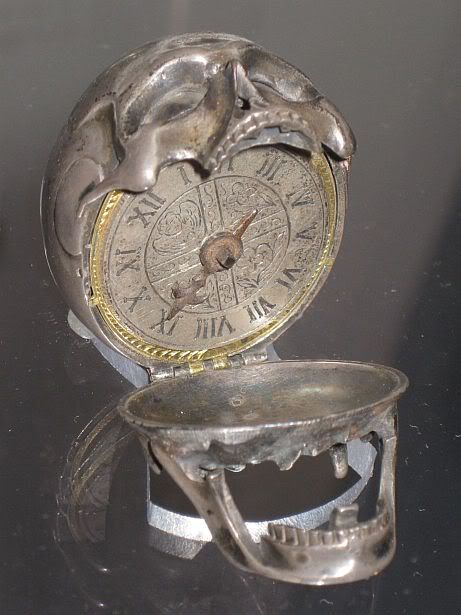
One of the coolest watches I've ever seen: Skull-form watch, ca1637-1658, French, steel


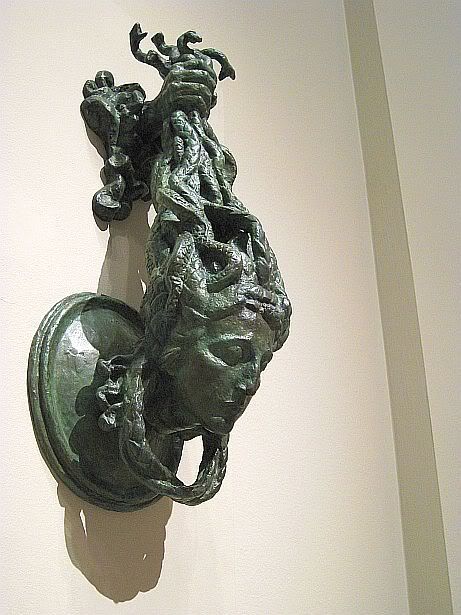
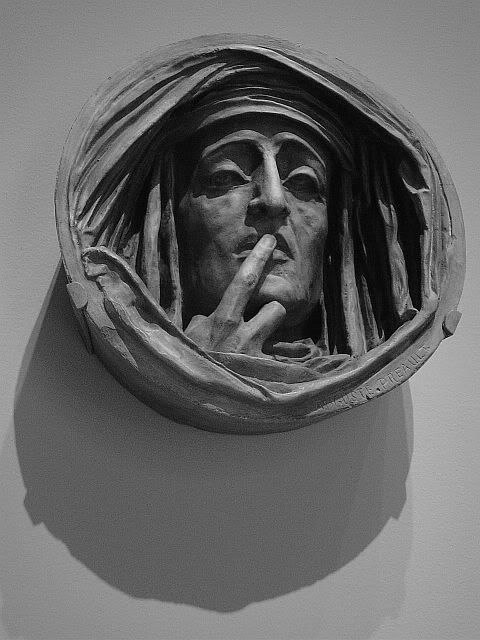
Head of Medusa door knocker, Emile-Antoine Bourdelle, ca1861-1929


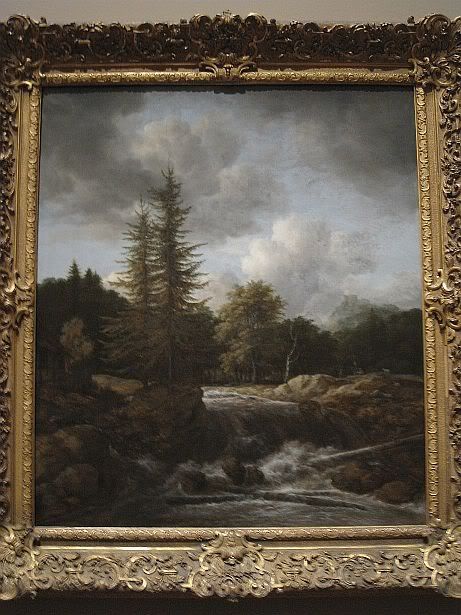
Assorted landscapes, in oil (Jacob Van Ruisdael, Dutch, ca1628-1682)...


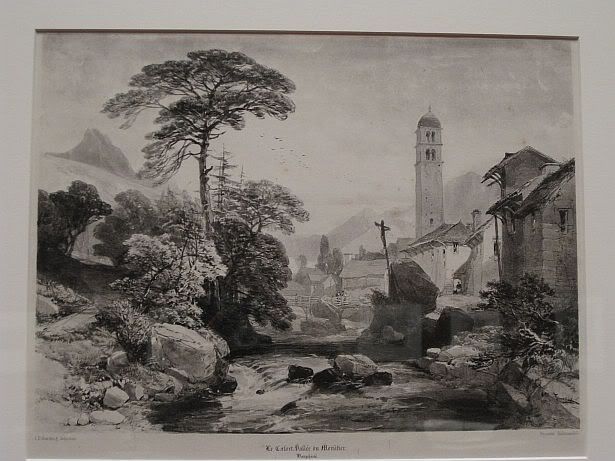
...and lithotint (James Durfield Harding, English, ca1854)...


...and crayon lithograph (Richard Parkes Bonington, English, ca1824)


One of the current special exhibits features the artist Franz West. The description of his work was, for me, more compelling than most of the actual pieces. As I wandered through the exhibit, I found myself repeating "what the fuck...?" over and over.


But then I got to the focal point of the exhibit, a work entitled "das Ich und das Es" (The Ego and The Id), which was designed and built specifically for the room within the BMA in which it was displayed. Note: Photography is not allowed in BMA special exhibits, so I nicked this shot from the museum's page about West.

This piece definitely intrigued me. The scale just isn't evident in this small image. And it's actually thought-provoking. From the description: "...the Latin term "ego" [das Ich]... means "the I". The task of the ego is to find a balance between primitive drives and reality. The term "Id" (inner desire) is a Latinized derivation of das Es, and translates into English as "It". The id is dominated by the pleasure principle." But which is which? Is ego's balance reflected in the uniform, soothing pink loops and id's chaotic drives in the riot of multiple colors? Or is it the reverse, ego finding its balance in a melding of colors, and id focused on throbbing pink pleasure? West apparently hasn't specified.

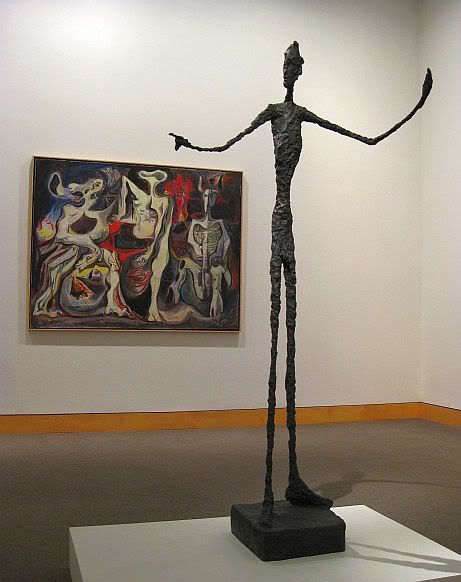
Moving on to the moderns: Man Pointing (Alberto Giocometti, bronze, 1947)...


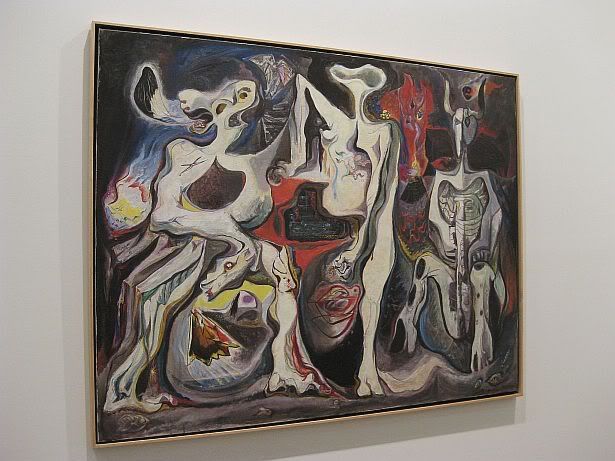
...and There is No Finished World (Andre Masson, 1942)


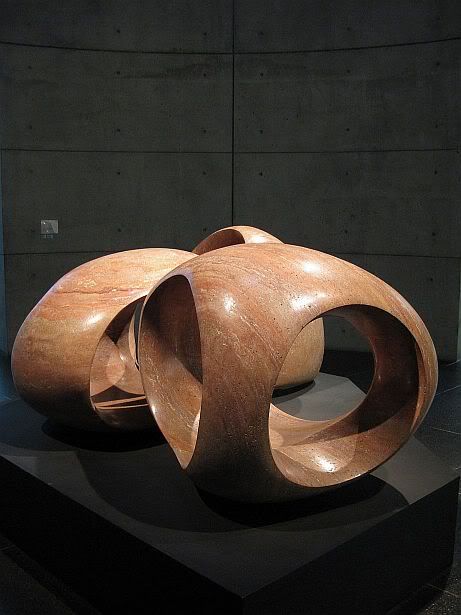
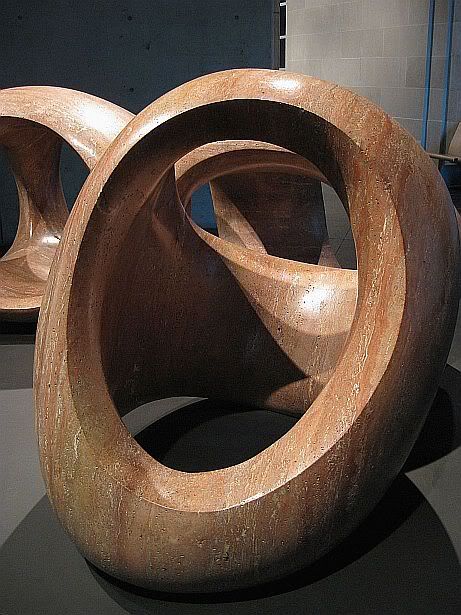
The Three Rings, Henry Moore, red soraya marble, ca1966 (Both times I've seen this piece, I've wanted to put my hands all over it)


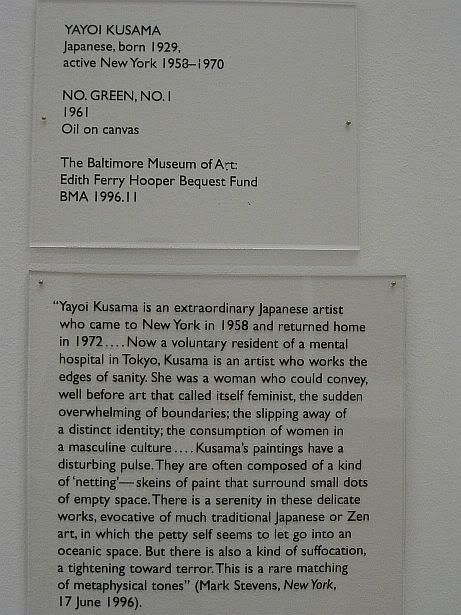
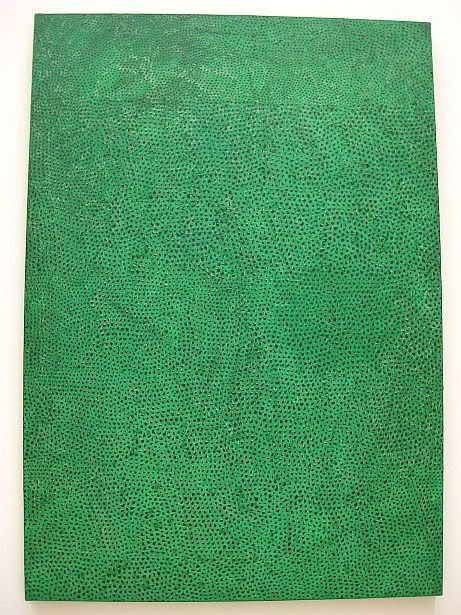
Modern, abstract art has always been a mystery to me, something that my visits to the BMA are helping me learn to appreciate. This piece is a prime example. To my uncomprehending eye, it's just a bunch of black smudges on a bright green background. Apparently, there's much more to it:


Metaphysical, huh? Who'da guessed?

And finally, The Baptism of Christ, by Louis Comfort Tiffany, ca1890-1899


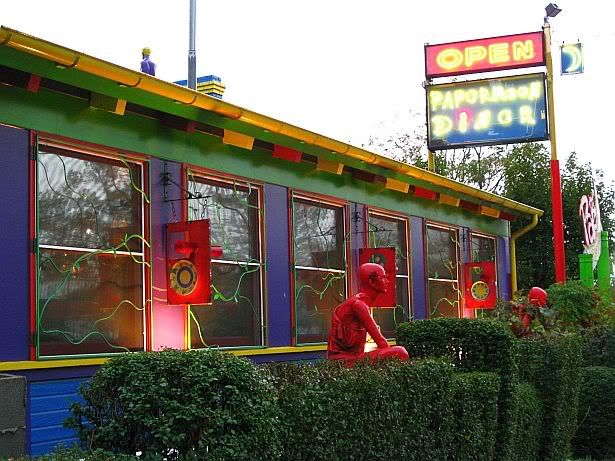
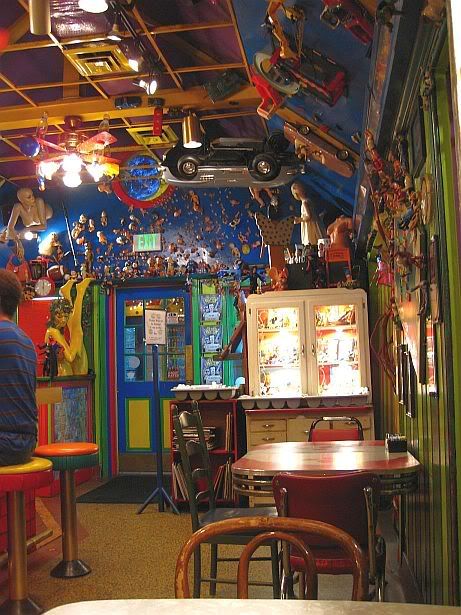
After the museum closed, I headed over to the Papermoon Diner to fill my grumbling belly. The place is a riot, in more ways than one. It was hard to concentrate on the book I was reading, with so much stuff to look at around me. But the Eggs Benedict with ham and avocado were freaking fantastic.


Stopped for gas on the way through the city. As I got out of the car, a guy approached and asked if he could pump my gas. I'm probably a sucker, but after only minimal hesitation I said ok. He launched into a story about having just arrived from eight years out in Cumberland. Interesting coincidence, as I'd just vacationed out that way. His time there was apparently no vacation, as he'd just been released from prison and was only given a bus ticket as far as Baltimore. He was trying to raise enough cash to get some dinner (real food, not the prison "suey" he'd been living on) and a bus ticket to Glen Burnie and his grandmother's house. After the tank was filled, I gave him $5 and drove off wondering if I'd been swindled. Meh. There are worse things than being ripped off for $5. And if the guy was genuine, I wish I'd given him more.

Today was one more day in my love affair with Baltimore, a city that is terribly unappreciated. Following my tendency to associate music with places, I've come to identify Baltimore with the same elements I love about Maynard James Keenan and Tool, specifially their masterpiece album Aenima. Like that album, Baltimore contains some things that are beautiful, some things that are humorous and quirky, and some that are seamy, edgy and dirty. And all of those elements are shoved tight up against each other, often within the same song or neighborhood. It makes for a whole that is incredibly stimulating, if you take the time to really listen and look.


Stinkfist

Something has to change.
Undeniable dilemma.
Boredom's not a burden
Anyone should bear.

Constant over stimulation numbs me
and I wouldn't have
It any other way.

It's not enough.
I need more.
Nothing seems to satisfy.
I don't want it.
I just need it.
To feel, to breathe, to know I'm alive.

Finger deep within the borderline.
Show me that you love me and that we belong together.
Relax, turn around and take my hand.

I can help you change
Tired moments into pleasure.
Say the word and we'll be
Well upon our way.

Blend and balance
Pain and comfort
Deep within you
Till you will not have me any other way.

It's not enough.
I need more.
Nothing seems to satisfy.
I don't want it.
I just need it.
To feel, to breathe, to know I'm alive.

Knuckle deep inside the borderline.
This may hurt a little but it's something you'll get used to.
Relax. Slip away.

Something kinda sad about
the way that things have come to be.
Desensitized to everything.
What became of subtlety?

How can it mean anything to me
If I really don't feel anything at all?

I'll keep digging till
I feel something.

Elbow deep inside the borderline.
Show me that you love me and that we belong together.
Shoulder deep within the borderline.
Relax. Turn around and take my hand.

June 7, 2008

A day at the museum: The BMA, 6/7/08

It was stinking hot in the mid-Atlantic region yesterday, so I decided a visit to the Baltimore Museum of Art would be a great way to beat the heat. And the timing turned out to be right, as this was the last weekend of their Looking Through the Lens exhibit on photography of 1900-1960. The museum's an interesting mix of historical/cultural items, classical art, and modern, abstract works. Picked up a few cool quotes and some decent photos while wandering the sculpture garden and the exhibits.

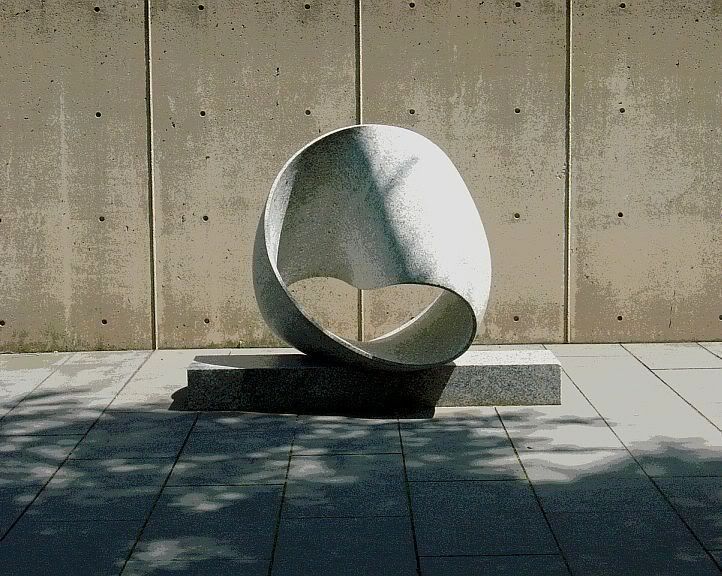
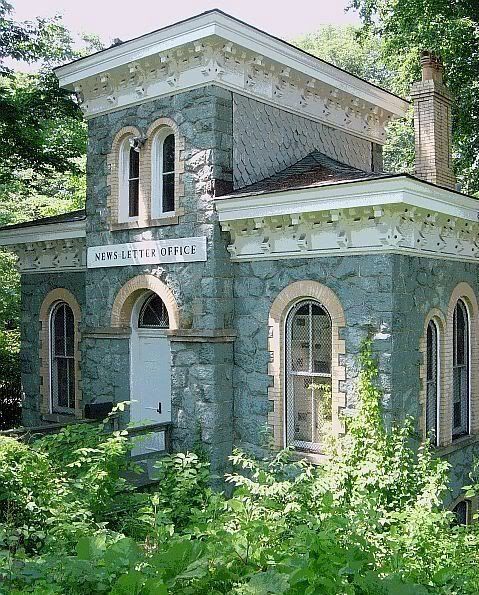
This small building is located at the corner of the museum grounds along St. Paul Street. Interestingly, the interiors of the windows are covered with newspaper pages.


"The experiment lies with the spectator in his willingness to accept what his eye conveys to him.... The success of the experiment is in proportion to the desire to discover and enjoy."
Man Ray


Click to view full size


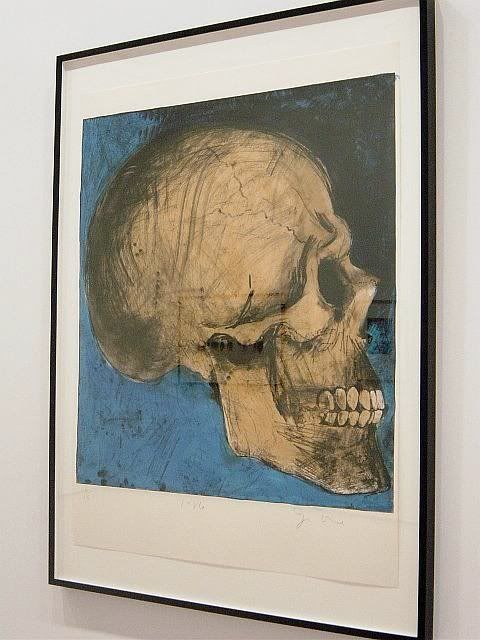
There was an entire room dedicated to Jim Dine, with the striking skull piece, A Side View in Florida, as the focal point upon entering the room. From a museum pamphlet--

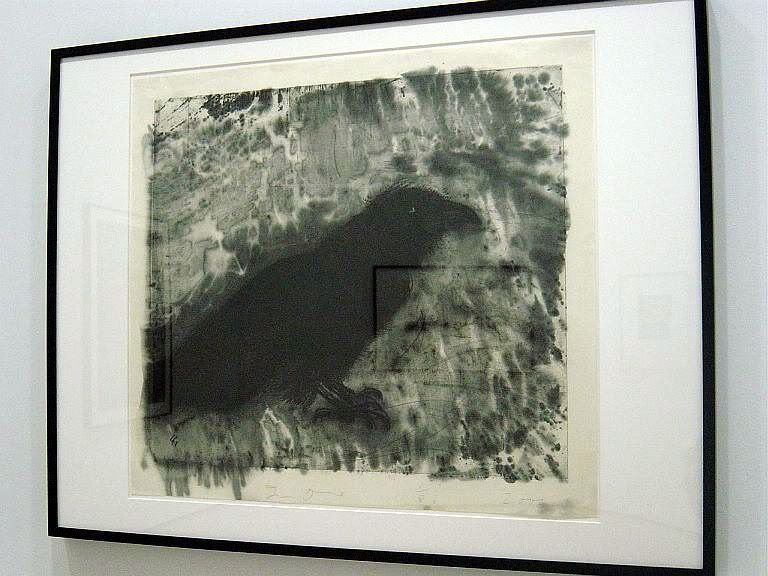
"It is tempting to codify Dine's various symbols, and occasionally the artist has identified specific meanings: ...the raven as a friend and alter ego that first appeared in a dream, the skull as the artist's voice crying to come out..."


Click to view full size


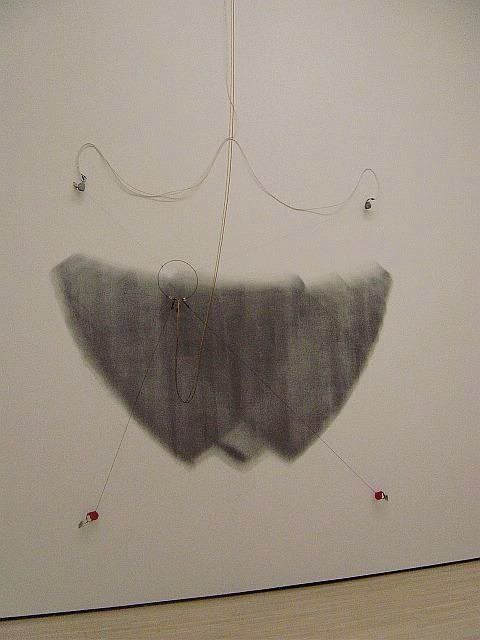
The piece below was mesmerizing. It was almost like a giant, self-automated spirograph, scratching its eternal pattern on the white-washed wall. What's so unusual about it, though, is that there's a microphone attached somewhere on the thing, and the sound of its scratching is played through speakers mounted to the ceiling above it. Hearing as well as seeing the movement of it gives the thing a strange sort of inanimate life.


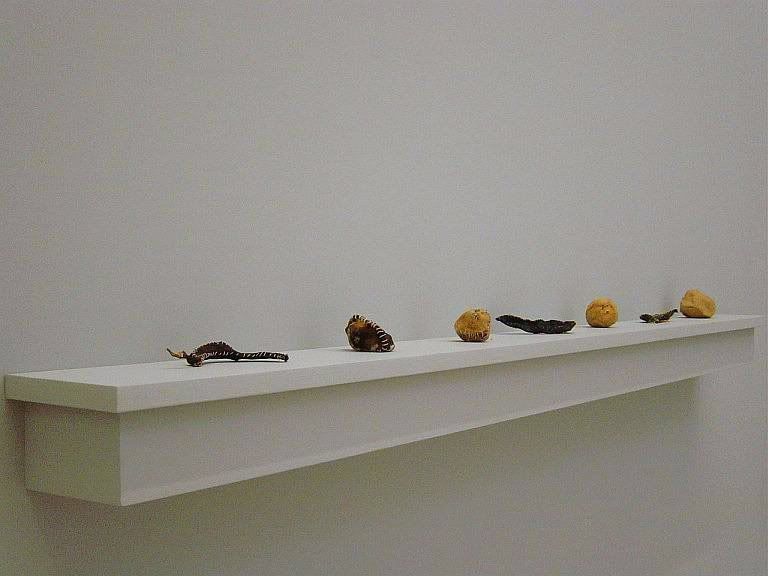
And from artificial life to organic death... For the untitled work below, Zoe Leonard ate 3 bananas, 3 oranges, and 1 grapefruit, then stitched the skins back together. The placard next to the piece explains that a museum's purpose is generally to preserve works of art for perpetuity, but Leonard specifically requested that the skins be left alone, exposed to the degrading effects of the air. Her intention is, apparently, to cause the observer to "reflect upon the desire for timelessness and to contemplate the processes of decay and disappearance".

Click to view full size


This painting was a surprise to me. I've been familiar for a long time with some of the works of Gustav Klimt, but this is very atypical to the pieces he's known for. It makes me think of so many of the forests I've hiked, serene and peaceful, yet darkly moody when the sun hits a certain position in the sky and only small glimpses of light penetrate the density of the trees.


"Irreverence is the champion of liberty and its one sure defense."
Mark Twain