Zen... is nondoctrinal, concrete, existential, and seeks above all to come to grips with life itself, not with ideas about life, still less with party platforms in politics, religion, science or anything else. (Thomas Merton, Zen and the Birds of Appetite)
Merton's description of Zen fairly well sums up the point of Brad Warner's latest book, Zen Wrapped in Karma Dipped in Chocolate. Brad uses himself and the chaos of his life in 2007 as a visceral example of the ways in which Buddhism, Zen specifically, is misunderstood. Now, I should say off the bat that Warner's writing is not for everyone. Near the end of the book, Brad describes himself as "too shy and indirect." That may be so in person, but his writing is blatant and direct, sometime vulgar, and very often goofily funny. His books tend to hit you like a Three Stooges poke in the eyes. After you rub the shock away, you can't help but see things differently.
Now, for that misunderstanding. I'll admit, I immediately fell for the neat little myth that Buddhism brings an all-encompassing calm to one's life. I mean, heck, folks like the Dalai Lama and Pema Chodron are always shown with happy, almost impish, grins on their faces. That's how we're all supposed to end up after enough time on the cushion, right? Wrong, at least where Zen is concerned:
The Middle Way was not some kind of spiritual path designed to make us all holy with shiny pink halos on our noggins. It was a way to live a life that wasn't a piece of shit. It was a way to find happiness and stability in an unhappy and unstable world. That's really all any of us are looking for, when it comes down to it. The stability of the Middle Way comes in our practice of zazen [meditation], which is the actual physical and mental practice of stability and happiness. A bit of zazen... radiates throughout the rest of the day and night and makes everything better. That's all there is to it.
And yet:
You may be wondering why, with all my Zen training, I would still feel this kind of tension. If you are, I understand. When I first started all this meditation stuff I also believed that it would fix me so that I'd never feel a bad feeling ever, ever again. It doesn't work that way, I'm afraid.
The practice does make this kind of stuff easier. But no amount of enlightenment will eliminate all stress and tension from your life. We all have a certain amount of karma to get through, and nothing can change that... The best you can do is learn how to add as little new garbage to the pile as possible. But this in itself is a very significant thing.
Sound a tad contradictory and confusing? What it all comes down to is expectation. Ultimately, the source of all our dukkha, all our squirmy dissatisfactions and outright suffering, is that we expect the world and our lives to be a certain way. We expect to be happy, to never feel emotional anguish or physical pain, to never be divorced or lose a job, to never break a leg or get cancer, and for the sun to always come out tomorrow. But we never see that the problem is the expectation itself. We become so caught up in the contrast between what is and what we were hoping for that just dealing with the situation as it is becomes unbearable. We forget to "...on every occasion ask thyself, what is there in this which is intolerable and past bearing?" (Marcus Aurelius, Meditations, Book VII, 36. Those Stoics sure had a lot in common with Buddhism.)
In ZWiKDiC, Warner clarified this for me succinctly, yet indirectly. In describing the questions he was asked during a sesshin dharma talk, he mentions that one participant asked how to avoid expectations in Zen practice. Brad's answer speaks specifically to all that crap I babbled about above:
...anyone doing this practice is going to have expectations. You expect to achieve peace of mind. You expect to deepen your understanding. You expect to get enlightenment.... There's no way to stop having expectations. The best you can do is understand that your expectations will never be realized... Just know that your expectations are only thoughts in your head, and keep on doing what you do.
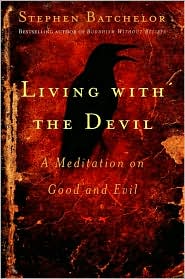
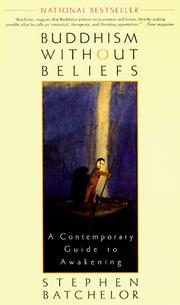
Living with the Devil, A Meditation on Good and Evil andBuddhism Without Beliefs, Stephen Batchelor: I got into Batchelor's writing because I was attracted to the cover of Living With the Devil (human being, check it out). What I found inside was, as much as I hate to resort to cliche, a revelation. Like Brad Warner, Batchelor espouses a version of Zen Buddhism that doesn't so much strip away mysticism as make realism magical. In LWtD, he begins by explaining the importance of learning to "encounter the raw, unfiltered contingency of life itself":
...Contingency reveals a chaotic freedom at the heart of of causally ordered events. However tempting it is to invoke the hand of God, karma, or destiny to inject a hidden order into what seems random, embracing contingency requires a willingness to accept the inexplicable and unpredictable instead of reaching for the anesthetic comfort of metaphysics.
The opposite of "contingency" is "necessity." No matter how ephemeral and insignificant I recognize this human life of mine to be, I cannot shake off an intuitive conviction that, deep down, my existence is necessary in the scheme of things. By paying close and sustained attention to the contingent nature of experience, the practice of Buddhist meditation challenges the instinctive feeling that we are, in the words of Milton's Satan, "self-begot, self-raised / By our own quick'ning power." In eroding this sense of our own necessity, we come to see how the unprecedented and unrepeatable person we are emerges from a sublime matrix of myriad contingent events-- no one of which need have happened either. Insight into the emptiness of self is achieved not by eliminating self but by understanding it to be contingent rather than necessary.
In BWB, he takes this freedom from necessity further by applying it directly to Buddhism and stating that "the dharma is not something to believe in but something to do." The book begins with one of the most definitive of quotes from the Buddha's Kalama Sutta:
"Do not be satisfied with hearsay or with tradition or with legendary lore or with what has come down in scriptures or with conjecture or with logical inference or with weighing evidence or with liking for a view after pondering it over or with someone else's ability or with the thought 'The monk is our teacher.' When you know in yourselves: 'These things are wholesome, blameless, commended by the wise, and being adopted and put into effect they lead to welfare and happiness,' then you should practice and abide in them."
Both books encompass so much more than their titles suggest, and both have become manuals of a sort for me to use in navigating the pitfalls of both life and my own nature. Most concretely, Batchelor's meditation instruction was what it finally took for me to get my ass on the mat and begin a daily practice (well, almost daily. Let's say every other day). Settling my monkey-mind has been a serious challenge, as it is for so many others, and focusing on the breath has been more a distraction than a means to open into emptiness. The light bulb went off while reading LWtD, though, when Batchelor wrote:
The trick is to remain fully aware of the breath without awareness impeding its natural ebb and flow... One way to do this is to wait for the breath to happen. After each inhalation and exhalation, there follows a brief pause as the muscles change gear, as it were, before releasing the pent-up air or drawing a fresh breath. The self-consciousness of breathing is most pronounced at these two moments: suddenly it feels as though "I" must inhale or exhale. To dispel this sense of agency, during each pause remain a disinterested observer, curious to notice when and how the muscles will engage of their own accord to initiate the next inbreath or outbreath. Just wait for the next phase in the breathing to kick in: with no expectation as to when it should start, no preparation for it to be deep or shallow, no anticipation for it to be forceful or gentle.
I still often find the breath to be like Schrodinger's Cat-- being conscious of it does affect its nature, no matter how long I wait for that inhalation. But Batchelor's advice is something specific to practice, and that has made all the difference.
The change in my mood and equilibrium since finding these two books has been subtle yet profound. As Batchelor himself puts it, "life [has become] less of a defensive stance to preserve an immutable self and more of an ongoing task to complete an unfinished tale." And that's tremendously freeing.
(My impressions of Brad Warner's books can be found here, for anyone who's interested.)
A Year in the Maine Woods, Bernd Heinrich: The linked review is an excellent summation of this book, but I disagree strongly with its criticisms. I just re-read AYitMW for about the fourth time, and the elements that so disturb the reviewer are exactly what I love about it. It's to the point that, like Inman in Cold Mountain, randomly opening up his copy of Bartram's Travels and finding peace within the pages, I can open Heinrich's book to any page and become immersed. I did this recently when I found myself between books and unsure of what I was in the mood for, beginning sometime mid-winter both in the book and in the real world outside. When I reached the last page at spring-time, I went back to the start and continued into the beginning of summer. And all the while that I read about the return of song-birds and blossoming of leaves on trees, it was bitterly cold outside my window (thought nowhere near the minus temperatures Heinrich experienced in the Maine winter). The fact that the narrative follows the seasons rather than a linear story-line gives the book a circular quality that easily allows it to be read in this way, and Heinrich's descriptions are so explicit that the reader is transported and doesn't even realize the amount of scientific information being digested and tucked away. Anyone looking for a deeper connection to the natural world would do well to pick this one up.
Sitting here like uninvited company Wallowing in my own obscenities I share a cigarette with negativity Sitting here like wet ashes with X's in my eyes And drawing flies
Bathed in perspiration drowned my enemies Used my inspiration for a guillotine I fire a loaded mental cannon to the page Leaning on the pedestal that holds my self denial Firing the pistol that shoots my holy pride Sitting here like wet ashes with X's in my eyes And drawing flies
Hey what you yellin' about Conditions, permission, mirrored self-affliction Hey what you yellin' about Sadists' co-addiction, perfect analogies Hey what you yellin' about Conditions, permission, mirrored self-affliction
Leaning on the pedestal that holds my self denial Firing the pistol that shoots my holy pride Sitting here like wet ashes with X's in my eyes And drawing flies
I'm sure that the young, 20-something Chris Cornell who wrote this song years ago had no clue as to its Zen-ness. To him, it was probably nothing more than an expression of existential angst. But, man, if that isn't the human condition in a nut-shell. From our denial of the reality of what we are to the afflictions we create for ourselves, and letting all that crap get in our own way because we forget that we're a pile of wet ashes dying with every breath we take.
Most of the rewards we get in life come to us obliquely. (Bernd Heinrich, A Year in the Maine Woods)
I'm not talking about anything as ambitious as getting off yer duff and realizing your life's dream. It's just being aware, every day, seeing the world as greater than ourselves, noticing the little, oblique things and relishing them. It can make all the difference in helping us let go of that holy pride.
I hadn't intended to write a summation of the old year/intentions for the new year-type blog, but I've been thinking about this Incubus song more and more lately and the time seems apropo to explain its impact on me. I've posted the lyrics before, so apologies to anyone for whom this is repetitive:
"Nice to Know You"
Better than watching Gellar bending silver spoons.
Better than witnessing newborn nebulaes in bloom.
She who sees from 'up high' smiles and surely sings.
Perspective pries your once weighty eyes and it
gives you wings.
I haven't felt the way I feel today
in so long it's hard for me to specify.
I'm beginning to notice how much this feels
like a waking limb... pins and needles,
nice to know you, goodbye!
Deeper than the deepest Cousteau would ever go.
And higher than the heights of what we often think we know.
Blessed She who clearly sees the wood for the trees.
To obtain a 'bird's eye' is to turn a blizzard to a breeze.
I haven't felt the way I feel today
in so long it's hard for me to specify.
I'm beginning to notice how much this
feels like a waking limb... pins and needles,
nice to know you... Goodbye!
So could it be that it has been there all along?
Now I unfortunately have to admit that, sometimes, I'm a bit dense. I didn't totally get this song at first. It's always stirred a strong emotional response in me, but for a long while I wondered just what lyricist Brandon Boyd was saying goodbye to. My instinctive response was to hone in on the euphoria the song made me feel, which is very similar to that inspired by "Wish You Were Here", in which he beautifully describes a moment of serene contentment and the desire to share it. When, in "Nice to Know You", he sings "I haven't felt the way I feel today in so long", I related the words to experiencing a state of joy after being stuck in a long period of doldrums. But if Brandon were singing about a joyous mood, why would that be something to say goodbye to and let go of? So where I grasped the simplicity of "Wish You Were Here" immediately, "Nice to Know You" left me exuberant but puzzled. It turns out that I wasn't totally off-base, but I was missing the connection necessary to get the full meaning of the song. Then I found this old quote from Brandon:
I had a moment in my life about a year ago where I was way too close to everything that was going on and I was blind, I felt like I was asleep. And the clouds parted for kind of a strange reason and I gained perspective. What happened was my hand had fallen asleep on the airplane on the way to Europe and it remained asleep for about 10 days, which was kind of scary. I must have pinched a nerve or something. But as my hand started waking up, the clouds started breaking away from that emotional state as well. The two happened simultaneously, so I created a simple metaphor for it. So it's basically a song about gaining perspective on a situation.
Kapow. Not only does that make more sense than my original interpretation, it also makes the song so much more meaningful.
As a self-proclaimed "student of Buddhism", I've read a fair amount about enlightenment, which is sometimes described as waking up or an awakening. Better people than I have written about this more coherently than I could ever hope to. In fact, according to Brad Warner in Hardcore Zen, the Soto school of Zen Buddhism actually shies away from discussing the idea of enlightenment at all because it's basically ineffable. If it were so easy for our intellects to grasp, it'd be way easier to achieve. But, for the sake of this blog, I'll go ahead and say that my impression of enlightenment is that it's the ultimate state of perspective. It's stepping back from all of our desires and aversions, our assumptions and expectations, and seeing things as they really are. Beyond that, it's not just seeing them that way, but actually experiencing and dealing with true reality as it is. There's way more to it than I could begin to sum up here, but this little nutshell description is sufficient for the topic at hand **
So, while I understand on an intellectual level the idea of dropping delusion and dealing with reality, I've yet to actually grasp and live it any more than any other average schmoe. It's not as if one day the alarm clock goes off, you lift your head off your pillow and swing your legs off the side of the bed and into nirvana. It takes a commitment and then continual effort to strip away all the illusions and delusions and bullshit that we all cling to and swear are "reality". It's really very much like the metaphor Brandon created for "Nice to Know You": We sleep-walk through much of our life, sometimes feeling that the world is ok and things are good, but more often stuck in a state of dukkha, a Buddhist term that's translated in various ways from "suffering" all the way to merely "unsatisfactory experience". Brad Warner takes a different angle on it and describes dukkha as "idealism":
When you look at things from an idealistic viewpoint, everything sucks... Nothing can possibly live up to the ideals and fantasies you've created. So we suffer because things are not the way we think they ought to be. Rather than face what really is, we prefer to retreat and compare what we're living through with the way we think it oughtta be. Suffering comes from the comparison between the two.
So the trick is to shake out that metaphorical limb that's fallen asleep, to wake up and take off those idealistic blinders. What makes that so hard is those damned prickly pins and needles, our desires and aversions. Here's more from Brad:
...the origination of suffering [is] our wish that things be different from what they are when they cannot possibly be. Things can never be other than they are... So the "desire" often spoken of by Buddhist teachers isn't just the fact that we desire that big car or that busty redhead... Everyone has desires. We can't live without them. Nor should we. The problem isn't that we have desires and needs. It's that we have a compulsive (and ultimately stupid!) desire for our lives to be something other than what they actually are... The problem is the way we let our desires stand in the way of our enjoyment of what we already have.
Letting go of our intense attachment to those desires is like the blood trying to re-circulate in that sleeping limb. It hurts like hell, but if we want to get rid of the pins'n'needles we've gotta let it happen. Otherwise, we end up either remaining numb and asleep, or stuck in that prickly, unsatisfactory state.
In my own case, a couple of years of reading about Buddhism did nothing for me but put me through a series of waking limbs: I'd read something that really struck a chord and I'd set the intention to follow the Path, only to have personal issues and my habitual responses to those issues throw me right back into a state of dukkha. 2007 was a particularly chaotic year, what with an increasingly meaningless job, illnesses of my own and those of family members and, finally, having to euthanise my cat the week before Christmas. Over the last couple months of the past year, there've been two things that carried me through and seemed to begin lifting me out of the sleeping state I'd become stuck in-- Incubus' music and Brad Warner's books. Warner's shown me a form of Buddhism that I can fully embrace, and finally grasping the full meaning of "Nice to Know You" has woken me up and helped me to step back from the things I was too close to. As this new year begins, I'd like to say "pins and needles, nice to know you, goodbye!", but I know it's too soon for that. What I can say is this: "I haven't felt the way I feel today in so long, it's hard for me to specify..."
** If you're really interested in a more thorough explanation of Buddhism in general and enlightenment in particular, I highly recommend both of Warner's books: Hardcore Zen and Sit Down and Shut Up. Great stuff, especially if you, like me, are leery of concepts such as "reincarnation" and "loving-kindness".
Very lazy day today. I'll backtrack a bit to explain why, then move on: Friday evening, I drove straight from work in DC up to King of Prussia, PA, to spend the night at a friend's house, then we left her place early Saturday morning to head to NY for a day of adventure-- A visit to Alex Grey's Chapel of Sacred Mirrors, then a reading by another friend of ours from her memoire-in-progress at the Bowery Poetry Club, then a bunch of us from the reading headed to Chinatown for a tasty dinner of vegetarian dim sum. And then, seven hours, three trains, and 154 miles driven at 80+mph later, I ended up back home in Maryland at 3:00am Sunday morning. Needless to say, I was a bit tired today. So, I headed out for a late lunch and a brief, easy meander through the woods at Monocacy National Battlefield Park.
I wish I could write about Saturday's experiences, but the day was a bit of a blur so I really don't have many concrete thoughts about it. The Chapel was incredible, but there were too many people there for me to fully absorb it the way I would have liked (which would have been to plop my butt down on the floor in the middle of the room and just sit there quietly for a while). And the memoire reading was funny and moving and stimulating. But, sorry, that's about all I can put together about it. So my thoughts were kind of vague and rambling today as I wandered through the woods along Monocacy River.
On the train(s) home last night, I began reading Brad Warner's latest book, Sit Down and Shut Up. His first book apparently describes his own discovery of Buddhism, specifically the Zen kind, and how he became an ordained monk. SD/SU is an explanation of the teachings of Dogen, an apparently influential 13th century Zen master. So far, Warner's focused on the idea of reality in Zen, and the process of sitting zazen. The guy's incredibly irreverent and even talks about how he pretty much hates being a zen monk and teaching the dharma. It's great stuff, because he explains everything so clearly and meaningfully, yet comes at it with an attitude that I can so easily relate to. I'd really love to know his take on the whole "loving-kindness" aspect of Buddhism, but I'm not sure whether that's a big concept in Zen. Guess I'll find out (or not) as the book progresses. Read this while at lunch and almost cracked up in the middle of the very crowded Golden Corral restaurant:
The truth is always with you at every moment, or as Dogen puts it, "The Buddhist truth exists under the foot of every human being." It's not something far away, abstract, or difficult. It is the uncomplicated and direct truth of what is right here, right now. Truth is not removed from your day-to-day existence. God, way up in heaven on his big gold throne, is just an idea. That itch on your left ass cheek right now is the truth. It's way bigger than God could ever hope to be.
Awesome stuff. Right up my alley.
Found myself at one point while sitting along the river, cursing as I have so many times before that I didn't have my camera with me. I had glanced downstream along the trail and noticed a very pretty interplay of clouds and tree branches, touched with a bit of gold from the late afternoon sun. Had the potential to be a great photo, but the camera was back at home. So I sat and had the debate with myself that I've had all those other times in similar moments: Should I make a point of always bringing the camera with me when I leave the house, or should I only bring it when I'm specifically in the mood to shoot photos? There are pros and cons either way.
With the camera, I can capture and keep a concrete memory of, not to mention share with others, all the gorgeous &/or interesting things that catch my attention. But having the camera with me changes how I move through whatever place I'm in. My vision is narrowed to the perspective of the view finder, and my perceptions become focused on lighting and composition. My other senses may as well just stay at home on those occasions.
Without the camera, though, I can allow the focus of my eyes to soften and my peripheral vision comes into play. I see more. Without the distraction of composing a picturesque shot, I'm able to have a more intimate connection to my surroundings and feel that I'm a part of the place. Which, in it's way, makes scenes such as the rosy-gold clouds behind those bare tree branches just that much more special, because I fully experience, yet can't capture, them. But, as special as those moments are to me, do they become even more meaningful when I'm able to share them with others via my photos?
Nice little circular argument, there.
And (apologies to anyone who's becoming tired of my Incubus obsession, feel free to read the poetry below but skip my babbling), I'm continuing to find inspiration in Brandon Boyd. I recently read a wonderful poem by Jane Hirshfield that made me instantly think of the Incubus song Pantomime (the lyrics of which I posted at the end of this blog). First, here's Hirshfield's piece:
To Speech
This first, this last:
there's nothing you wouldn't say.
Unshockable inclusion your most pure nature,
and so you are like an iron pot---
whatever's put in, it holds.
We think it's the fire that cooks the stew,
but, speech, it's also you:
teacher
of fire-making and stew-making,
orator of all our plans and intentions.
We think we think with a self.
That also, it seems, is mostly you---
sometimes a single spider's thread of you,
sometimes a mountain.
The late sun paints orange
the white belly of a hawk overhead---
that wasn't you
though now and here, it is.
If a hungry child says "orange", her taste buds grow larger.
If a person undamaged says "hungry child",
his despondence grows larger.
You are not, of course, omnipotent.
In fact, you do little unaided by muscle, by matter.
And still, present and absent, speech, you change us.
As Issa changed, writing after the death of his daughter,
This world of dew
is a world of dew.
And yet.
How much of you
was left uninvited in those lines.
That silence your shadow, bringing his grieving to me.
For days
I made phone calls to strangers,
the few words repeated over and over,
between the "please, if you have a moment" and "thank you."
I didn't expect to make a difference, and didn't. And yet.
Your vehicles are air and memory,
teeth, tongue, papyrus, woodblocks, iron,
signing fingers, circuits, transistors, and ink.
A wheel is not your vehicle, nor an engine.
Terence was your vehicle,
saying in Latin:
"Whatever is human cannot be foreign to me."
Your own truth as well---
For all of our parts, you are our closest mirror,
growing thin or fat, muscular, clumsy,
speeding or slowing as we do.
The wolf-child without you called wolf-child, not-fully-human.
You are held, in the forms we can know you,
only by creatures
able to pass you to others
living often in sadness and tiredness, sometimes in hope.
A friend, who is sometimes sad, said this:
"To be able to hope means that we can also regret."
You rest, fierce speech, in both.
As well as in bargaining, persuasion, argument, gossip,
flirtation, jokes.
Fear, hunger, rage stammer beyond you:
what lives in words is what words were needed to learn.
And so it is good we sometimes set you down
and walk---
unthinking and peaceful, planning nothing---
by the cold, salt, unobedient, unlistening sea.
Only then, without you, are we able to see you completely,
like those wandering monks
who, calling nowhere home, are everywhere home.
I was struck by the contrast between Boyd's idea of gaining freedom by giving up speech and Hirshfield's concept of it as something that is so much a part of us. "there's nothing you wouldn't say... Unshockable inclusion your most pure nature" vs. "I've found beyond all doubt, we say more by saying nothing at all". There's a romantic irony to Pantomime, that vision of someone whose creative career depends on word and voice choosing to give up speech and communicate by less "messy" methods. Especially considering Hirshfield's contention that "what lives in words is what words were needed to learn".
I'll throw another final contrast into this rambling mess of a blog. I keep finding myself hitting the "repeat" button of the car's cd player for two specific, yet very divergent, Incubus tunes: One is the wacky Azwethinkweiz that I posted the lyrics to a few days ago, and the other is 11am, which is one of the most beautiful of the many gorgeous tunes on Morning View:
7 a.m.
The garbage truck beeps as it backs up
And I start my day thinking about what I've thrown away
Could I push rewind?
The credits traverse, signifying the end
But I missed the best part
Could we please go back to start?
Forgive my indecision
Then again, you're always first when no one's on your side
But then again, a day will come when I want off that ride
11 a.m.
By now you would think that I would be up
But my bedsheets shade the heat of choices I've made
And what did I find?
I never thought I could want someone so much
Cause now you're not here and I'm knee-deep in that old fear
Forgive my indecision
I am only a man
Then again, you're always first when no one's on your side
But then again, a day will come when I want off that ride
12 p.m. and my dusty telephone rings
Heavy head up from my pillow, who could it be?
I hope it's you...
Then again, you're always first when no one's on your side
But then again, the day has come and I want off that ride
To anyone who's read thus far... I'm not sure whether to thank you for your attention, or to think that you're more obsessively weird than I am.
I don't consume alcohol, "illegal" substances, or cigarettes. I do get a kick out of the ocassional hit of nitrous oxide at the dentist's office, I like my teas caffeinated, and I enjoy a daily piece or two of fine dark chocolate, but otherwise I'm fairly abstinent. Past experience indicates that I could probably develop an addiction to sex, but current lifestyle choices have caused me to abstain from that, too. The one and only craving I fully indulge is an addiction to fast driving.
I'm fortunate to live in a region with some pretty good roads for driving at speed, somewhat close to areas of transition between suburban and rural. That, combined with the rolling hills of the piedmont region, means that curvy, relatively low-traffic country roads are in easy access. When I first moved to this locale back in my mid-20's, I began to explore just to familiarize myself with the area. As I started to discover the back-country roads nearby, I quickly realized how much fun they could be. I also learned that driving fast gave me an unexpected respite from the cyclothymic depression I had been sunk in for a handful of years. When I found myself sitting agitated and restless in my apartment in the evening, I'd grab my keys and head out for a drive. To this day, nothing calms my nerves and relaxes me like pushing the speedometer on an open road.
The thing about driving is the focus it requires. When you drive fast on country roads, you quickly learn that you have to maintain awareness and a constant anticipation that something (an animal, a pedestrian, another car) could be in the middle of the road as you crest that next hill or swing around that upcoming curve. The focus required pushes all other thoughts out of your head and leaves you in a very Zen-like state. I've intentionally described this state as "focused" and not "concentrated". Concentration implies a tunnel-visioned rigidity and that's sure to lead to a crash. What's necessary to drive fast is a relaxed, wide-spread, yet focused, awareness. Peripheral vision is key, as is being relaxed enough to respond instead of react. Chris Cornell is apparently also a speed-freak and describes it similarly:
"Speed is true escapism. When you're going really fast you have no opportunity to think about anything else in your life. Stuff that might bug you gets forced out of your brain. When I want to clear out my mind, I'll usually go driving late at night on roads where I know there are no police..."
My chiropractor (Dr. Joe) and I have discussed this. Dr. Joe is a motorcycle afficionado, specifically racing bikes. He and his buddies frequent many of the same roads I do, and several of my chiro appointments have ended with us comparing notes on current road conditions, favorite curves, etc. In one of these conversations, Dr. Joe described the exhilaration of of entering a curve and feeling that point when it's time to accelerate to sling your vehicle around the apex and out the other side. I knew exactly what he was talking about. Whether it's a car or a motorcycle, there's a thrill in feeling that no-mind, totally instinctual one-ness with vehicle and pavement.
Another great description of driving fast that mirror my sentiments is from a January 1999 National Geographic article about T.E. Lawrence ("Lawrence of Arabia"). Lawrence was apparently a motorcycle buff and spent the years of his retirement tearing around the English country-side on a pretty cool-looking Brough Superior SS1000, before an unfortunately fatal crash on that same bike. The Nat'l Geo writer had the opportunity of driving the Brough:
"...blasting down the narrow roads of Dorset that day, I did get a taste of what Lawrence found on this bike at the end. It was a kind of surrender, I think-- a speed-induced state of bliss in which things go empty and white, as they sometimes do in the desert, and where... struggle might be briefly forgotten, or somehow resolved, and penance seems no longer necessary."
To a lesser degree, my bicycle induces this same bliss. As I mentioned in another recent post, I'm no speed-demon on the bike. I just don't have the watts for it (yet...?). I've gone as fast as 30mph downhill, but I slow down like a granny going into turns. And I'm just not powerful enough for sustained speed on a straightaway. But there's a similar relaxed focus required in cycling. To maintain a steady cadence on flats or rolling hills demands attention to breathing, gearing, pedal stroke, and any upcoming obstacles that will affect that ideal combination of rpm/mph. Obviously, there's a necessary amount of knowledge of these various elements required, but at a certain point that knowledge becomes muscle-memory and thought exits the equation. Again, it's body, machine and surface congealing into a harmonious state of mindful-yet-mindless freedom from care.
Getting back to the car: Most people would probably not consider me to be a "good" driver, but I'd like to think of myself as at least a skillful one. Yes, I'm aggressive behind the wheel, but I honestly believe that I might be a tad more aware and attentive than the average cell-phone afflicted motorist. I try to be realistic, though. I tend to attribute my lack of accidents (beyond a handful of weather-related incidents in my early 20's) to a smidgen of skill in handling the car, a teensy bit to my awareness of what's going on and what could happen at any moment around me, and a whole lot to just plain dumb luck. Of course, now that I've written those words, I'll probably go out tomorrow and have a tremendous wreck. Unless it leaves me maimed or dead, though, it probably wouldn't be enough to curb my addiction.
Anyone know of a local chapter of Speed-Demon's Anonymous...?
All images and text herein (excepting song lyrics, quoted material, and otherwise attributed images) are licensed under a Creative Commons Attribution-Noncommercial-No Derivative Works 3.0 Unported License. Feel free to use my words or photos, but please link back to the post from which you pulled them. Like anyone else, I find it gratifying to be acknowledged for my work. Thank you.






 Posts
Posts


