October 21, 2012

Euphoric times in West Va and Oklahoma

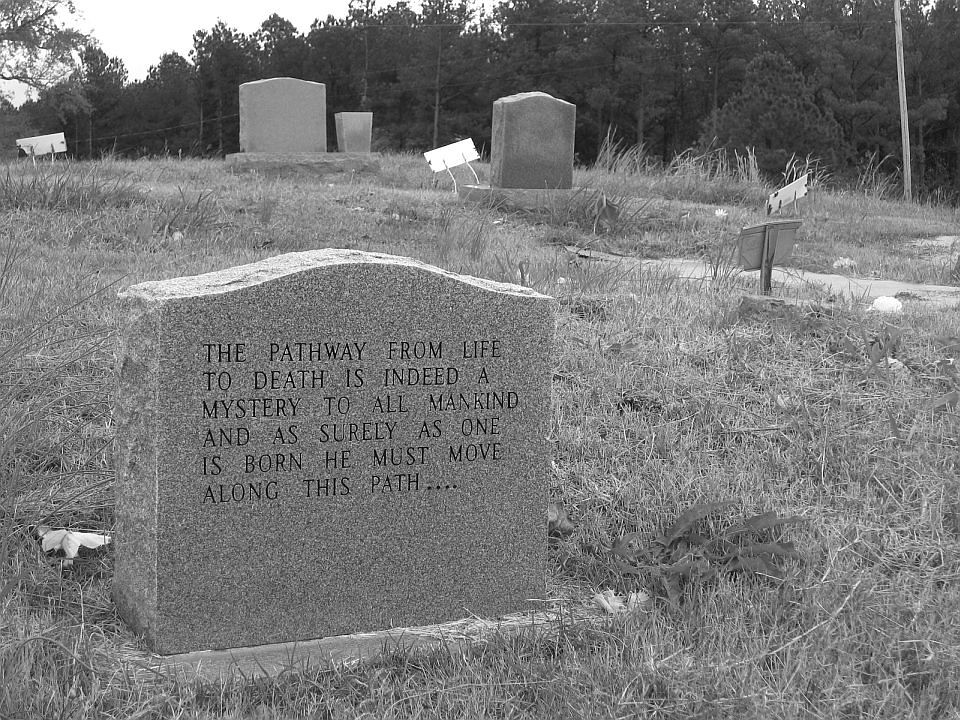
Drove to Shaharazade's in Shepherdstown, West Va, for an early dinner with tea and a book.  Wandered through town, looking at the old houses and the way the autumn leaves glowed against the pale dusk sky. Scored big at the consignment shop.  Hit the dark, curvy backroads for the drive home with a bootleg of one of the best shows I've ever attended blaring from the stereo.  Stopped at Sheetz for a Pepsi-flavored Slurpee, then some more backroads before ending up lying on my back in the dark in the middle of the old cemetery at historic St. Mark's church, smoking a cigar under a third of the moon and a sprinkling of stars that were still unfortunately faint even so far away from the city.  

St. Mark's cemetery in the daytime

Do experiences like this balance the crap of work, bills, commuting?  In the moment, yes, they do.  It feels a shame, of course, that the moment is so brief and fades so fast.  But if they were more frequent and lasted longer, perhaps it'd be an even greater shame if we became jaded to them.

But then again, some of those experiences are worth trying to hold onto.  Which brings me back to that bootleg I was listening to as I drove along those dark roads, a euphoric moment of its own that contributed so much to tonight's euphoria.  It's from a show that I recently traveled half-way across the U.S. to attend (the most recent of a dozen times I've done that for the same performer over the course of this year), in an old oil boom-times city full of gorgeous Art Deco architecture and American music history.  I went there to see-- yes, you guessed it-- Jack White.  I'd heard that at his previous show there back in March, Jack had talked about how beautiful and mysterious Tulsa, Oklahoma is.  More recently, in a chat at the Vault website, he'd described the city as "a campfire in the desert of [his] brain".  I couldn't not go.  And in the weeks leading up to it, as work, bills, and commuting turned my own brain into a bleak desert, I built up tremendous expectations for this show, to the point that I worried about being disappointed.  But Jack was apparently looking forward to it as much as I was.  Not only did he not let me down, he went so far beyond my bloated expectations that I still can't get over it.

Wish I could share the whole experience with everyone, but folks in the audience at Cain's Ballroom that night apparently complied for the most part with Jack's no-filming/no-recording edict.  Personally, I've got very mixed feelings about his prohibition--  His reasoning seems to be that he wants people to not be distracted from the experience by cameras, cel phones, or any other sort of black gadget with a little screen on it.  I understand and respect this.  You wouldn't catch me with any of those gadgets in my hand at a show because I very much want to be fully immersed in what my senses are taking in.  So I appreciate him laying down the law and nudging other people to immerse themselves in the same way, while also sparing those behind the first few rows from having to watch the show through a sea of other folks' gadgets being held up.  But, on the flipside, full immersion into such an overload of sight and sound and visceral feeling can cause these shows to become a massive blur.  I try my damnedest to cement individual moments in my brain, pulling out pen and paper as soon as the show's over to scribble down highlights.  But even with notes, my memory just ain't what it used to be.  So the recordings that the rule-breakers capture are invaluable to me.  I realize the contradiction here--  I would never diminish my experience by filming or recording anything myself, and I resent anyone who blocks my view by holding up a camera.  And yet, I'm thrilled by the photos and videos I find on the internet in the days after shows because they help to prevent the memories from dissipating. And I treasure any full-length audio recordings that I come across.  Being able to listen repeatedly
whenever I want to some of the many shows I've attended is priceless. 

Tonight was one of those times--  Hearing certain moments again made me smile and laugh and cry as I drove along, just the way I did that night a bit over a week ago when I was hugging the rail at the show, staring up at the stage while I sang along and grinned until my face ached.  Based on things I've read in interviews and been told, my impression is that Jack White feels there's a romance in having experiences such as I had at that show and then not being able to have them again.  He's said flat out that one of the things that makes him happy is "
creating and moving on from it, creating and pushing forward, creating and forgetting" (direct quote from an interview at the White Swirl message board).  So it's not a stretch to assume that he would feel similarly about euphoric experiences.  I can understand such a feeling, how he would see the romance in such letting go, in not trying to re-create or re-live.  But being able to understand does not mean that I agree. I do, to a degree.  But, at the same time, I don't.  Those moments don't come along often enough for me.  I'm too much of an addict, perhaps, too needy of them.   Whatever the reason, I want to be able to hold on and re-live.  It's one of the things that makes me happy.  I would like to think that Jack could understand and respect that, but, of course, I'll never know whether he can or not.  And I can live with that, as well as with my own contradictory views.

Here's all that can be shared with any shred of good conscience from that insanely magical show in Tulsa...


Photos--

jackwhiteiii.com


Steven Anthony Hammock

tulsaworld.com

Reviews of the show at the Little Room message board-- http://littleroom.whitestripes.net/index.php?showtopic=70318


April 17, 2012

Early in the morning time, late in the middle of the night...


So I woke up at 2:30a.m. this morning with the song above going through my head.  It's a fun little ditty by a guy I'd never heard of until recently, Little Willie John, that I've been listening to over and over for days.  The tune came to my attention via, you guessed it, Jack White.  News of Jack's first solo album hit the 'net back at the end of January and the fact that he'd chosen this song as the only cover for his debut was, along with the two singles so far released (Love Interruption and Sixteen Saltines), one of the few clues of what was in store on Blunderbuss.  The record itself, which I ordered as soon as was humanly possible, isn't due out until next week and I've been counting down the days in anticipation since the beginning of this month.  So I had it firmly in mind that I would listen for the first time when my order arrived and I had that vinyl platter in my hand, with the record sleeve and the liner notes and the lyrics.  Of course, this being the 21st century (Hah! You'll get that joke when you hear a certain song), the album leaked a week early and then was made available as an official webstream via iTunes.  Nope, said I, gonna wait for my record, I've been too well indoctrinated into Jack's culture of tangible vinyl to do otherwise.  Plus, there's that countdown of mine, like a kid waiting for Christmas and being too good to poke around in all the closets, preferring to wait for the big presentation and all the surprises.  But then I woke up with Little Willie in my head and the urge to find out just what Jack did with Willie's tune overwhelmed me.

This is not a track-by-track review, I've nothing yet but middle-of-the-night, first-listen impressions, and vague, half-formed, need-the-damned-lyrics ones at that.  The one thing I'll say for sure is that when the last song ended, there were tears running down my face.  One of the reviews of Blunderbuss that I've read over the last few days said it best--  Something along the lines of "It's not that Jack White couldn't write complex songs, he just didn't, and now that he is the whole world's open before him."  My one overriding thought after one listen to this record is that there's nothing he can't do.  No instrument he couldn't work with, no genre or style he couldn't dabble in, no musical mood he'd leave untouched.  Sure, upon reflection that's probably hyperbole but, like I said, this is just first impressions in the middle of the night.  There's so much to digest on this record, it's so completely unexpected despite what I know of his catalog and all of the detailed reviews I've read over the past weeks, that I can't even decide yet if I like it or which songs stand out for me.  But one thing I'm damned certain of is that once I do have that record in my hand, I won't be listening to anything else for a long, long while.  


March 4, 2012

Lightning from the gyroscope

From a fellow Jack White fan whose way with words I admire mightily (and whom I've quoted before)--

jack is so slick and hip. he is totally arrived rock royalty now with the responsibilities of pushing the art to new heights. he has money now so the scuffed black shoes and k-mart white tee and salvation army red golf pants have shifted the mighty bulge into the emperor's new clothes. the moire stripes. he still has the old woody tesla eleck-ah-tris-ah-tee though. it was good to see him free from the constraints of all the recent corporate music he has been marching to since the stripes. i always think of him as a one man band with a great drum partner and the closer he can get to that primal sweep the better. his energy cannot be contained in a bottle. it is lightning and needs to be free. welcome home jack.

I have nothing to add to that, except the performances on Saturday Night Live the night of March 3rd, 2012, that inspired it--


And the exhortation that if you have the opportunity to see this man on tour in support of his upcoming solo album, Blunderbuss, then fucking do it.


February 5, 2012

"Who doesn't want violence from love?"

On Monday, January 30th, one of the top-trending search terms on the web was "Love Interruption", which is the title of the first single from Jack White's upcoming debut solo album.  The song was released to the internet that morning via a brand new site, jackwhiteiii.com, with no previous announcement, though there had been whispers of hints of rumors for a few weeks of something maybe, just possibly, coming up.  Of course, the reaction in the fan community was pretty explosive, especially when the song was followed with the announcement of the new album and an accompanying world tour. For anyone who's into his music, that's a helluva lot of excitement to absorb at once, so it took a day or two for the single itself to sink into my head.  After some extended listening, though, I quickly realized that it's quintessential Jack-- Deceptive in its simplicity, leaving one caught up in comparisons, contrasts, and contradictions.   

The first contradiction is between the music and the lyrics.  Musically, Love Interruption is hauntingly sweet, reminiscent of the White Stripes tune I'm Bound To Pack It Up, from the album De Stijl, released back in 2000.  The two songs share a fairly simple arrangement of acoustic guitar which is layered with electric violin in the earlier song, clarinet and Wurlitzer organ in the more recent.  The themes of both are expressed through plaintive vocals, with Love Interruption enriched by backup from the gorgeous voice of Ruby Amanfu (who Jack had previously enlisted for two other Third Man Records projects-- As a live backup singer for Wanda Jackson and again on the Blue Series single from Seasick Steve).   


But the comparison of those two songs ends there and the next that sprang into my mind was Jack's recent cover of U2's Love Is Blindness, as much for the contrast as for the similarity.  Both depict love as an overwhelming force, but the dramatically passionate vocal delivery of Love Is Blindness is an antithesis to the gentleness of Love Interruption.  


A more apt comparison, though, one that gets to the heart of Love Interruption, might actually be with the old bluesman Mississippi John Hurt, who played and sang with a delicacy that belied the violent lyrics of some of the songs he performed.


That's the crux, the element that makes Love Interruption something insidious-- This simple and tender sounding song contains some of the most starkly dark imagery Jack's written yet.  The very first two lines reflect this intense contradiction of tenderness and violence:


I want love to roll me over slowly 
Stick a knife inside me and twist it all around 
I want love to grab my fingers gently 
Slam them in a doorway, put my face into the ground

The lyrics go on to list metaphorical ways in which he wants love to destroy him and overwhelm other relationships.  In seeming contrast to this, though, the chorus repeats an unconditional refrain of "I won't let love disrupt, corrupt or interrupt me anymore".  To me, this was the primary contradiction of the song and it left me baffled. 


The next evening, though, I had the chance to ask Jack about this when he unexpectedly popped into the chatroom of the Third Man Records Vault while I was there.  My comment apparently left him baffled in return, as he countered with "what contradiction?".  I pointed out the seeming inconsistency between wanting such violence from love, but not allowing it to disrupt or corrupt.  He again came back at me with a question-- "who doesn't want violence from love?" (Which prompted someone else to ask "so you like it rough?", to which he replied "no, I like it real".  Again, quintessential Jack.)  I would have gone on to ask how he feels it's possible to prevent something so powerful and intense from being an interruption, but the chatroom was filling up and he's usually there with an agenda, so I let it drop.  But his reply made me re-think the relationship between the verses and chorus.  I began to consider that perhaps the song was about how he (or the character he'd created) wants love to be hard and challenging, to push him to a breaking point, while at the same time learning to rise above that difficulty and not succumb to it.  At one of the two Jack-related message boards, I found someone who felt similarly, but who expressed it with a thoroughness I hadn't considered--

I think I would have to agree on Jack's point of "who doesn't want violence in love" and flattop and Kali's interpretation of finding a way to have intensity without being thrown off track. Love (and relationships) is something that is, and should be, forceful, extreme, intense, and (sometimes) painful. there are definitely highs and lows and extremes on both ends of the spectrum, otherwise it's just kind of bland and uninvolving. It's not like you're always going to agree with someone you love, and I personally don't buy that "we never fight or disagree", lovey-dovey crap that you see in some relationships. who wants to be completely subservient and complacent in a relationship?

I think people are going to get hung up on the imagery of the song and stuck in the typical idea of violence because of the imagery, while forgetting that some words have more than one definition. something that is violent isn't necessarily hurtful as the song's imagery conjures, but love is something violent (even if it doesn't come with the usual idea of what violence is)... forgive the dictionary post, but:

Violence:
3 a : intense, turbulent, or furious and often destructive action or force
(the violence of the storm)
   b : vehement feeling or expression : fervor; also : an instance of such action or feeling
   c : a clashing or jarring quality : discordance

Violent:
1 : marked by extreme force or sudden intense activity (a violent attack)

2 a : notably furious or vehement (a violent denunciation)
   b : extreme, intense (violent pain) (violent colors)
3 : caused by force : not natural (a violent death)

4 a : emotionally agitated to the point of loss of self-control (became violent after an insult)


Of course, though, not everyone will draw the same conclusions that I and a few others have.  That's the magic of truly effective lyrics, when metaphors are obscure enough that the words can inspire a personal meaning for the listener that might be quite different from what the songwriter had in mind.  Jack's a master of that sort of poetic ambiguity and it continuously puzzles me that his talent as a lyricist is still so often overlooked in favor of the frontman charisma and insane guitar skill he's universally known for.  It seems he might feel this way himself, as he mentioned in an interview the day after the single's release that he wanted the first single to be "a lyrical taste", that he "wanted the words to resonate", before getting to the sort of songs that people expect from him.  Personally, I think that's a mistake that people too often make with Jack--  having expectations.  The only thing I've come to expect from him is to always be surprised.  This song most definitely accomplished that, though I would have been equally astonished if it hadn't.  And knowing that there are more surprises coming up has got me violently excited.


December 25, 2011

The gyroscope just keeps on spinning...

Jack White's been busy being brilliant again.  Actually, though, that's a misnomer, as the man seems to never stop being brilliant.  If you haven't been paying attention, it'd be easy to think he's not done anything since the end of last year's Dead Weather tour or this year's handful of shows with the Raconteurs but, in actuality, he's turned out a tremendous amount of music and records over the course of this year.  It just hasn't all been the sort to put him in the spotlight.

As far as newness in his own music goes, 2011 was a year of collaborations.  First released was the spaghetti western-inspired Rome, a five-year-in-the-making labor of love by Danger Mouse and Daniele Luppi, on which Jack contributed lyrics and vocals to three songs.  The lyrics are not a huge a stretch from what a dedicated White Stripes fans might be familiar with, but his vocals and the music they're paired with are quite a departure.


Next was the long-awaited release of The Lost Notebooks of Hank Williams, a project begun by Bob Dylan roughly a decade ago.  In a turnaround from Rome, the musicians involved in this project were asked to write music for unfinished Williams lyrics and then perform on the album.  I've not yet listened to the entire record, but from what I have heard it doesn't seem that any of the other artists involved created anything as authentic as Jack did.


Most recent was a startling cover of U2's Love Is Blindness on the AHK-toong BAY-bi covers compilation, which I babbled about a couple months ago, but will post here again for the sake of comparison.


I'm struck every time I listen to these songs by the contrast between the delivery of them-- Not so much in the difference in style, but in how Jack chose to approach them.  In You Know That I Know, the "quiver and twang" in his voice and the distinctive pedal steel guitar in the music he wrote are a touchingly faithful recreation of Hank's style. He's done this sort of thing before, notably with the White Stripes' covers of Blind Willie McTell's Your Southern Can Is Mine and Lord Send Me An Angel, and Bob Dylan's One More Cup of Coffee and Isis, but not to quite this fine a degree.  In comparison, he took Love Is Blindness and ran miles away from U2's original to create something so much more extreme and intense, which, again, he also did with the Stripes on Dolly Parton's Jolene, Son House's Death Letter, and Robert Johnson's Stop Breaking Down (though he and Meg also did a slightly more faithful rendition of that one, as well).  And there's pretty much no way to compare the songs on Rome to anything he's done before.  When news leaks of things like this year's cover tunes and collaborations, the most exciting part of waiting to hear them is that there's just no telling what direction Jack will have taken.  It's fascinating to contemplate-- How does he make the decision each time?  Is it pure gut instinct based on a visceral reaction to the music?  Or does he actually thoughtfully consider the song and make conscious decisions? He spoke in a recent interview (that I now can't find) about problem-solving in relation to the business at his label, Third Man Records, of how he prefers to vary his own style from problem to problem rather than tackling every challenge that comes up from the same perspective, and that seems to also speak directly to how he approaches music.  

This same diversified approach is reflected in the output of the Blue and Green Series singles from Third Man, on which Jack steps into the background as producer.  This is where he's really been busy.  What's notable about these records aside from his astute production is that he personally searches out and contacts individuals with whom he feels he can create something new and inspiring.  With 33 releases in less than three years, these two series run a gamut that defines the word "eclectic"--  From relative unknowns like JEFF the Brotherhood, the Secret Sisters, and Chris Thiles, to actor John C. Reilly and 70's icon BP Fallon, Conan O'Brien and auctioneer Jerry King, Japanese girl group the 5.6.7.8.s and rapper Black Milk, to Carl Sagan and, controversially, Insane Clown Posse, the catalog of these two series is a blatant indication of just how wide-ranging Jack's interests and imagination run.  

The most recent of the Green Series singles has totally blown me away.  It features poet/actor/playwright, Edgar Oliver, whom Jack apparently noticed in an episode of the Discovery Channel's Oddities program. For his Third Man single, Oliver wrote and read a pair of poems-- In The Park and Hunger and Light.  While his voice, delivery, and poetry are certainly not necessarily everyone's cup of tea, they're right up my own eerie little alley.  A clip of the a-side, In The Park, can be heard at the Third Man Records on-line shop.  It's a gruesome yet lovely contemplation on the approach of death, read in a manner that summons up a delightfully daft combination of Vincent Price and Peter Lorre.  But the b-side, Hunger And Light, is the kicker.   

Recorded in Triple Reverse Cryptophonica™, it left me initially nonplussed at what sounded like nothing but gibberish.  I thought it would be great to listen to at Halloween, but it had no meaning for me beyond that.  


But then Third Man announced a contest promising a gold record of the single to the first person who could correctly interpret and transcribe the poem.  I had no clue of how to accomplish this, but there were plenty of other technologically-inclined audiophiles who took up the challenge.  When the results hit the internet, it left me giddy.  Whether Oliver's dark themes and creepy tone are appealing or not, the production of this piece is still a wonderment.  First, the single was pressed to physically play in reverse, from the inside run-out groove to the outer edge of the record  (which produces the sounds heard above). But by flipping the head of the turntable tonearm, it can be played in the normal direction of outer-to-inner edge, which creates the second reverse-- the direction of the sound.  But instead of hearing "Paul is dead" or some Satan-worshipping mumbo-jumbo like you'd hear if you played your records in reverse in the old days, you get this--


The final fantastic element is that Jack recorded Edgar reading the words in reverse order (as heard above).  Reversing things for a third and last time through transcription reveals the original poem—

Hunger and Light. I’m going in my sleep to the Galaxy Deli for a bacon and egg sandwich. I must cross daylight to get it. I went to the Galaxy Deli in my sleep. I crossed the Egyptian daylight on 3rd Avenue, fearing death at every step, but exalting in the sun on the mud in the street. This was not dreaming. I really crossed that Styx, and came back with two bacon and egg sandwiches, both for me and some for my cats, who are driven mad by the smell, as am I, of bacon and sunlight. The day, like a beautifully fried egg, sits coolly on a blue plate. Today is a blue plate special. I’ll go swimming around the rim and drown in my hunger. Sun sets a gold eye on a fly, hungry for everything glinting in the mud. It’s today in my dream. Cruelly today. Today I will eat the last bite.

Now that I'm able to comprehend it, I find it beautiful in every direction.  What leaves me most excited about it, though, is wondering how on earth Jack came up with the Triple Reverse idea.  How many people's minds work like that?  It's obvious that his brain is on a different plane than those of average individuals.  I've joked at one of the message boards dedicated to him that if you opened up his head, instead of a mass of grey matter like the rest of us have, you'd find a gyroscope spinning at breakneck speed, spitting out ideas like lightning.  Though the lightning image makes it more appropriate, probably, to compare Jack's brain to a Tesla coil like the one displayed on the roof of Third Man Records, or the one he showed off in Jim Jarmusch's Coffee And Cigarettes--


Clearly, the spark gaps of the Tesla coil inside Jack's head have always been adjusted for overdrive performance and that's something for which we should all be thankful.  The music world would be a damned dull place without him in it.


Note: Bearing in mind how he seems to feel about his tangible creations being turned into internet ephemera, I debated for several days whether to post the videos and translation of Hunger And Light.  In the end, I decided it was worth risking Jack's displeasure in order to demonstrate to the few people who read this just how insanely creative he is.  If anyone affiliated with Third Man Records should happen to stumble across this and feel that it should be removed, by all means please let me know.


December 19, 2011

I'm gonna sing this song, An I ain't goin' to sing no mo'


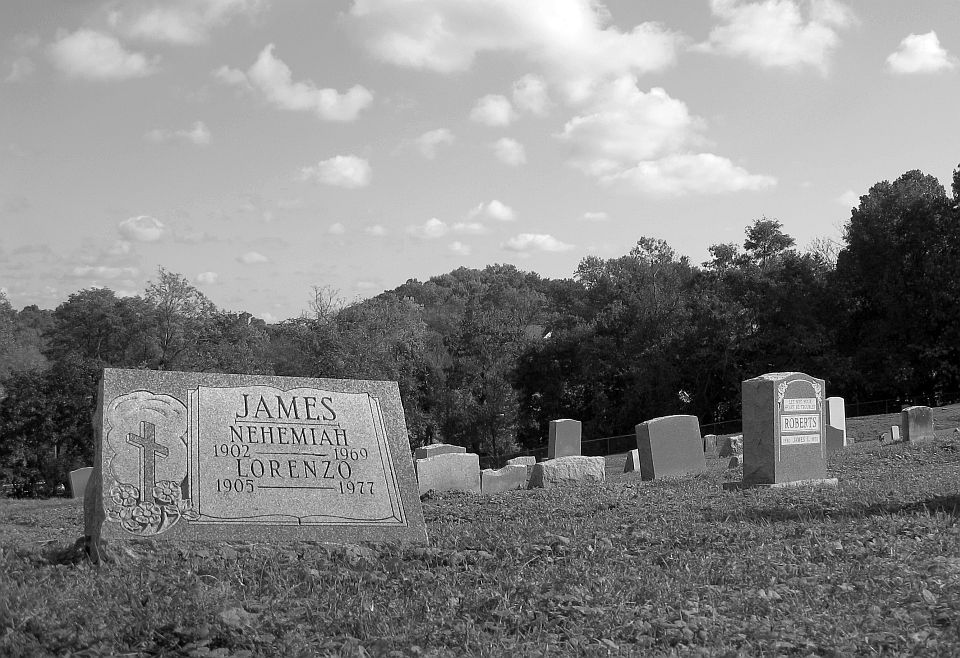
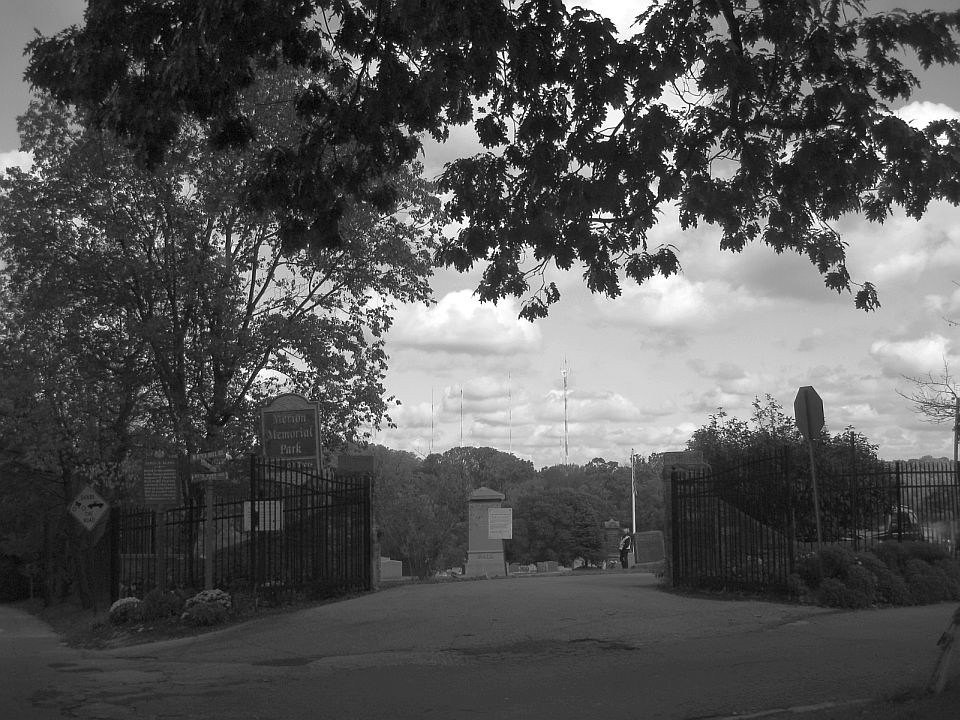
Finally made the pilgrimage to Skip James' gravesite at the Merion Memorial Park outside of Philadelphia.  


Merion's a fairly small cemetery but it sprawls down a hillside, so I decided to make things easy on myself by asking in the office where to find Nehemiah James.  The two older white folks working the office couldn't seem to find him in their register, but when I mentioned he had been a musician also known as Skip James, a lightbulb went off.  They sent me back outside to ask one of the groundskeepers, a young, dreadlocked black guy who knew right away who I was talking about and who was very happy to walk down the hill with me, chatting along the way about blues music and what it's like to work in a cemetery full of Canada geese (and their droppings).  Then he left me alone to sit in front of Skip's headstone and smoke and think about the man, the music he made, and how he came to be buried in Pennsylvania rather than in some cypress grove in the Delta. 


Here's hoping you've been resting in more peace than you had in life, Skip.


December 18, 2011

Welcome to the "Middle of Everywhere"

Take a step back with me, would you please?  Back to a time several decades ago, a time that was both simple and yet, in many ways, every bit as complex as those we live in now.  It's a very easy time to romanticize.  The music of that era is very different from what's produced these days-- It's one of the simpler elements of those years and contributes mightily to that sheen of romance, but it's pretty well overlooked by a majority of today's contemporary music listeners.  There are a handful of artists out there, though, who not only appreciate this music but do everything they can to keep it alive and vital.  One of those groups is Pokey LaFarge and the South City Three, and I'd like to introduce you to 'em.

I first heard of these fellas via the 7" single they cut for Third Man Records earlier this year--  A tune with the tongue-twisting title "Chitlin' Cookin' Time In Cheatham County", backed with the just as terrific "Pack It Up".  Their vintage look and traditional roots sound got me curious, but one particular recommendation from a conversation at a message board I frequent intrigued me even more-- "[Pokey] inhabits the authentic essence of the old music but carries it on with original lyrics and tunes. imagine alan lomax combining all the dna of american music and injecting it into this slight lad from south st louis..."  That's a kicker, folks.  Few people have done more to preserve and promote true American music than Alan Lomax did throughout his career, so the idea that this group could possibly distill the spirit of Lomax's work within their songs was compelling.  Think of the film "O Brother, Where Art Thou?" embodied by four very young men from St. Louis, Missouri, and you begin, just begin, to get the picture.

So I began reading about them and watching videos here and there (NPR, especially, has a terrific archive of Pokey and SC3 material).  I loved the idea of the group, but didn't quite connect.  Until, that is, I found out that they would be opening for the Raconteurs' first performance in three years at Third Man Records in Nashville in September--  I wanted badly to attend that show just to see the Racs, but had missed the tickets that sold out immediately.  Hemmed and hawed about spending a couple hundred dollars via eBay, plus the price of a plane ticket, and then heard that these guys would be the opening act.  They were the deciding factor, as my gut told me that this was a combination not to be missed.

Well, I'm happy to tell you, my gut was dead right.  Seeing this band live made all the difference in the world.  Their sound is one thing, but their performances are quite another.  They are consummately professional and meticulously talented, both smoothly polished and raucously fun at the same time.  Not to mention, endearing to a fault.  Pokey is a little guy with a huge voice, who plays rhythm on a beautiful old parlor guitar and occasionally hangs an amplified kazoo from his neck to add a snazzy accompaniment to various tunes.

Photo from bothell-reporter.com

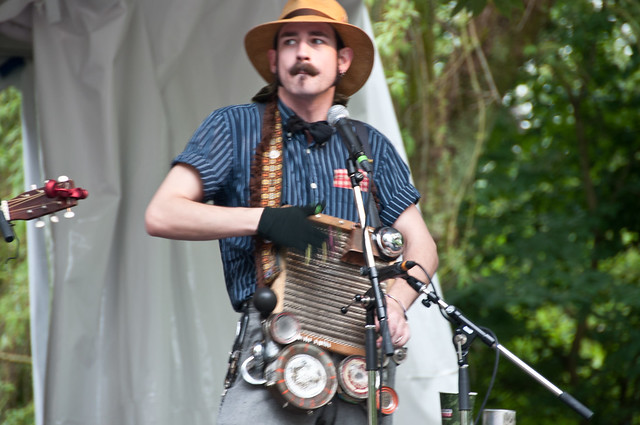
Ryan Koenig gives Pokey some serious competition for the spotlight on just about every tune, alternating entertainingly delivered accompanying vocals with some of the most intense harmonica going, then putting down his harp and strapping on his homemade washboard, complete with dishes and a bell, which is fascinating to watch.

Photo from arianecdesign.com

Photo from beforetheblink.com


The self-effacingly self-described "rhythm kings" of the band are Adam Hoskins on guitar and Joey Glynn on standup bass.  I'd never seen anyone play standup bass before this band and really looked forward to the experience. Checking out Joey's bass on the stage before the show began at Third Man, I wondered how the heck you got sound out of string like that-- The lower strings looked practically like twine.  When he started slapping away, I was spellbound by the thumping beat he created.

Photo by Corey Warner


But some of my favorite moments came from Adam Hoskins and his gorgeous vintage acoustic guitar.  When he jokingly referred to himself as one of the "rhythm kings" of the band, he was actually way off base.  He plays some of the most beautifully articulate guitar I've yet heard, with perfectly clean technique whether he's finger-picking notes or sliding a bottle-neck along the frets.  (And talk about endearing-- When I saw the band again, as described below, it was mentioned during the show that Adam had just bought himself a $3,000 vintage Gibson.  When I asked him about it afterward, I was struck by not only how eager he was to get it set up and be able to play it live, but also by his comment that it was the first guitar he'd bought himself with money that he'd earned by playing guitar. It was sweet to see just how gratifying this was for him.) 

Photo by Ryan Leith

So I came home from Nashville and immediately ordered a copy of their most recent record, Middle of Everywhere.  The album is terrific.  But, as fun and fantastic as the music is, the attitude behind it is what makes it real and significant, not just a campy bit of fluffy entertainment.  In the liner notes, Pokey talks about just what this style of music means to him--

...When jazz, blues and country took off early on, where the artists came from was as much of the music as the music itself,  that framework giving deep meaning and relevance to what they were saying and playing.  While the old music may have origins in regions and communities, it's been grabbed hold of and evolved as it's spread across America.  For me, the point is to find my place in this changing landscape and continue to express myself speaking the language of the old music while holding on to the roots.

It's that compulsion to keep this music alive rather than just to recreate it that makes it essential listening for anyone who cares about the history of American music.  Even if it's not your bag, it's hard to deny that maintaining that "language of the old music" is a worthwhile undertaking for young contemporary artists like Pokey and the South City fellas.  Like losing any other historic language, for this music that's so rich in history and culture to go extinct would be a sad and unnecessary loss

I followed the show in Nashville a few weeks later with a, get this, free show at Hill Country BBQ in Washington, DC, where I danced, talked to a couple of the boys in the band, and picked up a cd of their earlier record, Riverboat Soul.  The crowd at Hill Country packed the downstairs bar/performance area and was apparently full of friends and long-time fans of the band, and the atmosphere of the over-two-hour long show was joyous.  These boys work hard and seem to enjoy every drop of sweat they put into their performance as much as their audiences do.  If you get the chance to go see 'em, do yourself a favor and do so.  I intend to every chance I get.


Pack It Up at the Watermelon Park Festival in Berryville, VA, a show I would have attended if it hadn't been an hour and a half away and pouring down rain when I left work that night.  Comments from the audience at Hill Country BBQ made me very sorry I'd missed it--

So, now that we've stepped back, let's follow Pokey and the boys and step forward to keep the wonderful traditions of this music alive.  As Pokey says, "We'll see you down the road..."  Let's just hope it's a long one.


October 28, 2011

Back to Mississippi: Exploring the Delta, part II

Freaking hell, it was cold in Clarksdale when I woke up on this day.  And still grey as a tomb, though the sun ended up breaking through the clouds after I got on the road and headed along the very scenic way towards Tennessee and Nashville.

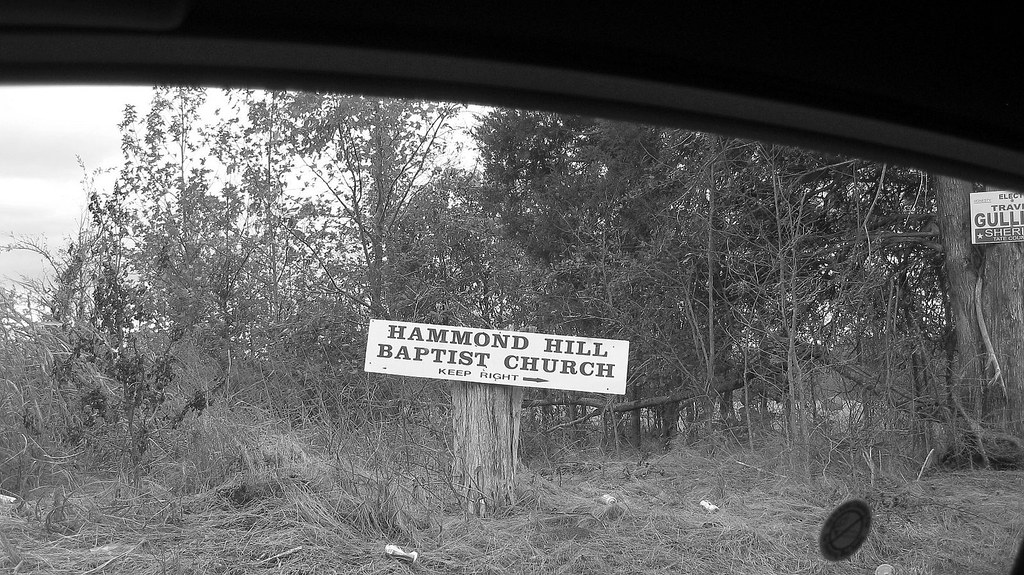
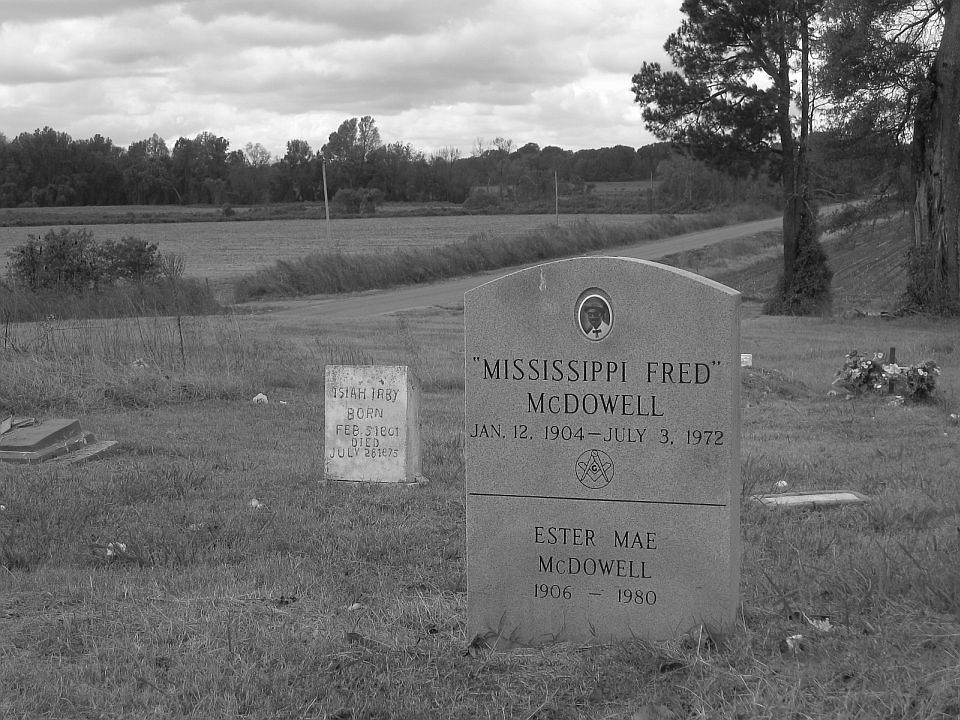
After the same breakfast as yesterday again at the Rest Haven, I steered the Shark up route 6 to route 55 with the plan to stop in Como on the way to Senatobia in order to find the gravesite of Mississippi Fred McDowell.  Como's so small it didn't even have a stoplight, but it did have Blues Trail markers for both Fred and fife master Otha Turner.  Fred's mentioned that he was buried north of town at Hammond Hill Missionary Baptist Church on Hammond Hill Road, but the young guy at the gas station where I asked didn't know where it was.  Just for shits'n'giggles, I decided to head up route 51, which parallels the larger, four lane route 55 up to Senatobia.  Went a little ways looking for Hammond Hill Road, but when I crossed into the next county it seemed that I was on the wrong side of the north end of Como.  So I decided to turn around and head back to check out the other side of town.  Picked a random side road in which to pull a u-turn and, lo and behold, there was a sign for Hammond Hill M.B. Church that wasn't visible from the direction I'd been headed.  


That road ended at a T intersection, but there were no more signs specifying a direction to the church.  Made another random decision and headed right (The first sign said "keep right", right?).  About a mile down, tucked next to a crossroad between pine and sweetgum woods on one side and empty fields on the other, was Hammond Hill M.B., with the cemetery on the hill across the street.  I always get a hell of a kick out of such serendipitous discoveries.


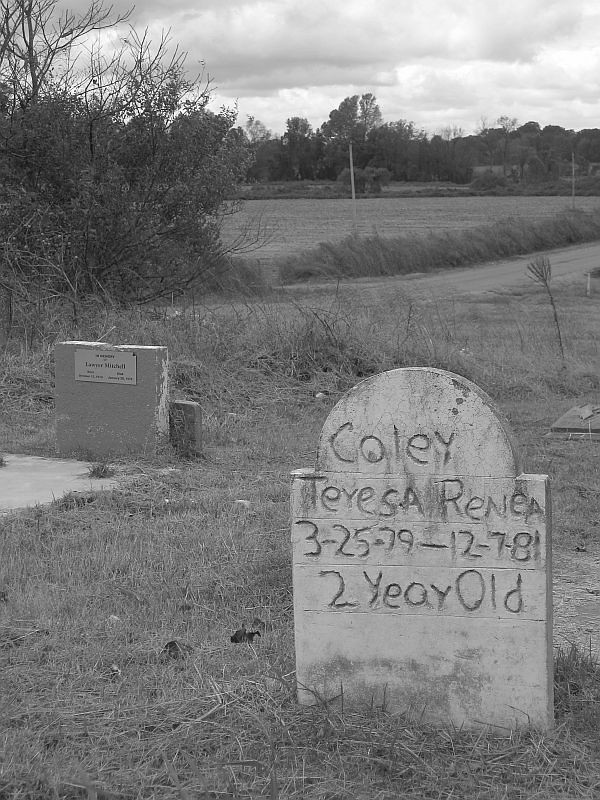
Hammond Hill cemetery had many of the same style of home-made headstones I'd seen yesterday at Charley Patton's gravesite, in addition to newer ones on which much more money has obviously been spent.


From Como, the Shark and I headed up to Senatobia, then juked east toward Holly Springs to see if I could find a record shop listed on the Mississippi Music Tourist Sites map-- Aikei Pro's (Pronounced "ecky", as in "ecky thump". Some of you will catch the White Stripes connection...)  Stopped first to choke down the worst fried green tomato po'boy in the history of southern cooking (fried green tomatoes should be breaded, not battered), then asked at the lunch counter if they could direct me to the street where the shop was located.  The woman who worked there didn't have any idea, and when she asked a local who'd come in to pick up carryout, we were told that the record store had closed.  I went back out and drove around anyway, and within five minutes had found both the old town cemetery (of course, I have a built-in radar for these things) and Aikei Pro's.  Wondered whether perhaps the woman at the lunch counter was correct, because when I peeked in the door it appeared that there were piles of records and magazines and Lord knows what other sorts of junk leaning up against each other just inside.

Photo from thefrontlinemusic.com
It was hard to tell if there were any signs of life inside, though.  Started to head back to the car, where a down'n'out local started to pester me for a ride to somewhere, when the door of the shop opened and out squeezed a college-aged white girl and a grizzled little old black man.  After she thanked him and wandered off, I squeezed as far in as I could get (which was about one foot), said hello to the grizzled guy and told him I'd heard this was the place to come for good records.  He laughed and started talking, and it was an hour before I got myself back into the car.  Mr. Caldwell talked to me about how there's no such thing as hill country blues-- That's something created by the white folk because they came along and wanted to be a part of things.  All blues are delta blues, no matter whether the musician playing them came from Mississippi or Texas. He went on to describe his experience of coming to Mississippi from Kentucky after serving a handful of years in the army in Europe-- After being called a nigger for the first time in his life and being told to go back where he'd come from, he decided that, no sir, he was going to stay put.  In his time in Holly Springs, he's since seen them desegregate the local schools and elect a black mayor. I can't help but think that he had at least a little to do with that.  But he also told me that if we went back to the lunch counter that very afternoon and ordered coffee, that he wouldn't be served.  I'd like to think that's not true, but we didn't put it to the test.  In hindsight, perhaps I should have offered to buy him a cup.  He's apparently also pretty famous amongst blues aficionados (he showed me a couple of magazine articles he's been interviewed for), as well as a good friend of Junior Kimbrough.  The one thing I could actually see in the shop that I wanted to buy was a record of Junior's up on the wall, but Mr. Caldwell told me that album wasn't for sale for any price. I'm unable to embed the video from this link, but you have to go and watch it in order get a feel for the place and the man-- Portrait of a Record Dealer: Holly Springs, MS - Aikei Pro's. (If the video there doesn't work, go here. Or check the one below that I found when updating/editing this post on 3/13/2017)


Back on the way towards Tennessee, the empty roads I'd become used to began to fill up with more and more traffic.  By the time I got to Nashville, it was well after dark, I was hungry, tired, and pissed off at being challenged on the highway by assholes in SUVs.  Much as I was looking forward to the plans I had for N'ville, couldn't help but wish I was back down in the Delta at the Shack Up Inn, listening to that cold wind blow outside the windows.


Complete set of photos from this trip, here.


October 27, 2011

Back to Mississippi: Exploring the Delta, part I

It's a cold, grey day in Clarksdale.  I've returned for a more extensive visit than last year's, back again at the Shack Up Inn, but with a different ride.  Lucifer the Pony, a black Mustang, has been replaced by a silver Camaro that, with it's wide mouth-like grillwork and side "gills", reminds me of a shark.


The weather, though, is just as unsettled as last year.  Woke up this morning to the sound of wind whipping around outside the windows of my Cadillac Shack.  Broke the night's fast at the Rest Haven restaurant, smoking a cigar while waiting for two eggs sunny-side up with a pork chop, surrounded by good ol' boys who were all also puffing away while waiting for their meals.  Smoking in restaurants is enough of a novelty these days, at least where I come from, but is even more exotic before breakfast.  Reminded me of my crotchety grandfather who began each day with coffee and a cigarette, which was soon followed up with the first of many Budweisers.  But back to Clarksdale-- The topics of conversation among the Rest Haven regulars that morning ranged from deer hunting to ant and roach control.  A handful of Japanese tourists then wandered in and squeezed into the booth in front of mine to complete the scenario.  William Least-Heat Moon wrote in Blue Highways that the more calendars on the wall in little country restaurants, the greater the guarantee of good food.  Rest Haven has only one calendar, but I've now had the same breakfast there three times and the pork chop has been perfect every time.  So much for Least-Heat Moon's rule.


Headed into downtown Clarksdale, such as it is, to re-visit the Delta Blues Museum, then stopped in Morgan Freeman's Ground Zero blues club for a post-breakfast Coke and peach cobbler.  Perhaps it's ignorance or snobbery on my part, but I just don't think much of Freeman's place.  His intentions are good, but it's like Bourbon Street is to New Orleans-- You get only a gloss of the real thing, a touristified version.  I'm sure the music booked at Ground Zero is very good, but the atmosphere, with the encouraged graffiti of visitors on every bare bit of wall and ceiling and the studied dilapidation, is just too cheesy for me.  And their peach cobbler leaves much to be desired.

While spooning up the gooey, soggy cobbler, I sat and contemplated the scribbles all over the bar and the wall behind it.  What is with the need people have to write on walls, anyway?  From graffiti to bathroom stalls to places like Ground Zero, where it's encouraged, to the shacks at the Shack Up Inn, where it's specifically not-- Is it some sort of cry for attention?  Or perhaps, on a deeper level, a fear of mortality?  So many people seem to have the need to be seen, recognized, remembered, even if it's only by anonymous strangers.  They need to leave a bit of themselves for eternity, even though their graffiti'd scribbles represent nothing worth being remembered for.  Though as I write this, it occurs to me that perhaps it's not all that different from babbling to the anonymous interwebs in some blog...

Braced by breakfast and the double shot of sugar from Coke and cobbler, I mapped a route around the Delta that headed east and then south on 49, east on 8, south on 7, then west on 82 to loop back towards the Mississippi River, north a ways along 1, and then back over to Clarksdale, then queued up the soundtrack for my wanderings--  John Lee Hooker, Robert Johnson, Son House, and the White Stripes Live in Mississippi.  The last is significant because it was their final show as a band and was, ironically in light of Jack's deep love of Delta blues, the first and only one they ever played in Mississippi, at a venue between Clarksdale and Memphis.  John Lee's Boogie Chillun was the band's walk-on music to begin the show, and after a moody, brooding version of Death Letter, Jack very touchingly thanked Son House for letting him finally come home.  He ended that last show by saying God bless you to both House and Robert Johnson, and so I felt it was fitting and necessary to include this album in the day's listening.


Stopped at a convenience store outside of Tutwiler for a package of dill pickle-flavored sunflower seeds and couldn't help but compare the real dilapidation of empty store fronts next door to the faux effects at Ground Zero.  The faces of a handful of older gentlemen lounging outside matched the buildings, but the freshly mopped floor of the bathroom inside the convenience store was spotless and had just enough of a bleach aroma to smell clean as a sunny day. 

I feel alien in places like this, with my fast rental car and my rock'n'roll attire, having slept comfortably the night before in a restored version of the sort of sharecropper's shacks that still line many of the roads down here.  What am I documenting when I snap photos around here?  I've felt the same thing driving through certain neighborhoods of Baltimore back home.  Am I romanticizing a place and people I don't fully understand?  My family was pretty poor when I was a kid and I'm far from well off now, so I have some idea of what it's like.  But this seems to be a level of poverty I've never experienced anywhere near firsthand.  Or is life around here really not as hard-scrabble as I imagine based on appearances?  What's the reality?  Without living it the way these people do, I'll likely never know, and that leaves me uncomfortable about pulling out the camera in these spots where I find a sort of desperate beauty and picturesqueness.


Heading down South 49W towards the site of the notorious Parchman Farm, you pass a sign that reads "Penitentiary area.  Emergency stopping only next 2 miles."  And yet there's a Blues Trail marker directly across the road from the prison, which is now the Mississippi State Penitentiary.  Of course I pulled over to snap a photo of the sign, then turned my head to look across the street and found a handful of inmates, in their distinctive green and white striped pants, lounging near the gate and watching the crazy tourist who wasn't supposed to stop.  One of the more notable inmates of Parchman was Son House, who spent two years there supposedly for killing a man in self-defense, though there is apparently some debate over the accuracy of that story.


Between stops, the Shark and I rolled past the ubiquitous, endless cotton fields of the Delta, which is not as monotonous as you might think.  Fallow fields of empty dirt rows alternated with harvested fields bordered with huge rectangular bales of compressed cotton, along which the roads were scattered with loose, dusty white puffs.  Occasionally you pass an unharvested field in full bloom and the white of the cotton against the brown of the plant stems creates a silvery shimmer that, on this day, mirrored the grey of the cloudy sky above.


Unfortunately, I got so caught up in the joy of moving fast on un-trafficked backroads that I missed the turn to the church where Mississippi John Hurt is buried outside of Avalon.  Wanted to also find Robert Johnson's gravesite (the official one, according to the Mississippi Music Tourist Sites map I was using as a reference), but drove around Greenwood without finding the right road.


Looked for something to eat while in Greenwood, too, but there appeared to be nothing except the usual fast food and chain restaurants.  Until I got to the edge of town and caught sight of a little shack with smoke pouring out of the side of the building and a bunch of cars out front.  Turned out to be the Rib Shack, of which Johnny Edwards is head chief (according to his business card).  I ordered a pulled pork sandwich with cole slaw and a side of baked beans.  Would have sat right there in the car to eat it, but felt I was providing a bit too much entertainment for the locals.  One gentleman asked if I was from around there.  When I said no, he confirmed that he didn't think so, 'cause he didn't think he'd seen a Camaro around town.  When my food was ready, I headed down the road and found an empty public park, where I sat and had a very windy picnic of gloriously succulent pork.  If you ever find yourself in Greenwood, MS, be sure to look around for Johnny's shack. 

One pilgrimage site I did manage to find was the gravesite of Charley Patton, in a sad excuse for a cemetery next to Hicks Cotton Gin outside of Holly Ridge.  Just a scrubby field scattered with graves, many with nothing but a small, plain white cross, some unmarked at all, and a few collapsed to the point that you'd fall in if you weren't watching where you were walking.  Most touching of all, for a reason I can't define, were the plain concrete slabs that had name and dates of birth and death scratched in by hand, like the way people scratch their names into freshly poured concrete on a sidewalk.  There was something very caring about those headstones, despite the bleak simplicity of them.


Wandered about for a bit, but the place was so disorganized that I couldn't find what I'd come for right off.  The wind began to push me back toward the car, but then a good ol' boy wandered over from the gin and asked if I was "looking for Charley".  The way he asked-- not "was I looking for Charley Patton", but "looking for Charley"-- was so disarming I couldn't help but smile.  He pointed me in the right direction and walked with me a bit, asking where I was from, then headed back over to work while I trudged the rest of the way through the dusty grass to the spot.  Stood there looking at the headstone and accompanying empty bourbon bottle and tried to imagine the slight, ornery man with the growling voice and flamboyant playing style.  Patton was one of the first precursors to today's modern rock stars, though few of those rock stars probably realize it.  I couldn't help but wonder how Charley might've felt if he'd had any clue that people like me would make pilgrimages to his grave in the heart of the Delta, eighty years and more after his death.


Ended the day back at Ground Zero for some passable electrified blues.  Decent stuff, but not as moving as Johnson's or House's acoustic blues or as mesmerizing as Hooker's groove or Patton's growl.  And certainly not as gut-wrenching as any version of the blues from the White Stripes, but decent enough for an evening's diversion.  Fell asleep worn out from hours of driving, listening again to the wind blowing around the edges of the windows of the shack.

Full set of photos from the trip, here


October 10, 2011

Why don't you just take the night, wrap it all around me

I've written before about my fascination with the effect music can have on us.  I've read one book on the topic so far that unfortunately fell short of a satisfying explanation, and am currently in the midst of two others (Oliver Sacks' Musicophilia and Robert Jourdain's Music, The Brain, And Ecstasy)  in the hopes that at least one of them will provide more insight.  I want to understand this--  How can certain combinations of chords, melody, rhythm and, specifically for me, voice and words, sweep us to such intense heights of emotion?  How can a mere song inspire an addictive craving to hear it over and over and over again?  If anyone out there knows... please, explain it to me.

The latest song to have this effect on me is one that I first heard about a few weeks ago, when it was announced that Q Magazine was releasing a special issue including a bonus cd in tribute to U2's Achtung Baby.  Amongst the artists covering tracks from the original album was Jack White.  I immediately pulled up a video of U2's original to get an idea of what he'd be working with.


Took one listen for me to fall in love with the song.  I've never been an outright fan of U2, but this and other tunes like With Or Without You stir every romantic yearning I've ever had.  The blend of words, Bono's voice, and the music effectively brings me to tears.

But tonight... Tonight Jack's cover version was leaked onto the internet and moved me in a way I think nothing I've ever heard before has.  So many elements of it are typical of his style--  The interplay of acoustic and electric guitar, the high pitched vocals, the drama... but, at the same time, it's so very different from anything he's done before.  In this one song he's taken every one of those familiar elements to a higher level than I've heard from him before.  The man is known for passionate performances, most famously on the White Stripes cover of Jolene and the Raconteurs' Blue Veins, but this one contains a sustained tension and passion that tops anything I've heard from him yet.  As incredible as his own songwriting is, he's got a brilliantly uncanny ability to take other people's words and music and transform them into something so much more powerful than the original artist created.  I've been left with my eyes wide, my jaw dropped and my heart pounding, and I can't stop listening to it.   


Love is blindness
I don't want to see
Won't you wrap the night
Around me
Oh my heart
Love is blindness

In a parked car
In a crowded street
You see your love
Made complete
Thread is ripping
The knot is slipping
Love is blindness

Love is clockworks
And cold steel
Fingers too numb to feel
Squeeze the handle
Blow out the candle
Love is blindness

Love is blindness
I don't want to see
Won't you wrap the night
Around me
Oh my love
Blindness

A little death
Without mourning
No call
And no warning
Baby...a dangerous idea
That almost makes sense

Love is drowning
In a deep well
All the secrets
And no one to tell
Take the money
Honey
Blindness

Love is blindness
I don't want to see
Won't you wrap the night
Around me
Oh my love
Blindness


From ology.com, a review of the song that uses words like "devastating" and "stunning" that I didn't have the presence of mind to summon up: Listen To Jack White Cover U2's "Love Is Blindness"