Drove from Maryland to Florida for a belated Christmas this year. Left Christmas eve morning, well, actually more like noon, and hit the dreaded I-95 Corridor through northern VA. I've driven 95 from Connecticut to the Carolinas (before this trip) and the stretch through Virginia is consistently the absolute worst in terms of traffic slowdowns for no discernible reason. Fortunately, there was a flashdrive full of music plugged into the car dash and it more than once set both the mood and the pace of the trip, both going and coming back. Though I learned something important on this drive-- Setting music on shuffle makes time go more slowly than listening to something with a discrete time-frame, like a podcast or album.
Hit the border of VA and SC a little after 8pm with the intention of stopping at that famous (notorious?) spot that is the entrance to SC. But South of the Border just does not live up to its kitschy potential. Very sad. Obviously there was a time when it was a fun spot, but those days seem to be over. I thought of staying at Pedro's motor inn just for the fun of it, but lost the taste for it after taking a quick spin down the road beyond and passing a gentleman's club and "Asian spa", where I would swear a drug deal was taking place as I pulled a u-turn in the lot. Went back and wandered the deserted aisles of Pedro's gift shop looking for a fun memento or silly gift for a co-worker, even just a bumper sticker or post card, but came up empty-handed. Just a lot of nothing clever there.
Woke up Christmas morning a little farther south than South of the Border and got back on the highway. Spent half of Jack White's album Blunderbuss tucked into a line of four cars doing a consistent 90-100mph. No one was being competitive, there was no tailgating, no passing. Just smoothly pacing each other at high speed. It was great. Then in the middle of Trash Tongue Talker we came up behind a clump of slower cars that couldn’t be easily passed and it all fell apart.
When we finally got by, the two in front got slow, the guy from New York who’d been bringing up the rear got aggressive and that was it. All good things must come to an end. A few songs later, after one had gotten off at an exit and I’d passed the two who’d been leading, I put on the brakes myself to let New York get in front of me, and then watched him proceed to tailgate and pass cars up ahead, to the point of using an on-ramp to pass a truck on the right.
On my own again and with 300mph Torrential Outpour Blues set on repeat, I started taking a closer look at the scenery, sizing it up and drawing conclusions about it. I think I wrote once years ago about driving through the desert of Utah and feeling that the landscape there, so wide open and lacking in coverage or shade, so much hot sun relentlessly pounding down on your head, could drive a person mad. But I got the same feeling looking at the landscape passing alongside the road in S.C. Instead of wide open, it’s dense with thick, seemingly impermeable stands of tall, dark pines and scrubby undergrowth, here and there immersed in stands of swampy water. Having to make your way through that back in the day before there were highways or even many roads would be a tricky thing for the sane, though a convenient thing for the insane or merely surreptitious looking for places to hide. And if you weren’t mad already, I could easily imagine it making you mad, all rough bark and sharp needles scratching at your brain. So easy to picture those convoluted woods filled with moonshine stills and guys like Ernest T. Bass.
Hopped off the highway for a moment for a break and bought a pack of Raisinets and a black-and-white, Harlequin-painted resin skull at the truck stop. Made sure to say “Merry Christmas” to the woman at the cash register as I paid for it. It was very tempting to follow the narrow road down through the pines on the other side of the overpass, but instead I hopped back on the highway and took off to the tune of Bear Cat.
Had to chuckle a bit at the GA border over the fluttering U.S. and S.C. state flags, landscaped palm trees, and graciously worded signage (“Thank you for visiting South Carolina"). What is it about S.C.’s relationship with Georgia that made them put this up, in contrast to the sketchy neon kitsch of South of the Border up north by N.C.?
95 through Georgia spread immediately from S.C.'s 4 lanes split by a swampy pine divider into 6 wide open lanes with a Jersey wall divider. It also immediately became quite dull, aside from frequently having to pass folks with their brains stuck on cruise-control in the left and middle lanes. The monotony was broken here and there by marshy rivers like the Jerico and Cat Creek, which reminded me of Jug Bay and Blackwater back home in eastern MD.
Perfect road-trip song, huh? Though I may live a predominantly static lifestyle, afraid to let go of the stability of a steady, well-paying-though-usually-unstimulating job, trips like this and the rest of the travelling I’ve done the last few years are necessary to keep me sane. Certain family members might consider some of the travelling I’ve done to be irresponsible and selfish, but my feeling is that I have to do it now while I can. I couldn’t afford to do it when I was younger, and in a handful of years I may have to take on the sort of responsibility for others that I’ve always shied away from. I don’t know what to expect, but the possibility of it is what drives me now to drive and fly and follow my addictions to road and music. Now is when I can do it and I have to take advantage of that.
After all the billboards along the highway had left visions of peach salsa and peach cider and peach ice cream and peach bread dancing in my head, I was very disappointed that Peach World was closed for Christmas Day.
Spent several miles debating who recorded the better version of Solid Sender- Chico Leverette or John Lee Hooker.
Totally different songs, not variations of the same. Both have strong selling points, but I'm inclined to lean towards John Lee.
Crossed over into Florida to the tune of Son House’s Death Letter. I don’t have much to say about Florida. It’s not my favorite state. The natural flora is exotic and mysterious and sometimes beautiful, but the human development (I almost said “encroachment”) seems mostly haphazard and ill-conceived, and frequently shabby. I’ve seen some interesting and even wonderful things in Florida (culture in Sarasota, the Edison-Ford Winter Estates, incredible cloud formations), but overall the state just leaves me on edge. It’s a hard place for me to relax in. Though I’ve always experienced it through the prism of family or work, so maybe this trip, driving through so much of it on my own, will let me form a different connection with it.
Connections might be tough to form, though, as there seem to be damned few places to stop. Went all the way from Jacksonville to Ocala via routes 10 and 301 with nary a rest area or hotel/restaurant haven, and thought I was going to be out of luck dinner-wise in Ocala. Cruising the outskirts of town, the Family Dollar store was open, but Burger King was not. That says something. Thank goodness for Aunt Fannie’s Restaurant, which, as the servers kept answering the phone near me at the counter, was “open 24 hours a day, 7 days a week, 365 days a year!” The counter was so high that I felt like a little kid sitting there, especially as the stool was also so high that my toes didn’t touch the floor and the glass they served my sweet tea in was so big it took two hands to grab and lift it to my mouth. A bit Alice In Wonderland-ish, but the ham steak was damned good. Three hours to go, headed back to the highway accompanied by Hank Williams’ 6 More Miles To Go.
Looked over my left shoulder a while later to see the Full Cold Moon rising. Listened to Son House singing Pearline and tried to imagine him at 60-something in a recording studio with “Blind Owl” Alan Wilson helping him to remember his old songs. Was Pearline one he originally did way back when, or was it made up during those studio sessions? I should look that up some day, see if I can find out. It’s my favorite of his songs, with lyrics that consist of pretty much nothing but “Pearline, what’s the matter with you?” and “Pearline, I love you”. His slide guitar sums up everything else about their relationship in between those two sentiments.
One of the truisms of the road—No matter what state you’re in, a dark highway is a dark highway is a dark highway.
January 2, 2016


December 8, 2015
Jug bands and Joe Bussard
 |
| Image borrowed from Dust & Grooves |
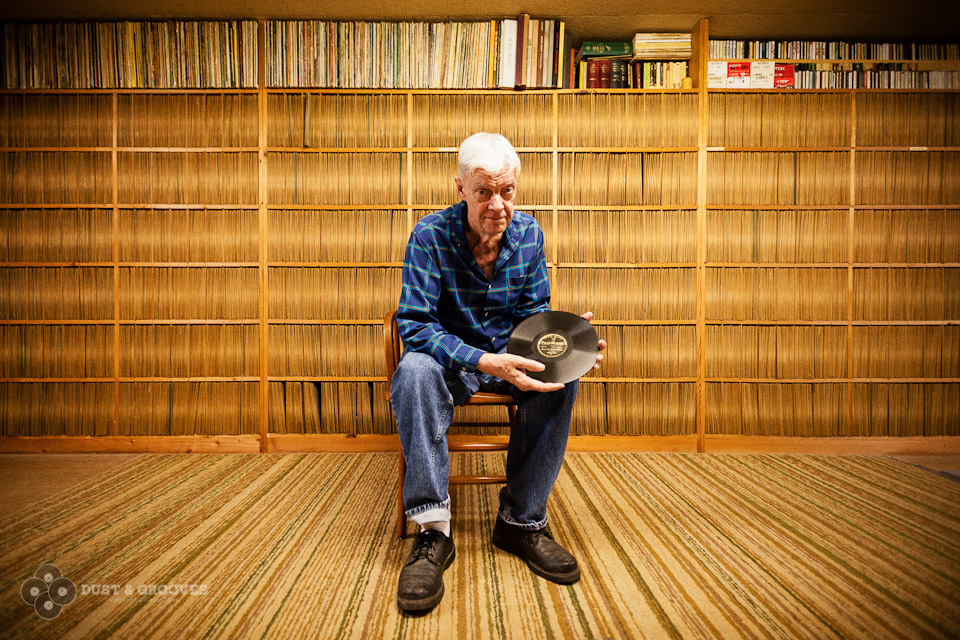
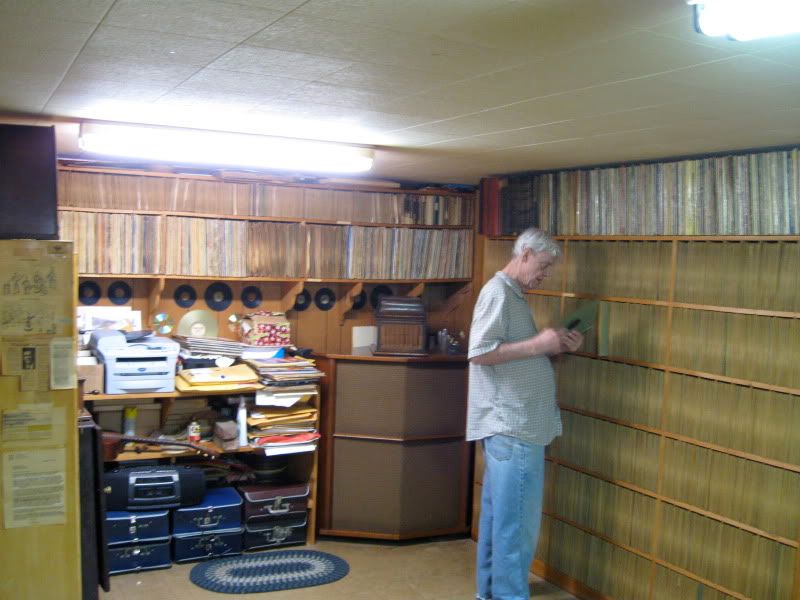
Joe's well known in a small, somewhat esoteric circle of music historians, record collectors, lovers of old-time music. The Dust and Grooves article linked below the photo above is where I first heard of him. I was tickled by the fact that he lived so nearby, but figured I'd never meet him. I learned more about him and that incredible room in his basement when I read Amanda Petrusich's Do Not Sell At Any Price, an essential read for anyone interested in the history of American music, but still figured I'd never run into him on the streets of downtown Frederick. And then one of my favorite local record shops posted on Facebook that they were going to host a release party for The Year of Jubilo, a new cd compilation of Civil War songs culled by Joe from his collection. Hot damn, I could meet the man. When I did, he got a kick out of the way I bopped around to the live music provided by The Capitol Hillbillies and said "You should come up sometime and I'll play you some records!" You have no idea how excited that invitation left me. A week or two later, after an e-mail exchange and a phone call, I was on my way to Joe's house on a wet, chilly Saturday morning.
I tried to take notes of the records he played for me during the three and a half hours I was there, but I didn't want to talk while the music was playing and when each song ended, he was either flipping the record in a flash or slipping it in its sleeve and jumping up to comb the shelves for another one faster than I could write. I ended up with a piece of paper full of scribbles down the middle and around the edges and feel like I didn't write down even half of what I heard. Joe started with 20s jazz, then into jug band, harmonica music, country blues, then he sat down on his couch and played me a bit of screwdriver slide guitar (beautifully, too), and then went back to the records with a dive into 40s and 50s country. And then I had to get on the road, but not before he played a couple of wax cylinder records and some Edison diamond discs on a windup player.
My education in this sort of music began a couple of years ago with the two volume set, The Rise and Fall of Paramount Records, from Revenant Records and Third Man Records. They're a fantastic start to studying American music history, with 1,600 songs and a couple of books thick with information, like four years of high school devoted entirely to the vast catalogue of music released by Paramount. Stepping into Joe's basement and having him play dj for you is like graduating and going off to college. There are so many directions to go in, so many connections to make, and he's a challenging professor to keep up with. On this first morning, the first lesson I came away with had to do with jug bands.
If you're like me, the idea of a jug band most likely initially summons up an image of Appalachia and hillbilly music. And yet, like so much of American music, jug music originated with African-American musicians in urban environments. Which explains the surprising diversity of jug music, as African-American players of that era were apparently rarely as conscious of genre as the historians who've come along since to classify them. They just played, using whatever instruments were at hand or creating new ones from whatever was lying around. As a result, the jug became a bridge between styles, providing a bass line for pretty much any combination of instruments you could think of. Pair it up with a clarinet and piano, and you've got sophisticated, swinging jazz. With a guitar and maybe a harmonica, you could create deeply mournful blues. Throw in a fiddle and there's the Appalachian tone that I think most people would associate with it. And it can be incredibly subtle-- On at least one song, I didn't even realize what I was listening to was a jug rather than a stand-up bass until I heard the musician's breath.
Some highlights of jug music and a few other things Joe played for me that I was able to find on YouTube--
Lordie, that harmonica... And to close it out, a tune used in a documentary about Joe--
And, holy heck, look at the lone speaker there in the corner that Joe plays his music through. Filled that room like nothing I've heard before.
 |
| Image borrowed from this person's tale of his own Joe experience |
Needless to say, there will be as many more lessons as Joe's willing to give me. Soon as I can get a free weekend to head back down into that basement.
December 6, 2015
A walk in the woods, with a double
After Cassie at Lost Dog slipped a double espresso into my Walk In The Woods, I went for a walk in the woods. There, a pair of oyster fungi led to a rusted old coffee can which led to this---
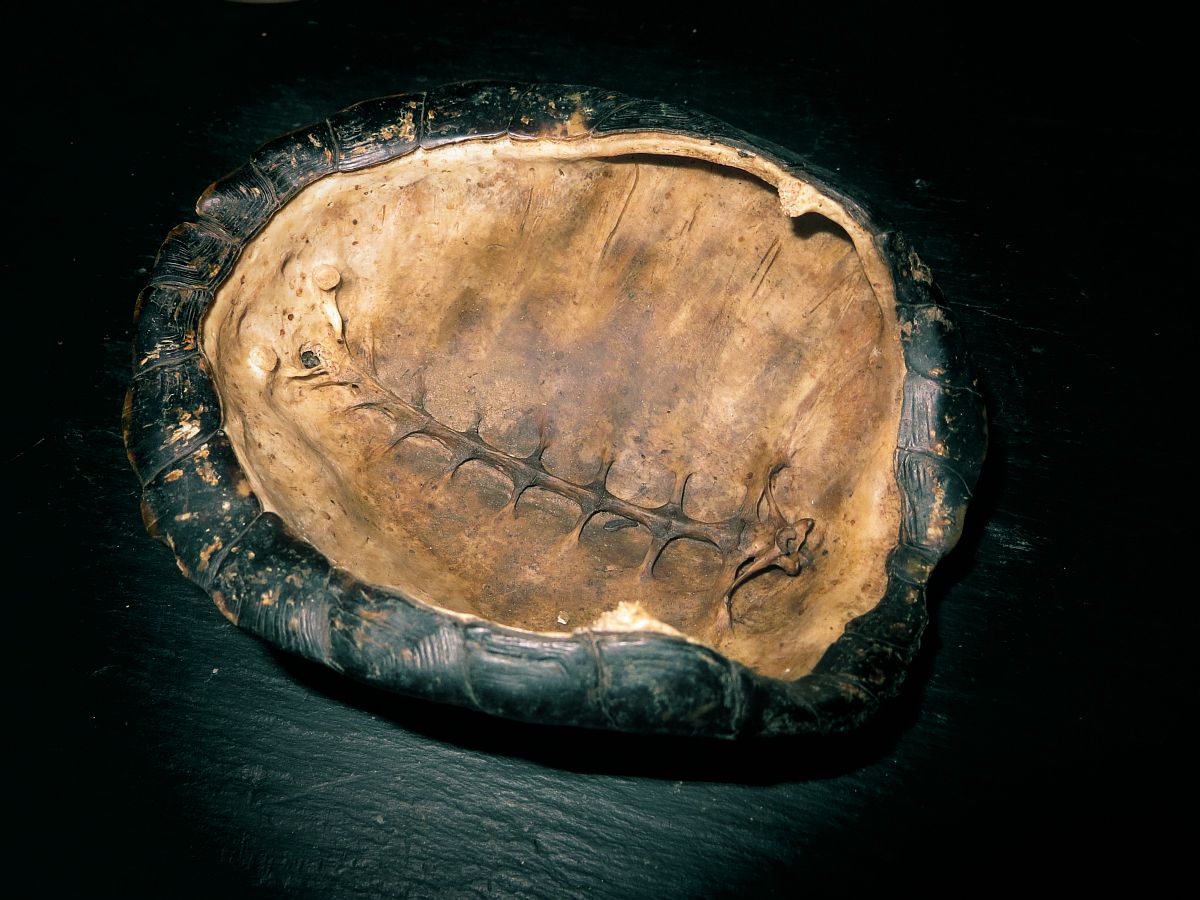
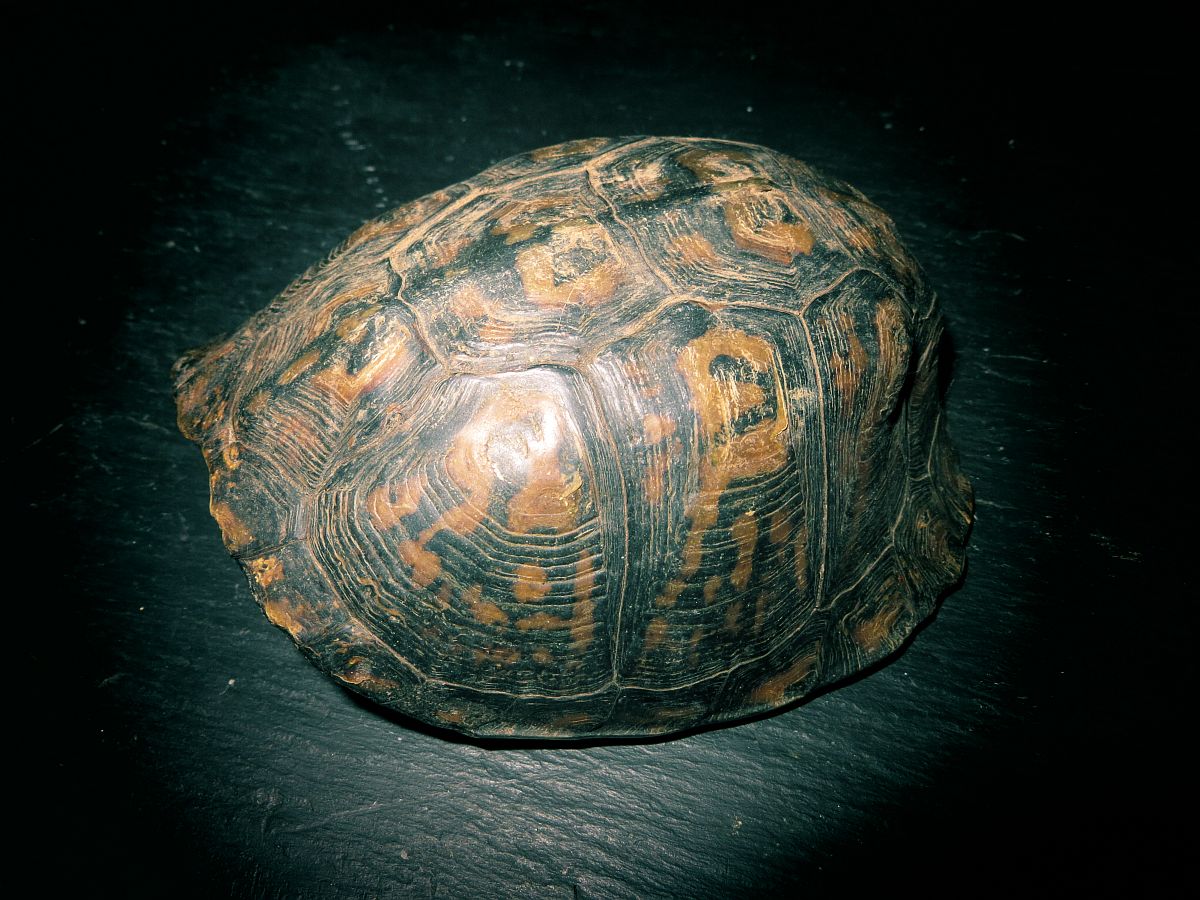
I don't ever intentionally drink coffee, but that turtle shell is quite a prize.
I don't ever intentionally drink coffee, but that turtle shell is quite a prize.
November 8, 2015
A night at the museum: The BMA, 11/7/15
The spotlight was an ugly thing. Metal fixtures clustered high on a metal pole, yellowish glaring light that could blind you if you accidentally raised your eyes in its direction. But the silhouette its harshness created-- crepe myrtle branches cast like a photographic plate in black and sepia against the marble wall, sharply focused where the branches were close to the building and blurred where they were farther-- was so strikingly lovely it took my breath away. I'd driven through heavy traffic all the way to Baltimore after a long day at work and spent $30 on a ticket for an event that proved so dull I walked out during intermission, but that shadow on the wall was worth it all.
October 25, 2015
This is Baltimore, vol. 238
Teavolve was too busy,
Lebanese Taverna was not.
Fest in full swing in Fells.
A sweet pitch of orioles in the sculpture garden
(without a ball or bat among them),
a raucous murder of crows in Wyman Park Dell.
Playing spoons with a jug band in the museum.
This is Baltimore.
Lebanese Taverna was not.
Fest in full swing in Fells.
A sweet pitch of orioles in the sculpture garden
(without a ball or bat among them),
a raucous murder of crows in Wyman Park Dell.
Playing spoons with a jug band in the museum.
This is Baltimore.
August 14, 2015
The delights of music, math, and hokum
So I've been reading Bob Dylan's Chronicles, Volume One, getting close to the end at this point. Hit a passage the other night that struck me and got me excited, in which he talks about feeling stuck, like he can't perform anymore. Inspiration came to him through the memory of a lesson he'd learned from Lonnie Johnson, a blues/jazz musician I only have one record from but whom I absolutely love. Along with Little Willie John, Lonnie's one of my favorite crooners.
I owe a big thanks to thebobdylanfanclub.com for typing out that passage from Chronicles so that I don't have to. Here's the part that jumped out at me:
“Besides my devotion to a new vocal technique, something else would go along with helping me re-create my songs. It seemed like I had always accompanied myself on the guitar. I played in the casual Carter Family flat-picking style and the playing was more or less out of habit and routine. It always had been clear and readable but didn't reflect my psyche in any way. It didn't have to.
The style had been practical, but now I was going to push that away from the table, too, and replace it with something more active with more definition of presence.
I didn't invent this style. It had been shown to me in the early 60's by Lonnie Johnson. Lonnie was the great jazz and blues artist from the 30's who was still performing in the 60's. Robert Johnson had learned a lot from him. Lonnie took me aside one night and showed me a style of playing based on an odd- instead of even-number system. He had me play chords and he demonstrated how to do it. This was just something he knew about, not necessarily something he used because he did so many different kinds of songs. He said, "This might help you," and I had the idea that he was showing me something secretive, though it didn't make sense to me at that time because I needed to strum the guitar in order to get my ideas across. It's a highly controlled system of playing and relates to the notes of a scale, how they combine numerically, how they form melodies out of triplets and are axiomatic to the rhythm and the chord changes.
I never used this style, didn't see that there'd be any purpose to it. But now all of a sudden it came back to me, and I realized that this way of playing would revitalize my world. The method works on higher or lower degrees depending on different patterns and the syncopation of a piece. Very few would be converted to it because it had nothing to do with technique and musicians work their whole lives to be technically superior players. You probably wouldn't pay any attention to this method if you weren't a singer. It was easy for me to pick this up. I understood the rules and critical elements because Lonnie had showed them to me so crystal clear. It would be up to me now to expel everything that wasn't natural to it. I would have to master that style and sing to it.
The system works in a cyclical way. Because you're thinking in odd numbers instead of even numbers, you're playing with a different value system. Popular music is usually based on the number 2 and then filled in with fabrics, colors, effects, and technical wizardry to make a point. But the total effect is usually depressing and oppressive and a dead end which at the most can only last in a nostalgic way. If you're using an odd numerical system, things that strengthen a performance automatically begin to happen and make it memorable for the ages. You don't have to plan or think ahead. In a diatonic scale there are eight notes, in a pentatonic scale there are five. If you're using the first scale, and you hit 2, 5, and 7 to the phrase and then repeat it, a melody forms. Or you can use 2 three times. Or you can use 4 once and 7 twice. It's infinite what you can do, and each time you would create a different melody. The possibilities are endless. A song executes itself on several fronts and you can ignore musical customs. All you need is a drummer and a bass player, and all shortcomings become irrelevant as long as you stick to the system. With any type of imagination you can hit notes at intervals and between backbeats, creating counterpoint lines and then you sing off of it. There's no mystery to it and it's not a technical trick. The scheme is for real. For me, this style would be most advantageous, like a delicate design that would arrange the structure of whatever piece I was performing. The listener would recognize and feel the dynamics immediately. Things could explode or retreat back at any time and there would be no way to predict the consciousness of any song. And because this works on its own mathematical formula, it can't miss. I'm not a numerologist. I don't know why the number 3 is more metaphysically powerful than the number 2, but it is. Passion and enthusiasm, which sometimes can be enough to sway a crowd, aren't even necessary. You can manufacture faith out of nothing and there are an infinite number of patterns and lines that connect from key to key - all deceptively simple. You gain power with the least amount of effort, trust that the listeners make their own connections, and it's very seldom that they don't. Miscalculations can also cause no serious harm. As long as you recognize it, you can turn the dynamic around architecturally in a second."
I mentioned this at a message board where I've been talking to people about Dylan and was told by a guy who worked on the book for the publishing house that employs him that the passage I was so struck by was an example of the "delightfully Dylanesque hokum" that Chronicles is apparently full of. That may be true, and it didn't surprise me. I knew going in that Dylan has a reputation for deception and camouflage and I'd been wondering already what parts of the book were true vs hokum. He may've never met Lonnie Johnson or, if he did, was never schooled by him (though there are people out there who seem to think there's something to the tale). But that doesn't matter, doesn't diminish the beauty of the passage for me at all. It was the mathematics of it that fascinated me. I'm not a mathematically inclined person, my brain just doesn't work that way. I can do simple math in my head, most of the time, but algebraic stuff leaves me flummoxed. So the marriage of math and music is something that fascinates me.
Music is intangible, ethereal. Even if you own a record, you only own a piece of vinyl in which sound waves have been captured. What those sound waves contain, though, can't be held in your hand. Music is stories, notes that can break your heart or uplift you. Music can bring you to tears of sorrow or joy. Music is the only form of art that you can enjoy while doing other things, like driving or jogging or washing the dishes. It's the only form of art that makes us move. That's how we're able to connect other experiences to music and, I think, a large part of how music creates a sense of nostalgia in us.
Math is intangible, too, but there's nothing ethereal about it. It's fact, it's cold, hard, rational and logical. So the fact that music is based on mathematics blows my mind. And you can't really do other things while you're doing math, nor can I imagine the sight of an algebraic formula giving anyone but a mathematician a nostalgic pang. Math can make you cry, though. I remember sitting in algebra class in high school and yawning until tears came to my eyes, sometimes to the point that a few would slip out and roll down my cheek. One day I was wiping some of those tears away and the teacher asked me "Is this class that hard for you?" I said, "No, it's that boring". That's no hokum.
You were expecting Dylan videos, perhaps? Here, have one of Bob and John Lennon being silly in a London cab--
I owe a big thanks to thebobdylanfanclub.com for typing out that passage from Chronicles so that I don't have to. Here's the part that jumped out at me:
“Besides my devotion to a new vocal technique, something else would go along with helping me re-create my songs. It seemed like I had always accompanied myself on the guitar. I played in the casual Carter Family flat-picking style and the playing was more or less out of habit and routine. It always had been clear and readable but didn't reflect my psyche in any way. It didn't have to.
The style had been practical, but now I was going to push that away from the table, too, and replace it with something more active with more definition of presence.
I didn't invent this style. It had been shown to me in the early 60's by Lonnie Johnson. Lonnie was the great jazz and blues artist from the 30's who was still performing in the 60's. Robert Johnson had learned a lot from him. Lonnie took me aside one night and showed me a style of playing based on an odd- instead of even-number system. He had me play chords and he demonstrated how to do it. This was just something he knew about, not necessarily something he used because he did so many different kinds of songs. He said, "This might help you," and I had the idea that he was showing me something secretive, though it didn't make sense to me at that time because I needed to strum the guitar in order to get my ideas across. It's a highly controlled system of playing and relates to the notes of a scale, how they combine numerically, how they form melodies out of triplets and are axiomatic to the rhythm and the chord changes.
I never used this style, didn't see that there'd be any purpose to it. But now all of a sudden it came back to me, and I realized that this way of playing would revitalize my world. The method works on higher or lower degrees depending on different patterns and the syncopation of a piece. Very few would be converted to it because it had nothing to do with technique and musicians work their whole lives to be technically superior players. You probably wouldn't pay any attention to this method if you weren't a singer. It was easy for me to pick this up. I understood the rules and critical elements because Lonnie had showed them to me so crystal clear. It would be up to me now to expel everything that wasn't natural to it. I would have to master that style and sing to it.
The system works in a cyclical way. Because you're thinking in odd numbers instead of even numbers, you're playing with a different value system. Popular music is usually based on the number 2 and then filled in with fabrics, colors, effects, and technical wizardry to make a point. But the total effect is usually depressing and oppressive and a dead end which at the most can only last in a nostalgic way. If you're using an odd numerical system, things that strengthen a performance automatically begin to happen and make it memorable for the ages. You don't have to plan or think ahead. In a diatonic scale there are eight notes, in a pentatonic scale there are five. If you're using the first scale, and you hit 2, 5, and 7 to the phrase and then repeat it, a melody forms. Or you can use 2 three times. Or you can use 4 once and 7 twice. It's infinite what you can do, and each time you would create a different melody. The possibilities are endless. A song executes itself on several fronts and you can ignore musical customs. All you need is a drummer and a bass player, and all shortcomings become irrelevant as long as you stick to the system. With any type of imagination you can hit notes at intervals and between backbeats, creating counterpoint lines and then you sing off of it. There's no mystery to it and it's not a technical trick. The scheme is for real. For me, this style would be most advantageous, like a delicate design that would arrange the structure of whatever piece I was performing. The listener would recognize and feel the dynamics immediately. Things could explode or retreat back at any time and there would be no way to predict the consciousness of any song. And because this works on its own mathematical formula, it can't miss. I'm not a numerologist. I don't know why the number 3 is more metaphysically powerful than the number 2, but it is. Passion and enthusiasm, which sometimes can be enough to sway a crowd, aren't even necessary. You can manufacture faith out of nothing and there are an infinite number of patterns and lines that connect from key to key - all deceptively simple. You gain power with the least amount of effort, trust that the listeners make their own connections, and it's very seldom that they don't. Miscalculations can also cause no serious harm. As long as you recognize it, you can turn the dynamic around architecturally in a second."
I mentioned this at a message board where I've been talking to people about Dylan and was told by a guy who worked on the book for the publishing house that employs him that the passage I was so struck by was an example of the "delightfully Dylanesque hokum" that Chronicles is apparently full of. That may be true, and it didn't surprise me. I knew going in that Dylan has a reputation for deception and camouflage and I'd been wondering already what parts of the book were true vs hokum. He may've never met Lonnie Johnson or, if he did, was never schooled by him (though there are people out there who seem to think there's something to the tale). But that doesn't matter, doesn't diminish the beauty of the passage for me at all. It was the mathematics of it that fascinated me. I'm not a mathematically inclined person, my brain just doesn't work that way. I can do simple math in my head, most of the time, but algebraic stuff leaves me flummoxed. So the marriage of math and music is something that fascinates me.
Music is intangible, ethereal. Even if you own a record, you only own a piece of vinyl in which sound waves have been captured. What those sound waves contain, though, can't be held in your hand. Music is stories, notes that can break your heart or uplift you. Music can bring you to tears of sorrow or joy. Music is the only form of art that you can enjoy while doing other things, like driving or jogging or washing the dishes. It's the only form of art that makes us move. That's how we're able to connect other experiences to music and, I think, a large part of how music creates a sense of nostalgia in us.
Math is intangible, too, but there's nothing ethereal about it. It's fact, it's cold, hard, rational and logical. So the fact that music is based on mathematics blows my mind. And you can't really do other things while you're doing math, nor can I imagine the sight of an algebraic formula giving anyone but a mathematician a nostalgic pang. Math can make you cry, though. I remember sitting in algebra class in high school and yawning until tears came to my eyes, sometimes to the point that a few would slip out and roll down my cheek. One day I was wiping some of those tears away and the teacher asked me "Is this class that hard for you?" I said, "No, it's that boring". That's no hokum.
You were expecting Dylan videos, perhaps? Here, have one of Bob and John Lennon being silly in a London cab--
July 27, 2015
Random babblings: Blood On the Tracks and blood on my wrist
Hefted a rain-soaked fawn this morning, surprised at how flexible it was in its stiffness. Walked away with wet hands and a fleck of blood on my wrist.
After breakfast, an Idiot Wind blew me to Breezewood looking for a tunnel on an eroded highway. Wasn't sure how far I'd have to walk, but then suddenly there it was.
On a day like today, you don't realize how hot it is until you stop moving, then sweat and denim combine to smother you.
Other tunnels I've explored have had a light at the end. This one didn't, it was just a throat of hazy blackness. So I sat at its mouth, had a snack, read the graffiti, and watched the tunnel exhale a cool, dusty breath. After a while, fellow explorers were heard long before seen, so I got up and headed back before they could step out of the darkness and destroy the illusion.
Crossed paths with a couple of local boys on the way back and some thoughts crossed my mind that I didn't want to have. What a world we live in. As the young men went on their way, I turned my mind back to the fawn to make the thoughts go, too.
Back at the car, pulled out and hit the road in search of a road on a hill that defied gravity. Blood On the Tracks... blood on my wrist... a runaway truck axle-deep in gravel on the way to Bedford.
Lost my shit and was reduced to giggles coming down the mountain toward the junction with 522 when I took my foot off the gas to coast the descent and watched the speedometer slow down and down and down. Would've just let the car come to a stop in the middle of the highway, but someone was coming down behind me.
At a Pentecostal church along Jack Rd.: "Nothing ruins the truth like stretching it".
Never did find Bedford or that physics-defying hill, but gave into giggles again coming around the first bend of an S curve to see a sign warning to watch for cows in the road.
Looked for the fawn as I approached home, but it was gone. Guess the county came and took it away. Just as well. I can still feel the muscles of its neck on my fingertips and see the blood that flowed from its ear as I laid it down.
After breakfast, an Idiot Wind blew me to Breezewood looking for a tunnel on an eroded highway. Wasn't sure how far I'd have to walk, but then suddenly there it was.
On a day like today, you don't realize how hot it is until you stop moving, then sweat and denim combine to smother you.
Other tunnels I've explored have had a light at the end. This one didn't, it was just a throat of hazy blackness. So I sat at its mouth, had a snack, read the graffiti, and watched the tunnel exhale a cool, dusty breath. After a while, fellow explorers were heard long before seen, so I got up and headed back before they could step out of the darkness and destroy the illusion.
Crossed paths with a couple of local boys on the way back and some thoughts crossed my mind that I didn't want to have. What a world we live in. As the young men went on their way, I turned my mind back to the fawn to make the thoughts go, too.
Back at the car, pulled out and hit the road in search of a road on a hill that defied gravity. Blood On the Tracks... blood on my wrist... a runaway truck axle-deep in gravel on the way to Bedford.
Lost my shit and was reduced to giggles coming down the mountain toward the junction with 522 when I took my foot off the gas to coast the descent and watched the speedometer slow down and down and down. Would've just let the car come to a stop in the middle of the highway, but someone was coming down behind me.
At a Pentecostal church along Jack Rd.: "Nothing ruins the truth like stretching it".
Never did find Bedford or that physics-defying hill, but gave into giggles again coming around the first bend of an S curve to see a sign warning to watch for cows in the road.
Looked for the fawn as I approached home, but it was gone. Guess the county came and took it away. Just as well. I can still feel the muscles of its neck on my fingertips and see the blood that flowed from its ear as I laid it down.
May 7, 2015
Confessions of a Jack White junkie, part 13: See you down the road sometime
As the internet parlance goes these days, I had "all the feels". April 26th, Sunday before last, was Jack White’s final live performance for “a long period of time”. The fan-girl junkie had been in deep denial all month because she was still brooding over the Columbus, OH show at the end of January and hadn't been able to get to any of the final shows of the Lazaretto tour in mid-April. Missing the show at Blaisdell Center in Hawaii, the venue from which Elvis’ 1973 "Aloha From Hawaii" performance had been broadcast, was particularly galling because of my love of the Elvis connection and because Kristi, Sam, and Helen were going to that one. But my rational side had taken over and squelched the junkie’s feelings of jealousy and regret as much as possible, so that I was able to be happy for them. And, probably fortunately, Helen was the only one who kept in touch with me during their trip, and she very sensitively kept details to a minimum, which gave the junkie less to respond to. But then… there was the announcement:
After many years of performing in a multitude of configurations, Jack is announcing that he will be taking a break from performing live for a long period of time. To cap off the Lazaretto world tour, and following his pair of headlining performances at Coachella, Jack will embark on a short acoustic tour of the only five states left in the U.S. that he has yet to play. The states these shows are occurring in will be unannounced until the day of each performance. Joining Jack on his jaunt across these locations will be musicians making up an acoustic quartet, including Fats Kaplin, Lillie Mae Rische and Dominic Davis. The shows will be totally acoustic and amplified only with ribbon microphones to the audience as well. These shows will be the very first totally acoustic full concerts Jack has ever done.
Each special acoustic performance will be announced day of show at 8am local time. Tickets for these engagements are priced at $3 per ticket and will be limited to one ticket per person. All tickets will be sold at the venue door starting at 12pm local time on the day of the show – first come, first served and cash only.
My immediate reaction was a feeling that I’d been punched in the sternum. Sitting at my desk at work reading those words, my face got hot, my chest tightened, my eyes filled with tears. I’ve said before that I realize how ridiculous these reactions may be compared to very real tragedies people have to deal with in this world, but we all have different things that affect our own individual lives and that impact our emotions. I also know that I’m far from alone in how I reacted to this news, almost every one of my friends was upset over it and we were still commiserating with each other more than a week later. But after a day or two of feeling I’d been sucker punched, I began deliberately distancing myself from the news. I tried to look forward, feeling intense curiosity about what else Jack might be working on with no more touring going on, and when we’d begin getting news of whatever projects he’s involved in. And I refrained as much as possible from reading about or discussing the acoustic shows as they began happening. People immediately figured out the five states they would take place in, but I didn't bother to think about which of them I could possibly get to. I snuck peaks at setlists and the official photos from the shows as they began happening, but otherwise went into denial, putting up a wall of rational calm to keep the fan-girl junkie from plunging me into irrational misery.
And then, Friday afternoon, the day the fourth acoustic show was taking place in South Dakota, I got a message from Sharon about the last state left for him to play-- North Dakota. The assumption was that he'd play in Fargo, probably the very next night, Saturday. I was scheduled to work on Saturday, but when she talked about flying out there my brain immediately began spinning. People had lined up by the hundreds for the previous shows as soon as they were announced the morning of. I'd have to fly out that very night and skip work the next day. I'd lied to my boss once before to get to one of Jack's shows, but I really didn't want to do that again. And, hell, could I even get on a flight at such short notice so late in the day and, if I could, how many arms and legs would it cost me?
And then more news popped up, this time an announcement sent to subscribers of the new music streaming site, Tidal, of which Jack is a partial owner (along with Jay-Z, Kanye West, Beyonce, Madonna, and a handful of other notable musicians). The announcement stated that subscribers would be able to watch a livestream of a special surprise event coming up on Sunday night at 8:30pm CENTRAL TIME. Bingo. What else could it be but Jack's final acoustic show in North Dakota? My plans were set. Fly into Fargo after work Saturday night, line up in the wee hours with my buddies who were also there, have the experience of a lifetime Sunday night, then fly back Monday morning and go straight into work as early as possible. Nothing I haven't done for Jack before, and no lies necessary to get time off. Except that I wouldn't know until Sunday morning whether Fargo was the right city or if the show really would take place that day. I could fly all the way out there for nothing.
I didn't. My gut reaction to Sharon's urging and that Tidal announcement had been correct:
To commemorate the final show of Jack’s acoustic tour of states he has never played, the end of the Lazaretto world tour, and his final live performance of any sort for the foreseeable future, Jack’s performance at the Fargo Theatre tonight will be live streamed on TIDAL. The TIDAL X Jack White livestream will begin at 8:30pm CT/9:30pm ET and will be replayed in its entirety immediately following the initial live broadcast. An on-demand archive of the full performance will be available on TIDAL at a later date.
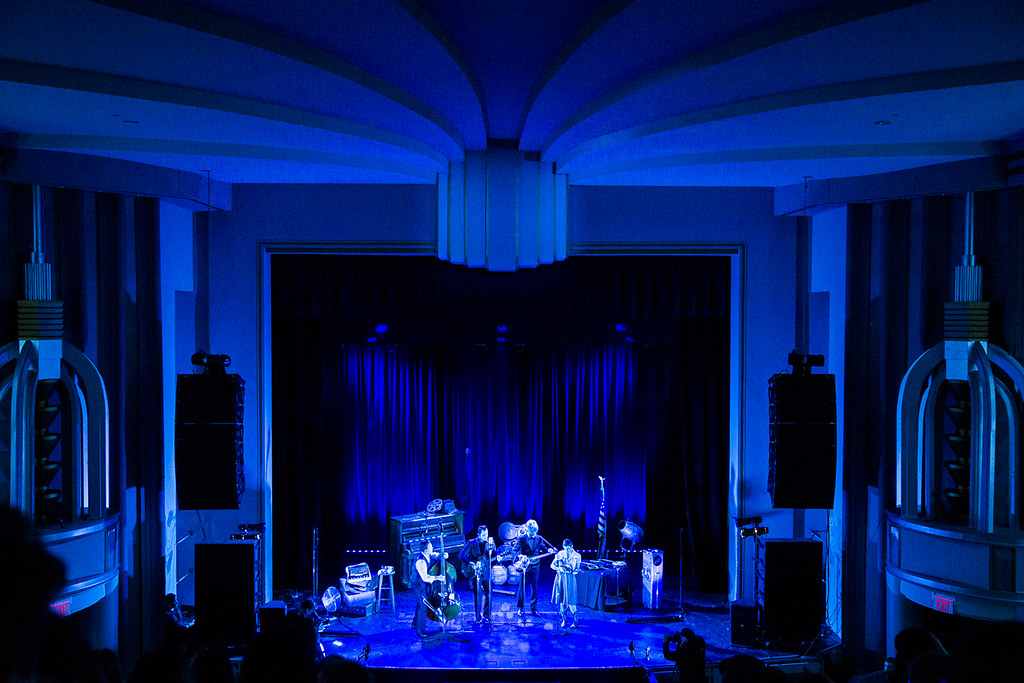
The 16 hour wait in line was a breeze. When we got inside, we found a small 870-seat theater that was starkly Art Deco and understatedly gorgeous. A beat up boombox on the stage was playing a cassette of what I found out later was a Lawrence Welk/Bob Wills mix-tape.
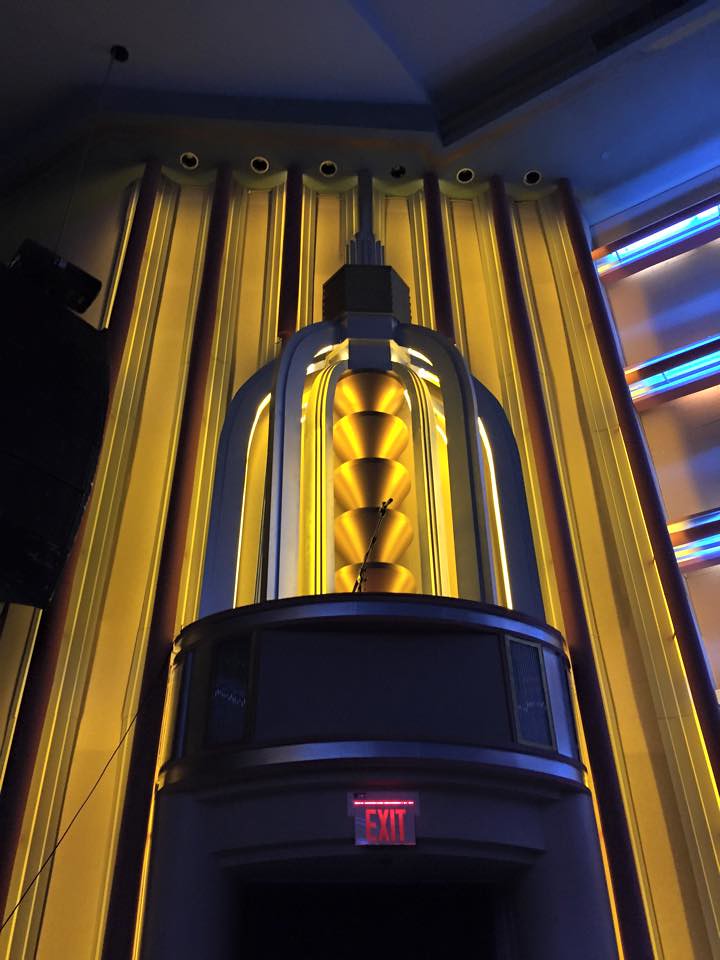
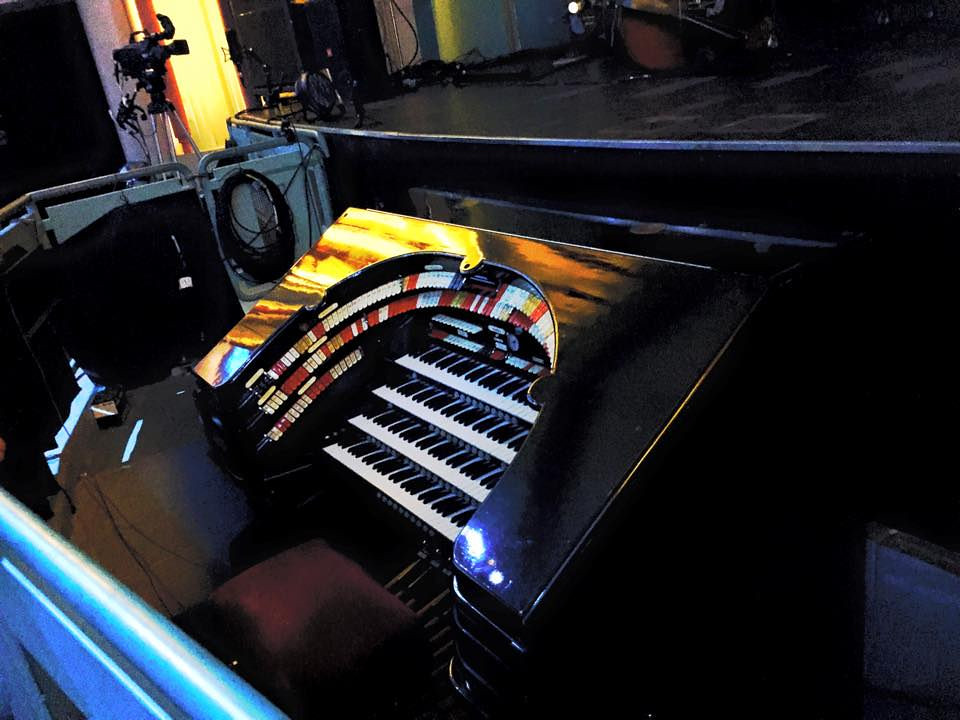
When Jack's tour manager, Lalo Medina, came out for his usual pre-show no-iPhones speech, I was as stunned as he seemed to be by the audience reaction-- A standing ovation that was as loud or louder than anything I've heard at a large festival or arena show. I knew in that moment that this was going to be a wonderful, intense show. The crowd exploded again a handful of minutes later when the band- Dominic, Fats, and Lillie Mae- stepped out on stage and began a rollicking intro to Just One Drink. And then, as we began clapping along, out came Jack, strumming a galloping, percussive rhythm on his old Gibson Army-Navy guitar, and the place really took off. Folks were so enthusiastic that partway into the second song, Temporary Ground, Jack grinned and motioned for us all to sit down and settle in. Within moments everyone was silent, rapt, allowing the sounds of Fats Kaplin's steel guitar flourishes to ring out magnificently.
But with the next tune, Hotel Yorba, everyone was clapping along again. Following my usual impulse, I began to sing along, but as quietly as possible. Even barely audible, I felt I was hearing myself too much, Jack's voice and the band's instruments were cutting with such beautiful clarity through the acoustics of the theater that they had to be unmarred. From the moment the band quieted for the third verse of Alone In My Home, leaving Jack's voice echoing softly by itself, I couldn't do anything but mouth the words as he sang them.
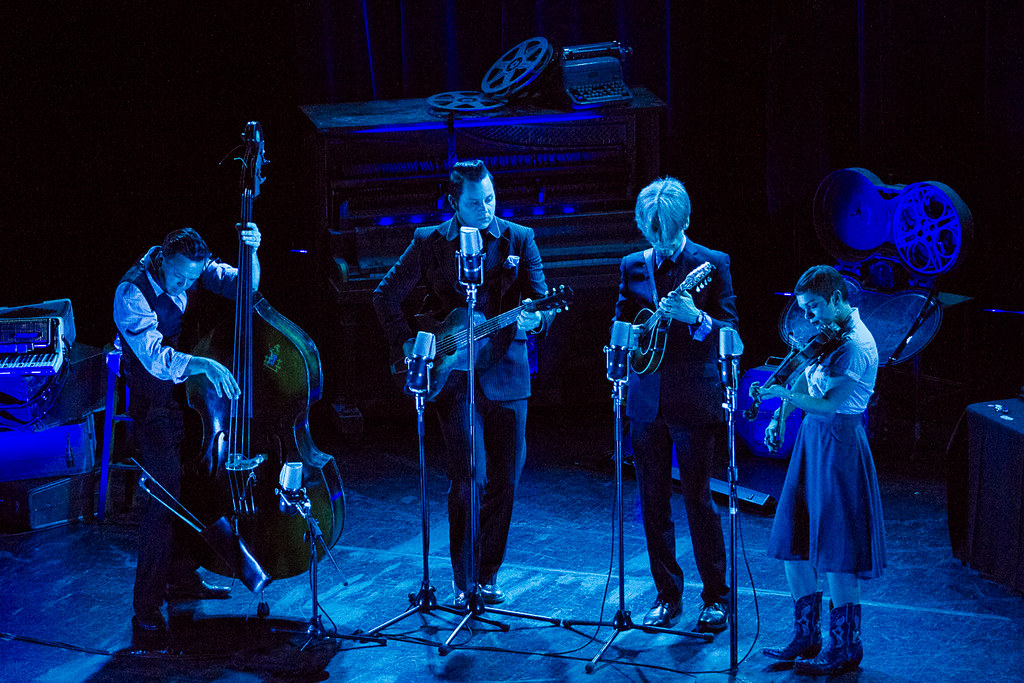
And the combination of this band was phenomenal, transforming these songs that I've heard so many times into truly brand new experiences, taking them to emotional levels that I've not felt before. It's taken me days to describe this show, everything I've thought of to say sounds so overblown and hackneyed. But it can't be helped. Every song had some special something that left a gorgeous impression-- From Fats Kaplin's mandolin on Alone In My Home, to the aching interplay of standup bass and violin in Do, to the brief-but-transcendently beautiful introduction to Martyr For My Love For You leading into some of Jack's most tongue-trippingly lovely lyrics... The latter was one of the four songs that initially pulled me into his music and one that has rarely ever been played live, so hearing it in this setting was an especial treat. And Inaccessible Mystery, which Jack introduced as an "orphan, mis-fit" song-- That song really didn't have much impact for me when I first heard it as a b-side to one of the Blunderbuss singles. It seemed somehow unfinished. Completely acoustic, though, the performance this night felt like it was finally finished, as if this was what the song was meant to become from the very beginning, with Fats' steel guitar and Lillie Mae's violin soaring in a way that the electric guitar in the original recorded version couldn't .
During other songs, what made the experience special was the people around me. Early on in my run through the Lazaretto tour, We Are Going To Be Friends had inspired me to begin putting my arms around whichever friends I was surrounded by as we sang along. On this night, when I reached out for Angelina's hand during the song, she leaned her head on my shoulder while the two of us quietly sang the words, and I swear I'll never hear that song again without thinking of that moment.

Another touching element was the casualness of Jack's stage banter through most of the show, as he told charmingly corny jokes during the band intros, admired the theater decor, and revealed thoughtful stories behind the songs.

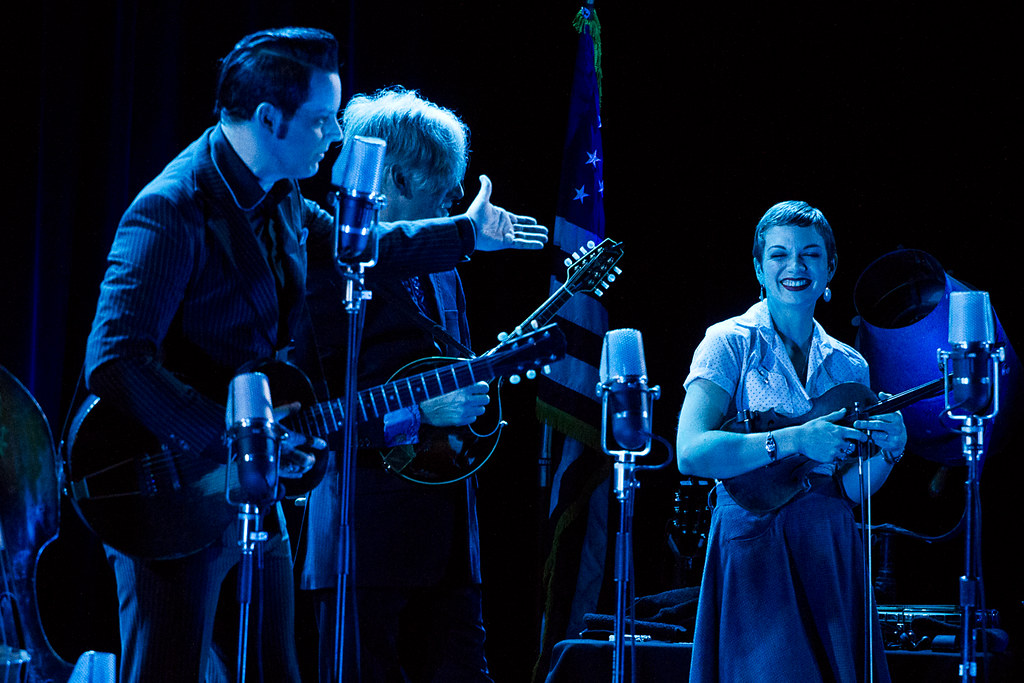
And then, after a plaintive Carolina Drama that had the audience back on their feet, the first set was over. Already, so quickly. The break, though, was fortunately also over quickly. And as wonderful as the band was, as much as they added to the songs they performed, the next two tunes were sublime for just the opposite reason-- They were performed by Jack alone, with his silver shoes, his pompadour, and his warmly resonating Army-Navy guitar.
I think if anyone ever asked me to show them what makes Jack White such a magnetic performer, instead of directing them to a more explosive show, the sort that most people might think of as an example, I might instead have them watch Same Boy You've Always Known from this show. It was stripped down, simple and quiet, and yet absolutely mesmerizing purely for the intensely emotive quality of Jack's voice. I've written before about how he doesn't think of himself as a singer, how he considers himself a vocalist or impressionist. Whatever the case, the impression he's able to create with his voice is dramatic. Even if you were someone who didn't think much of the sound of his voice, I think it'd be hard to deny the range of emotion he's able to convey.
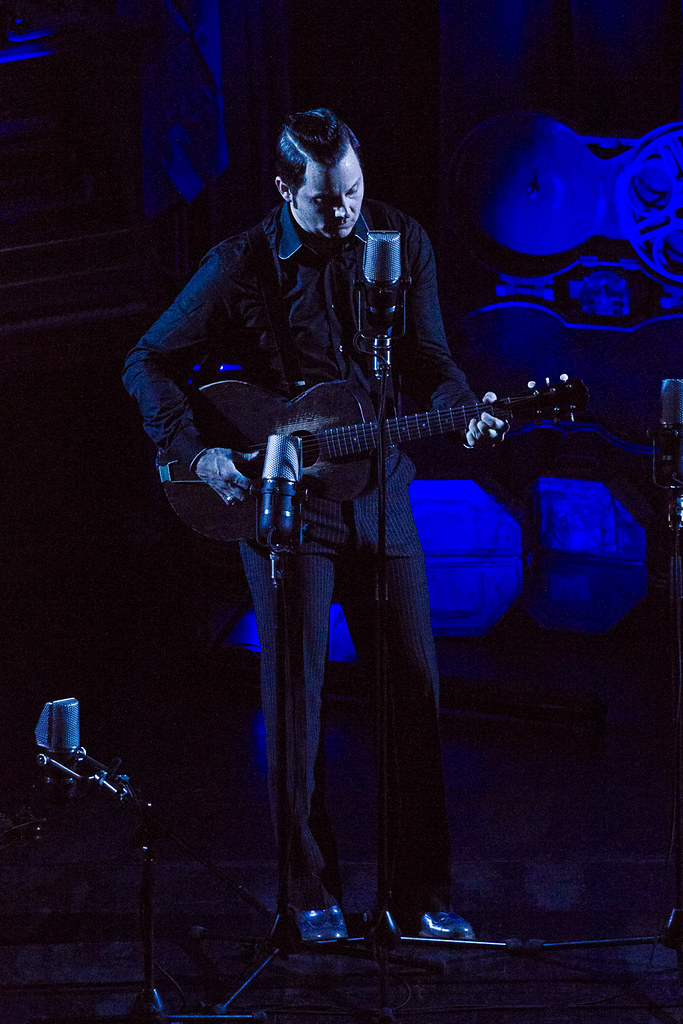
And, of course, each of the five final acoustic shows ended with Goodnight, Irene, which he'd not played since the volatile show at the Fox Theater in Detroit last summer. I had expected to cry through this entire show, knowing that it was the last for who knows how long, and expecting it to be completely beautiful. Instead, I was too overwhelmed and caught up in it all for the tears to let loose. The closest I came was the final moment when he stepped to the front of stage, as I first experienced it in 2012 in Omaha, NE, to sing the last verse a capella right there in front of us, his voice carrying us to the end and joining with all of ours in the final chorus.
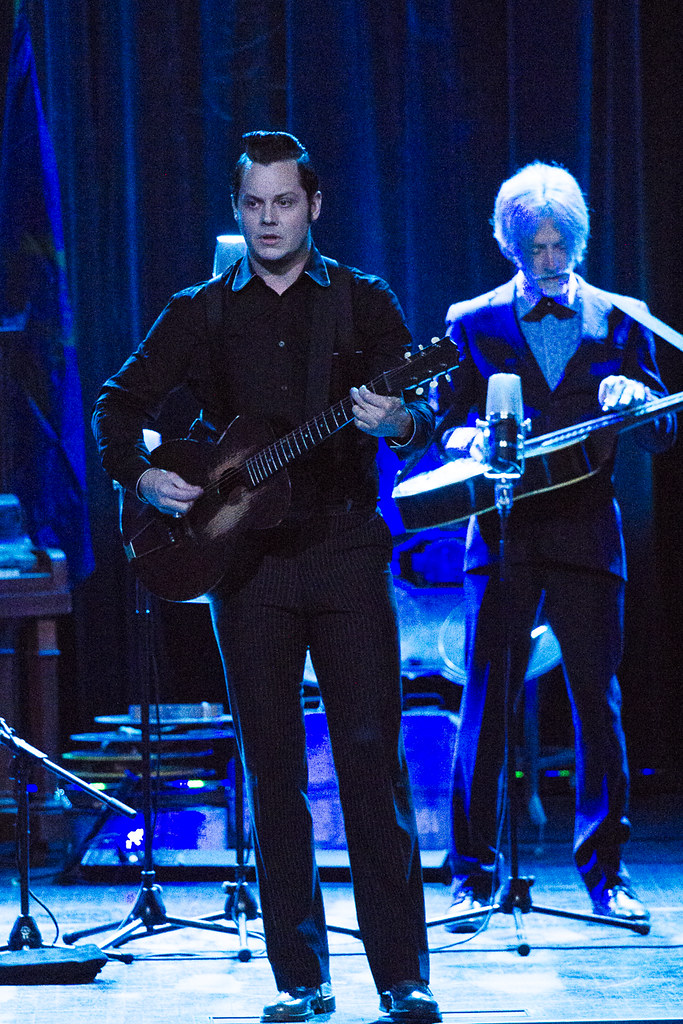
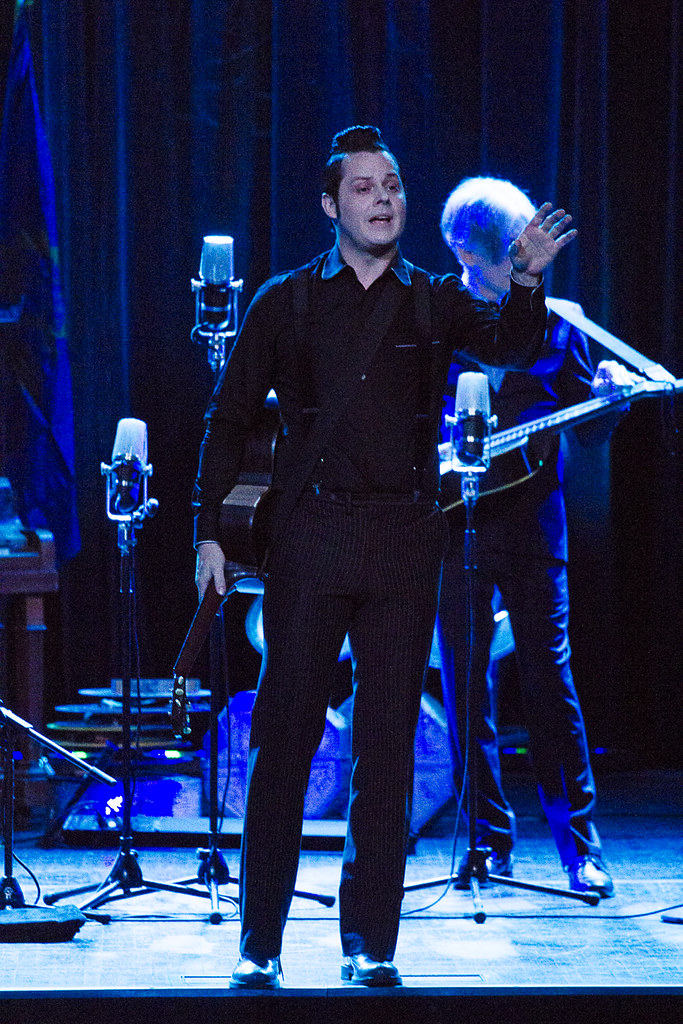
His final words were his usual sign-off of "You've been incredible and I've been Jack White", but coupled with "I'll see you down the road sometime". I know four people who'll be waiting down that road...

The next morning was a doozy. I rolled over in bed and took a sleepy glance at the clock to see how much time I had till the alarm went off, only to realize I was 45 minutes late for my 5:00am flight. So much for cell phone alarms. A quick call to the airline left me happily stuck in Fargo til late that afternoon, giving me time to walk around, explore the small downtown under a beautiful blue sky, and sit and think about what I'd experienced.
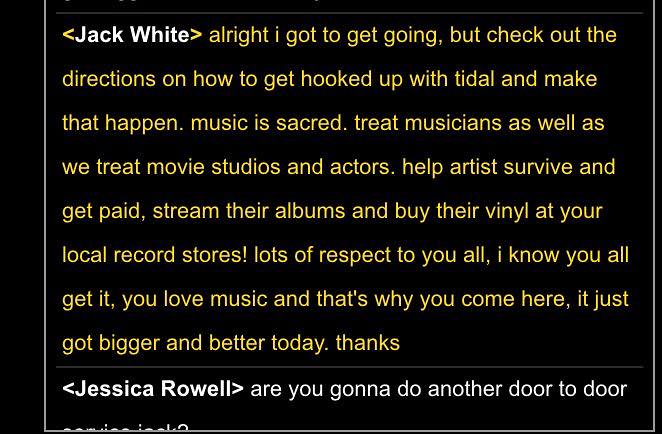
And I juggled a mix of conflicting impressions. I'm so very glad that so many people were able to watch the show via the livestream, and that it's been archived (go ahead, join the Vault (or Tidal), you know you want to be able to see this show), though there were some small feelings of agitation mixed in with that gladness-- It felt as if the show wasn't quite as intimate as it could have been because of the cameras that hovered inches above our heads a few times and the inclusion of the "music is sacred" speech that'd been made at both Coachella shows earlier this month and in a recent Vault chat.
The songs played were gorgeous and his exhortation about the sacredness of music is profoundly important, but I still had a slight, nagging feeling that Jack had been playing for a bigger crowd than just us, trying to send this new message of his farther out into the world. The crowd that night made themselves feel bigger than they actually were, though, being so obviously engaged in the music, whooping and applauding one moment and so silent the next you could hear a pin drop. And because of those cameras that were occasionally distracting and of which he was so seemingly aware, I get to have this experience again and again.
And yet, at the same time, it was a very intimate, special event. That’s the drawback to having seen so many of Jack’s shows, both live and livestreamed. I’ve experienced such a gamut that I have high expectations, and I can tell when he’s gearing a show toward a large crowd such as a festival or a livestream audience. The choice of songs, the speeches vs just freewheeling banter (such as two nights earlier in South Dakota when he'd called his mother from the stage and had her tell a story to the crowd as he held the phone to the mic), these things show me clearly whether he’s doing a “club show” or sending out a message to the world. I wanted a club show, like that one in South Dakota at which he played a song I’d requested in vain back in San Francisco and then had his mother talk to the audience. But does that mean I wasn’t thrilled at this show, wasn’t feeling such intense emotions that it affected me physically? No. I wanted more, but I was more than satisfied with what I got. Does that seem like a contradiction? It’s just that it’s become impossible for me to have a simple experience with Jack anymore. Every experience is threaded with conflicting thoughts and contradictory emotions. And that’s not a bad thing. It can cause niggling frustration underneath the euphoria, but also makes every experience more multifaceted.
And I am inexpressibly happy that I was able to share this experience with Angelina, Sam, Sharon and other friends (missing friends were also thought of and spoken about, so they were definitely there with us in spirit). The hugs we all shared afterward were some of the best I've ever had in my life. This is one of the greatest things I've gotten from discovering Jack's music. I owe him so much for the musical education and awakening he's provided me, but the friends I've made over the last five years and the experiences we've had together because of him have given me moments of joy such as I never expected to have at this point in my life. That's a large part of what makes me so terribly sad about this being the last show until who knows when-- Not only am I losing the exuberant high I've been dependent upon for the last five years, but I will also miss all of my friends scattered around the country. Will we find another reason to spend the money and make the time necessary to see each other without Jack's shows to pull us together?
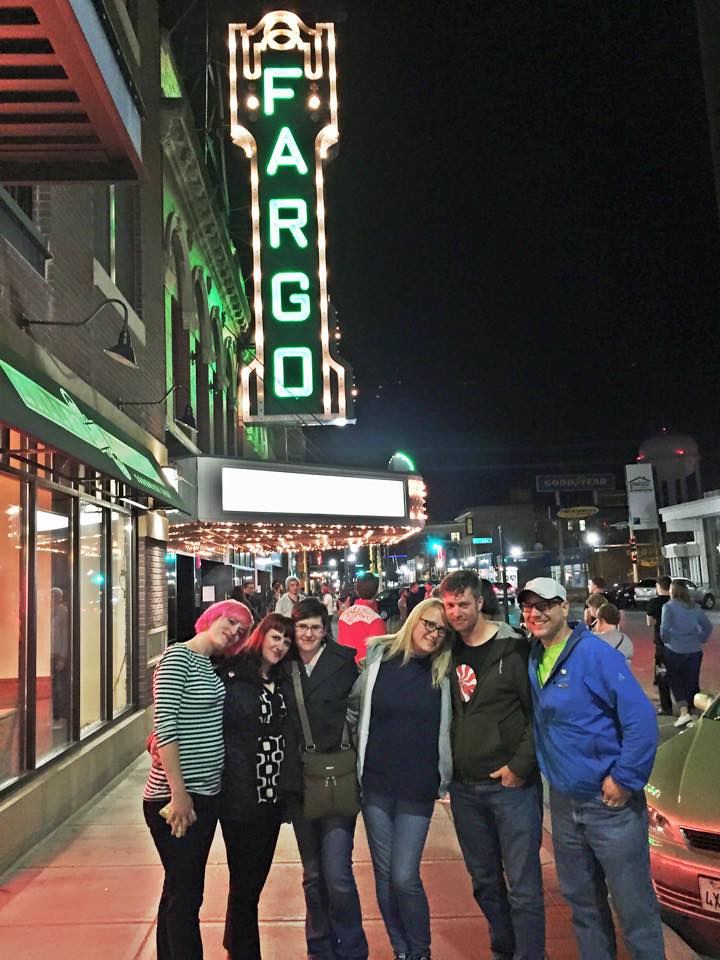
A few other reminiscences inspired by this hopefully temporary end of the road--
All of the places I’d rarely or never been to before that I’ve traveled to because of Jack:
Nashville, TN (lost count of how many times)
Memphis, TN
Chattanooga, TN
Atlanta, GA
New York City (7 times)
Omaha, NE
Denver/Red Rocks, Colorado
Tulsa, OK
Pittsburgh, PA
Detroit, MI and countryside nearby
San Francisco, CA
Seattle, WA (which had been a goal for many years)
Cleveland and Columbus, OH
New Haven, CT
Austin, TX
Fargo, ND
People have told me how lucky I've been to be able to go to all the shows I have. Yes, there's been a degree of luck in a few cases, especially in succeeding in acquiring tickets that sold out in minutes. But where there wasn't luck, there were choices I made. Such as how I was thinking of refurbishing my kitchen around the time I got into Jack's music and made my first road-trip to Memphis to see him. It hasn't happened, the wallpaper's still torn, the flooring is still crooked, the dishwasher is still broken. Likewise, I thought for a while just a couple of years ago about quitting my job, selling my condo, and re-locating. Actually brushed up my resume and talked to a realtor. But then the Lazaretto tour began and all of that would've gotten in the way. Do I regret giving up these and other oh-so-adult plans to instead spend my time and money running around the country going to concerts? Not for one bloody moment. Especially now that Jack's announced this hiatus. On more than one occasion, the decision to buy a ticket and book a flight (or map out a road-trip) hinged on a feeling that I had to take advantage of what he was doing now, that who knew how long it would last? Friends even said that to me on a couple of occasions when I was waffling, go for it, we don't know when he'll do this again. My only regrets are for shows that I didn't make more effort to get to. We have to follow our passion-- Not just the things that we are passionate about, but the things that ignite a passion within us, that make us feel alive.
The show in Fargo may have been Jack’s last live performance for the foreseeable future, but it’s not the end of me being a junkie. He's made it clear that he's as busy and as ambitious as ever, between making donations to the soon-to-open National Blues Museum and, even more exciting, producing the upcoming PBS documentary American Epic with Robert Redford and T Bone Burnett. We may not have anymore of his music for a while, but he seems set on ensuring that we continue to explore the rest of the music that's out there while he takes his break from the stage. Because that's what it's all about at this point-- It's not about just him, it's about the fact that music is sacred.
Amen.
After many years of performing in a multitude of configurations, Jack is announcing that he will be taking a break from performing live for a long period of time. To cap off the Lazaretto world tour, and following his pair of headlining performances at Coachella, Jack will embark on a short acoustic tour of the only five states left in the U.S. that he has yet to play. The states these shows are occurring in will be unannounced until the day of each performance. Joining Jack on his jaunt across these locations will be musicians making up an acoustic quartet, including Fats Kaplin, Lillie Mae Rische and Dominic Davis. The shows will be totally acoustic and amplified only with ribbon microphones to the audience as well. These shows will be the very first totally acoustic full concerts Jack has ever done.
Each special acoustic performance will be announced day of show at 8am local time. Tickets for these engagements are priced at $3 per ticket and will be limited to one ticket per person. All tickets will be sold at the venue door starting at 12pm local time on the day of the show – first come, first served and cash only.
My immediate reaction was a feeling that I’d been punched in the sternum. Sitting at my desk at work reading those words, my face got hot, my chest tightened, my eyes filled with tears. I’ve said before that I realize how ridiculous these reactions may be compared to very real tragedies people have to deal with in this world, but we all have different things that affect our own individual lives and that impact our emotions. I also know that I’m far from alone in how I reacted to this news, almost every one of my friends was upset over it and we were still commiserating with each other more than a week later. But after a day or two of feeling I’d been sucker punched, I began deliberately distancing myself from the news. I tried to look forward, feeling intense curiosity about what else Jack might be working on with no more touring going on, and when we’d begin getting news of whatever projects he’s involved in. And I refrained as much as possible from reading about or discussing the acoustic shows as they began happening. People immediately figured out the five states they would take place in, but I didn't bother to think about which of them I could possibly get to. I snuck peaks at setlists and the official photos from the shows as they began happening, but otherwise went into denial, putting up a wall of rational calm to keep the fan-girl junkie from plunging me into irrational misery.
And then, Friday afternoon, the day the fourth acoustic show was taking place in South Dakota, I got a message from Sharon about the last state left for him to play-- North Dakota. The assumption was that he'd play in Fargo, probably the very next night, Saturday. I was scheduled to work on Saturday, but when she talked about flying out there my brain immediately began spinning. People had lined up by the hundreds for the previous shows as soon as they were announced the morning of. I'd have to fly out that very night and skip work the next day. I'd lied to my boss once before to get to one of Jack's shows, but I really didn't want to do that again. And, hell, could I even get on a flight at such short notice so late in the day and, if I could, how many arms and legs would it cost me?
And then more news popped up, this time an announcement sent to subscribers of the new music streaming site, Tidal, of which Jack is a partial owner (along with Jay-Z, Kanye West, Beyonce, Madonna, and a handful of other notable musicians). The announcement stated that subscribers would be able to watch a livestream of a special surprise event coming up on Sunday night at 8:30pm CENTRAL TIME. Bingo. What else could it be but Jack's final acoustic show in North Dakota? My plans were set. Fly into Fargo after work Saturday night, line up in the wee hours with my buddies who were also there, have the experience of a lifetime Sunday night, then fly back Monday morning and go straight into work as early as possible. Nothing I haven't done for Jack before, and no lies necessary to get time off. Except that I wouldn't know until Sunday morning whether Fargo was the right city or if the show really would take place that day. I could fly all the way out there for nothing.
I didn't. My gut reaction to Sharon's urging and that Tidal announcement had been correct:
To commemorate the final show of Jack’s acoustic tour of states he has never played, the end of the Lazaretto world tour, and his final live performance of any sort for the foreseeable future, Jack’s performance at the Fargo Theatre tonight will be live streamed on TIDAL. The TIDAL X Jack White livestream will begin at 8:30pm CT/9:30pm ET and will be replayed in its entirety immediately following the initial live broadcast. An on-demand archive of the full performance will be available on TIDAL at a later date.
 |
| All photos before and after show courtesy of Mike Dziama |
When Jack's tour manager, Lalo Medina, came out for his usual pre-show no-iPhones speech, I was as stunned as he seemed to be by the audience reaction-- A standing ovation that was as loud or louder than anything I've heard at a large festival or arena show. I knew in that moment that this was going to be a wonderful, intense show. The crowd exploded again a handful of minutes later when the band- Dominic, Fats, and Lillie Mae- stepped out on stage and began a rollicking intro to Just One Drink. And then, as we began clapping along, out came Jack, strumming a galloping, percussive rhythm on his old Gibson Army-Navy guitar, and the place really took off. Folks were so enthusiastic that partway into the second song, Temporary Ground, Jack grinned and motioned for us all to sit down and settle in. Within moments everyone was silent, rapt, allowing the sounds of Fats Kaplin's steel guitar flourishes to ring out magnificently.
But with the next tune, Hotel Yorba, everyone was clapping along again. Following my usual impulse, I began to sing along, but as quietly as possible. Even barely audible, I felt I was hearing myself too much, Jack's voice and the band's instruments were cutting with such beautiful clarity through the acoustics of the theater that they had to be unmarred. From the moment the band quieted for the third verse of Alone In My Home, leaving Jack's voice echoing softly by itself, I couldn't do anything but mouth the words as he sang them.
 |
| All photos during show by David James Swanson |
And the combination of this band was phenomenal, transforming these songs that I've heard so many times into truly brand new experiences, taking them to emotional levels that I've not felt before. It's taken me days to describe this show, everything I've thought of to say sounds so overblown and hackneyed. But it can't be helped. Every song had some special something that left a gorgeous impression-- From Fats Kaplin's mandolin on Alone In My Home, to the aching interplay of standup bass and violin in Do, to the brief-but-transcendently beautiful introduction to Martyr For My Love For You leading into some of Jack's most tongue-trippingly lovely lyrics... The latter was one of the four songs that initially pulled me into his music and one that has rarely ever been played live, so hearing it in this setting was an especial treat. And Inaccessible Mystery, which Jack introduced as an "orphan, mis-fit" song-- That song really didn't have much impact for me when I first heard it as a b-side to one of the Blunderbuss singles. It seemed somehow unfinished. Completely acoustic, though, the performance this night felt like it was finally finished, as if this was what the song was meant to become from the very beginning, with Fats' steel guitar and Lillie Mae's violin soaring in a way that the electric guitar in the original recorded version couldn't .
During other songs, what made the experience special was the people around me. Early on in my run through the Lazaretto tour, We Are Going To Be Friends had inspired me to begin putting my arms around whichever friends I was surrounded by as we sang along. On this night, when I reached out for Angelina's hand during the song, she leaned her head on my shoulder while the two of us quietly sang the words, and I swear I'll never hear that song again without thinking of that moment.
Another touching element was the casualness of Jack's stage banter through most of the show, as he told charmingly corny jokes during the band intros, admired the theater decor, and revealed thoughtful stories behind the songs.
And then, after a plaintive Carolina Drama that had the audience back on their feet, the first set was over. Already, so quickly. The break, though, was fortunately also over quickly. And as wonderful as the band was, as much as they added to the songs they performed, the next two tunes were sublime for just the opposite reason-- They were performed by Jack alone, with his silver shoes, his pompadour, and his warmly resonating Army-Navy guitar.
I think if anyone ever asked me to show them what makes Jack White such a magnetic performer, instead of directing them to a more explosive show, the sort that most people might think of as an example, I might instead have them watch Same Boy You've Always Known from this show. It was stripped down, simple and quiet, and yet absolutely mesmerizing purely for the intensely emotive quality of Jack's voice. I've written before about how he doesn't think of himself as a singer, how he considers himself a vocalist or impressionist. Whatever the case, the impression he's able to create with his voice is dramatic. Even if you were someone who didn't think much of the sound of his voice, I think it'd be hard to deny the range of emotion he's able to convey.
And, of course, each of the five final acoustic shows ended with Goodnight, Irene, which he'd not played since the volatile show at the Fox Theater in Detroit last summer. I had expected to cry through this entire show, knowing that it was the last for who knows how long, and expecting it to be completely beautiful. Instead, I was too overwhelmed and caught up in it all for the tears to let loose. The closest I came was the final moment when he stepped to the front of stage, as I first experienced it in 2012 in Omaha, NE, to sing the last verse a capella right there in front of us, his voice carrying us to the end and joining with all of ours in the final chorus.
The next morning was a doozy. I rolled over in bed and took a sleepy glance at the clock to see how much time I had till the alarm went off, only to realize I was 45 minutes late for my 5:00am flight. So much for cell phone alarms. A quick call to the airline left me happily stuck in Fargo til late that afternoon, giving me time to walk around, explore the small downtown under a beautiful blue sky, and sit and think about what I'd experienced.
And I juggled a mix of conflicting impressions. I'm so very glad that so many people were able to watch the show via the livestream, and that it's been archived (go ahead, join the Vault (or Tidal), you know you want to be able to see this show), though there were some small feelings of agitation mixed in with that gladness-- It felt as if the show wasn't quite as intimate as it could have been because of the cameras that hovered inches above our heads a few times and the inclusion of the "music is sacred" speech that'd been made at both Coachella shows earlier this month and in a recent Vault chat.
 |
| Screencap courtesy of Mike Dziama |
And yet, at the same time, it was a very intimate, special event. That’s the drawback to having seen so many of Jack’s shows, both live and livestreamed. I’ve experienced such a gamut that I have high expectations, and I can tell when he’s gearing a show toward a large crowd such as a festival or a livestream audience. The choice of songs, the speeches vs just freewheeling banter (such as two nights earlier in South Dakota when he'd called his mother from the stage and had her tell a story to the crowd as he held the phone to the mic), these things show me clearly whether he’s doing a “club show” or sending out a message to the world. I wanted a club show, like that one in South Dakota at which he played a song I’d requested in vain back in San Francisco and then had his mother talk to the audience. But does that mean I wasn’t thrilled at this show, wasn’t feeling such intense emotions that it affected me physically? No. I wanted more, but I was more than satisfied with what I got. Does that seem like a contradiction? It’s just that it’s become impossible for me to have a simple experience with Jack anymore. Every experience is threaded with conflicting thoughts and contradictory emotions. And that’s not a bad thing. It can cause niggling frustration underneath the euphoria, but also makes every experience more multifaceted.
And I am inexpressibly happy that I was able to share this experience with Angelina, Sam, Sharon and other friends (missing friends were also thought of and spoken about, so they were definitely there with us in spirit). The hugs we all shared afterward were some of the best I've ever had in my life. This is one of the greatest things I've gotten from discovering Jack's music. I owe him so much for the musical education and awakening he's provided me, but the friends I've made over the last five years and the experiences we've had together because of him have given me moments of joy such as I never expected to have at this point in my life. That's a large part of what makes me so terribly sad about this being the last show until who knows when-- Not only am I losing the exuberant high I've been dependent upon for the last five years, but I will also miss all of my friends scattered around the country. Will we find another reason to spend the money and make the time necessary to see each other without Jack's shows to pull us together?
A few other reminiscences inspired by this hopefully temporary end of the road--
All of the places I’d rarely or never been to before that I’ve traveled to because of Jack:
Nashville, TN (lost count of how many times)
Memphis, TN
Chattanooga, TN
Atlanta, GA
New York City (7 times)
Omaha, NE
Denver/Red Rocks, Colorado
Tulsa, OK
Pittsburgh, PA
Detroit, MI and countryside nearby
San Francisco, CA
Seattle, WA (which had been a goal for many years)
Cleveland and Columbus, OH
New Haven, CT
Austin, TX
Fargo, ND
People have told me how lucky I've been to be able to go to all the shows I have. Yes, there's been a degree of luck in a few cases, especially in succeeding in acquiring tickets that sold out in minutes. But where there wasn't luck, there were choices I made. Such as how I was thinking of refurbishing my kitchen around the time I got into Jack's music and made my first road-trip to Memphis to see him. It hasn't happened, the wallpaper's still torn, the flooring is still crooked, the dishwasher is still broken. Likewise, I thought for a while just a couple of years ago about quitting my job, selling my condo, and re-locating. Actually brushed up my resume and talked to a realtor. But then the Lazaretto tour began and all of that would've gotten in the way. Do I regret giving up these and other oh-so-adult plans to instead spend my time and money running around the country going to concerts? Not for one bloody moment. Especially now that Jack's announced this hiatus. On more than one occasion, the decision to buy a ticket and book a flight (or map out a road-trip) hinged on a feeling that I had to take advantage of what he was doing now, that who knew how long it would last? Friends even said that to me on a couple of occasions when I was waffling, go for it, we don't know when he'll do this again. My only regrets are for shows that I didn't make more effort to get to. We have to follow our passion-- Not just the things that we are passionate about, but the things that ignite a passion within us, that make us feel alive.
The show in Fargo may have been Jack’s last live performance for the foreseeable future, but it’s not the end of me being a junkie. He's made it clear that he's as busy and as ambitious as ever, between making donations to the soon-to-open National Blues Museum and, even more exciting, producing the upcoming PBS documentary American Epic with Robert Redford and T Bone Burnett. We may not have anymore of his music for a while, but he seems set on ensuring that we continue to explore the rest of the music that's out there while he takes his break from the stage. Because that's what it's all about at this point-- It's not about just him, it's about the fact that music is sacred.
Amen.
May 1, 2015
Baltimore has no chill
I've been thinking all week of writing something about the recent situation in Baltimore. For those who don't know, I'm referring to the recent death of Freddie Gray, the weekend of protests, rioting, and looting, and the criminal charges brought just this morning against the six police officers involved in Gray's arrest and death. But I've read so many articles covering the issues so much better than I could hope to. Maybe I'll write about it later, but for now I have to just share this: Baltimore Has No Chill: A compilation of residents calling people on their bullshit.
That is one of the many reasons I love this city. There's no subterfuge, Baltimoreans call it like they see it, and they speak their minds articulately no matter what neighborhood they live in. I may've grown up in northern Virginia, I may live in Montgomery County and work in Washington, D.C., but my heart belongs to Baltimore.
That is one of the many reasons I love this city. There's no subterfuge, Baltimoreans call it like they see it, and they speak their minds articulately no matter what neighborhood they live in. I may've grown up in northern Virginia, I may live in Montgomery County and work in Washington, D.C., but my heart belongs to Baltimore.
April 19, 2015
Record Store Day 2015: The human aspect of vinyl records
So how many of you all grew up in the days before cds, before cassette tapes, back when vinyl records (and sometimes those gigantically bulky 8-track tapes) were the way that all music was played? It was a while ago, wasn't it? I grew up in that era and I remember not even thinking twice about switching to cassettes when those came along. They were portable! We could record our records and listen on our Walkman! We could record songs off the radio! And, best of all... we could make mix-tapes! And then cds came along and who thought twice about switching to those? Well, I'll admit I did, but pretty much only because I was poor at the time and didn't have a lot of money to buy a cd player, either for home or for carrying around, much less a whole lot of cds. But I had to do it, because cassettes became obsolete pretty much immediately. Through these changes, all those records that took up so much space didn't necessarily become obsolete, they just... went away.
Now that I'm older and make a semi-decent living, I have more liberty to spend hard-earned dollars on my tunes. But five years ago, I still thought twice about shelling out a bunch of bucks to make a big format switch again, this time going backwards, from listening to cds back to playing records again. Anyone who reads my babblings with any regularity knows why, of course. It's pretty much impossible to become a devotee of Jack White without learning his philosophy of musical formats by rote. Notwithstanding his latest venture of becoming involved in the Tidal digital streaming service, vinyl records have been and apparently always will be the way he prefers for music to be listened to. As recently as last month in Billboard magazine's vinyl revival issue, he broadened his usual focus to speak of an appreciation for cds, and went on to say "...when you respect music, it doesn't matter how we're getting it. We still know what the real deal is." And that 'real deal' is still records-- "It's the movie theater compared to the iPhone....You're reverential to it. With vinyl, you're on your knees. You're at the mercy of the needle. You watch the record spin and it's like you're sitting around a campfire. It's hypnotic."
So when I discovered Jack's music five years ago, taking that seemingly backward step of investing in a turntable and buying records again was the only way I could participate in one of the most exciting things he's created, the Third Man Records Vault subscription service. As soon as I began hearing about the sort of exclusive music the subscription provided, there wasn't much choice to make beyond "How much can I spend on a turntable (and a receiver, and speakers)?" Once I had the thing, it became a source of nostalgic delight well beyond what I got from Third Man-- The very first records that I went out to shop for on my own were all the old Bill Cosby comedy albums I loved so much as a kid. I wanted to laugh til my gut split while listening to that fucking Chicken Heart that ate Chicago again, dammit! And I wanted to do it the way I had as a kid, with a record on a record player. Of course, I've got some mixed feelings about those Cosby records these days, but up until recently they were an unadulterated joy, as are all of the other records I've accumulated over the past five years as I've explored the wide genre of blues music, picked up all of Jack's previous and continuing releases, and dived into the many artists I've been exposed to via Third Man Records and connections I've made radiating out from TMR.
As I began buying records more and more and cds less and less, I realized that there really is something that I prefer about vinyl. I'm no audiophile, so it's not necessarily the lows and highs or warmth and depth that serious vinyl purists go on about, though those elements are often very noticeable. And, unlike Jack White, I don't sit and watch my records spin around. I do enjoy admiring the sleeve art and taking the effort to drop the needle in just the right spot, there is a lot to be said for those rituals. But once the music begins, I either lie back to soak it in or bounce around the room dancing to it. So my reason for preferring records isn't based purely in the sound quality or in the ritual of listening, it's something more elemental, something I was only recently able to put into coherent thought, thanks to an episode of Marc Maron's WTF podcast in which he toured the plant at United Record Pressing in Nashville (it's a bonus episode only available to subscribers but, seriously, go and subscribe and then search for "Marc's vinyl factory tour", it's worth the couple of bucks even if you only sign up for a month).
Marc's conversation with URP's PR rep Jay Millar begins with them discussing that return to vinyl that I talked about above, and why so many people are doing it these days. In their conversation, Jay used two words that turned on a lightbulb for me-- He spoke about the "human aspect" of vinyl. I realized that's it, that's what encompasses the sound quality, the ritual, the art that accompanies record albums, the tangibleness and moving parts that so mesmerize Jack White, it's that there is a very human aspect to creating, handling, and listening to vinyl records. Of course cds and even digital music files are also ultimately created by human beings, someone has to push the buttons and flip the switches on the machines that manufacture the cds or the computer that turns the music into the 1s and 0s of an mp3 (or flac, if you're an audiophile purist), but there's more machine than human in those creations. And while vinyl records are pressed by massive machines, there are humans involved around those machines at every step along the way, there's a symbiosis between man and machine that gives records an organic feel that digital music just does not have.
In comparison, to me at least, cds and mp3s have come to feel robotic and a bit sterile. I mean, hell, there's no way you could create a work like Dario Robleto's Melancholy Matters Because of You from digital music formats, in which the generations of a family are conveyed through the varying rpms of ground-up vinyl records.
And this past weekend's Record Store Day event at Third Man Records confirmed all of that, it confirmed Jack White's commitment to vinyl records, and it confirmed the human element that keeps drawing me in. As described in the Billboard article linked above, Jack recently spent $300,000 to purchase the original acetate of Elvis Presley's very first record, My Happiness, which Elvis recorded at Sun Studios for $4. He then had it digitally transferred so that new copies could be pressed for a special Record Store Day 78rpm edition (and a less-limited 45rpm version to be released later this year).
Jack's motivation for spending all that money is surely based in the reverence he feels for music and its history. And the tangibleness of records is tied up in that history. You can listen to a digital recording of an historic song, as I did at another Dario Robleto exhibit, Setlists for a Setting Sun, but there's so much more impact in seeing an historic item, seeing the age and the wear and realizing that that thing has been around and represents something that happened in time. So seeing that original acetate of My Happiness that Jack bought displayed at Third Man like it was a shrine object gave me goosebumps.
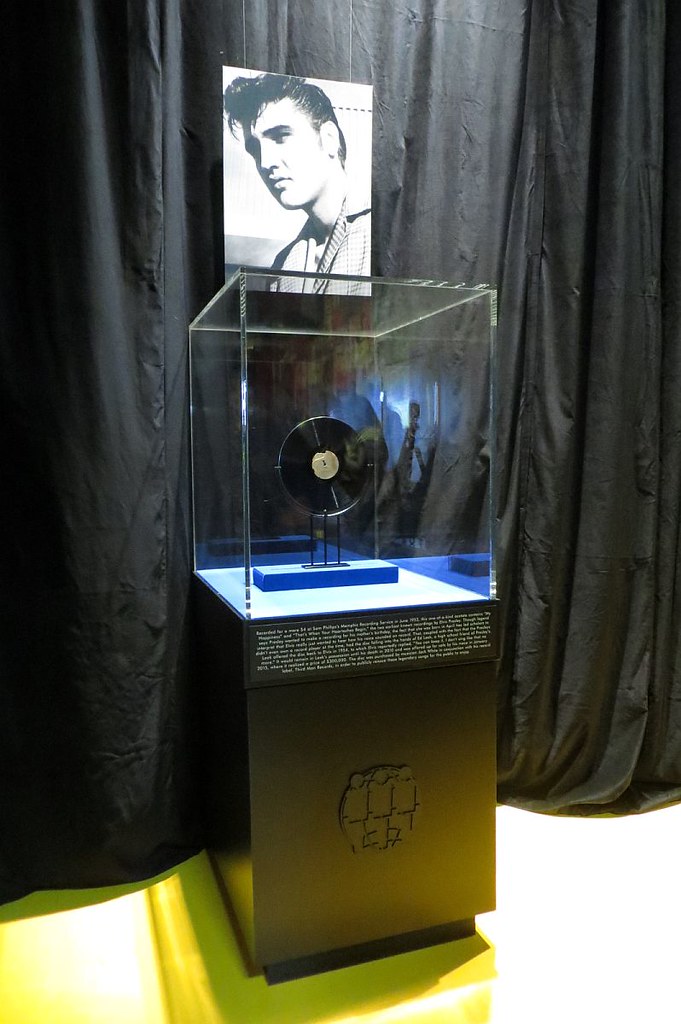

And then to see the Rek-O-Kut machine that that very single was cut on sitting right there next to it brought the magnitude of it all home.

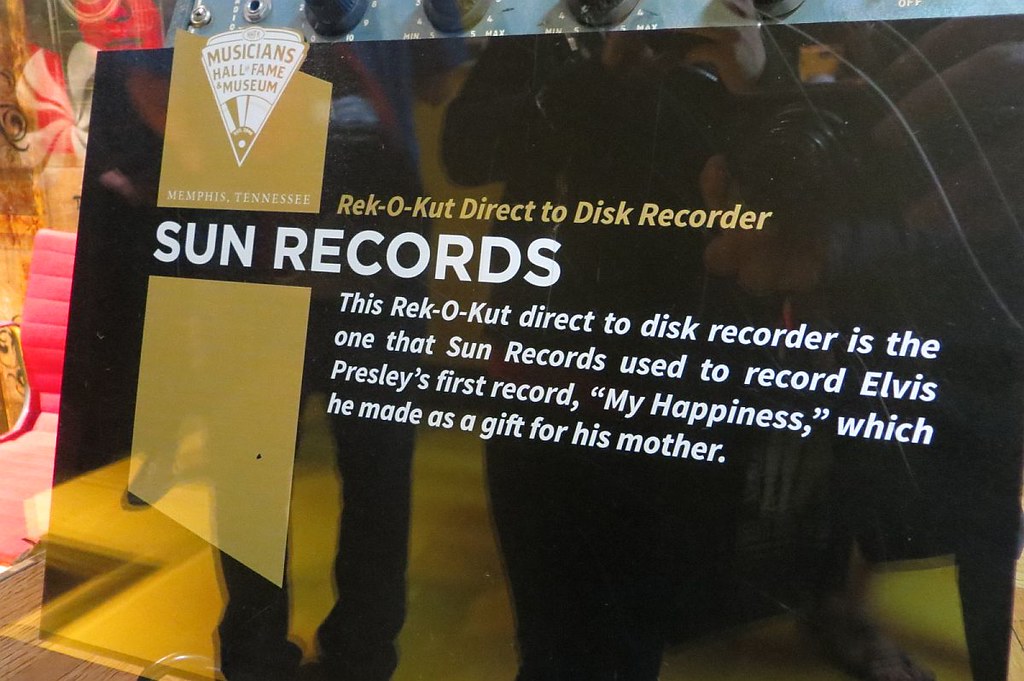
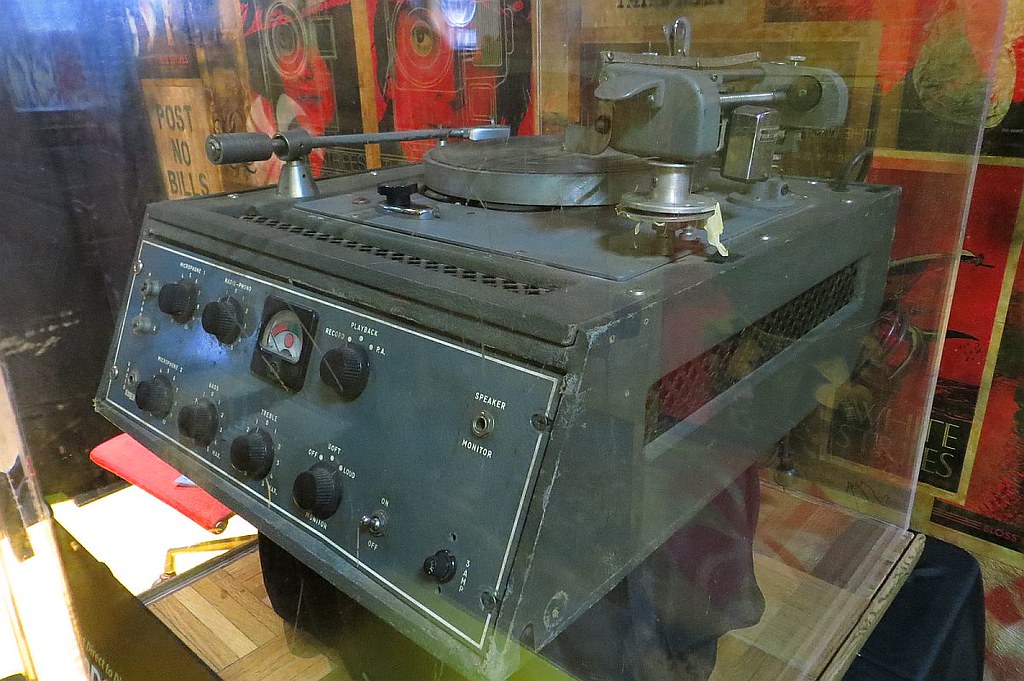
I've not been to Graceland yet, but I have visited the museum at Sun Records in Memphis and stood in the room where that Rek-O-Kut captured Elvis' first attempt to put on vinyl those urges that would before long change his life and musical history together. And just that morning, I had watched TMR honcho Ben Blackwell carrying a bulky object covered by a white sheet across the street and into TMR and wondered if it was the Rek-O-Kut. A representative from the Country Music Hall of Fame and Museum (from whom TMR had the machine on loan for the day) confirmed that, sure enough, that'd been what Blackwell was hauling in. If it'd been me, I'd have been scared to death of dropping it, would've wanted to put it on a cart or at least a dolly or something. The Hall of Fame rep also told me a fantastic story about how they just recently found out that theirs was the machine that cut My Happiness-- Scotty Moore, Elvis' guitar player in the early days, was walking through the museum and stopped in front of it and said "You know, that is the machine". The rep told me he replied something along the lines of yeah, we know it was used for a lot of records at Sun. Apparently Scotty said, "No, I worked with that machine a lot and I know it well. It's the machine that was used for Elvis' first record". When my jaw dropped and I took a step back, the rep said his reaction had been exactly the same.
He then explained how they got the call from TMR early last week asking if it could be displayed for RSD. There were questions about things like insurance and such, but the biggest stumbling block was that the display case at the museum was built in, couldn't be moved with the machine. But then the very next day, the museum rep was out picking up a steel guitar that was to be added to the museum, and when he went to get it he found it was in a plexi case that was the perfect size for the Rek-O-Kut to be displayed in. He said it was as if it'd been meant to be for the machine to be displayed at TMR, because after that they worked everything out and all the pieces just fell into place within a day or so, just in time for Record Store Day.
Have to mention another little kick I got related to one of Elvis' predecessors-- A portion of an old, broken Robert Johnson Terraplane Blues 78 that was hanging on the wall in a frame with no glass and a little placard beneath it that read "Touch Me". Of course I did.
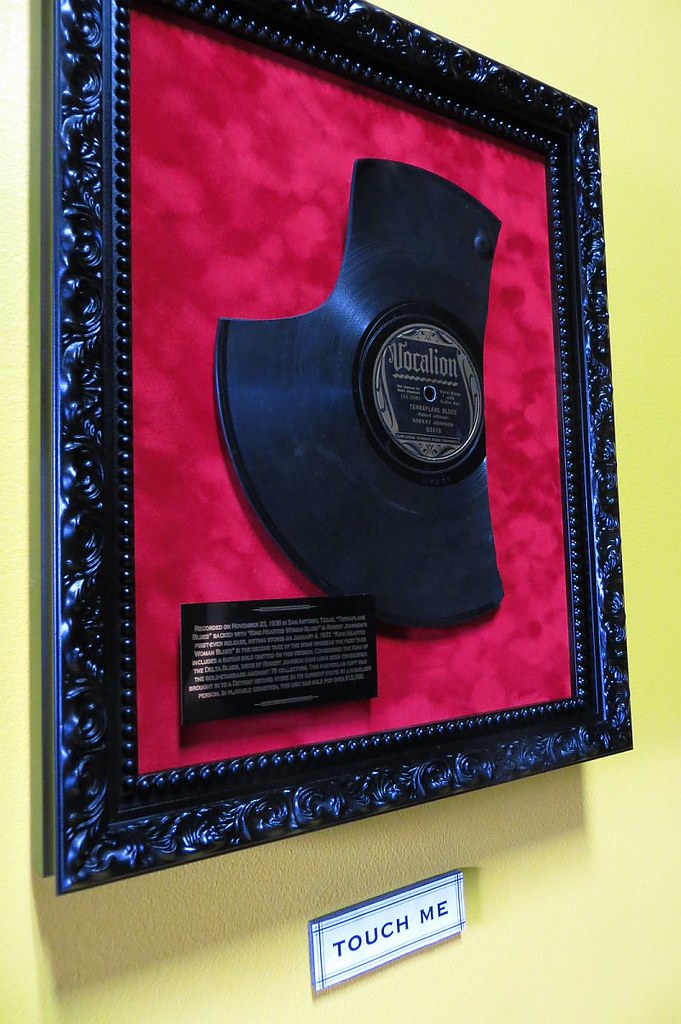
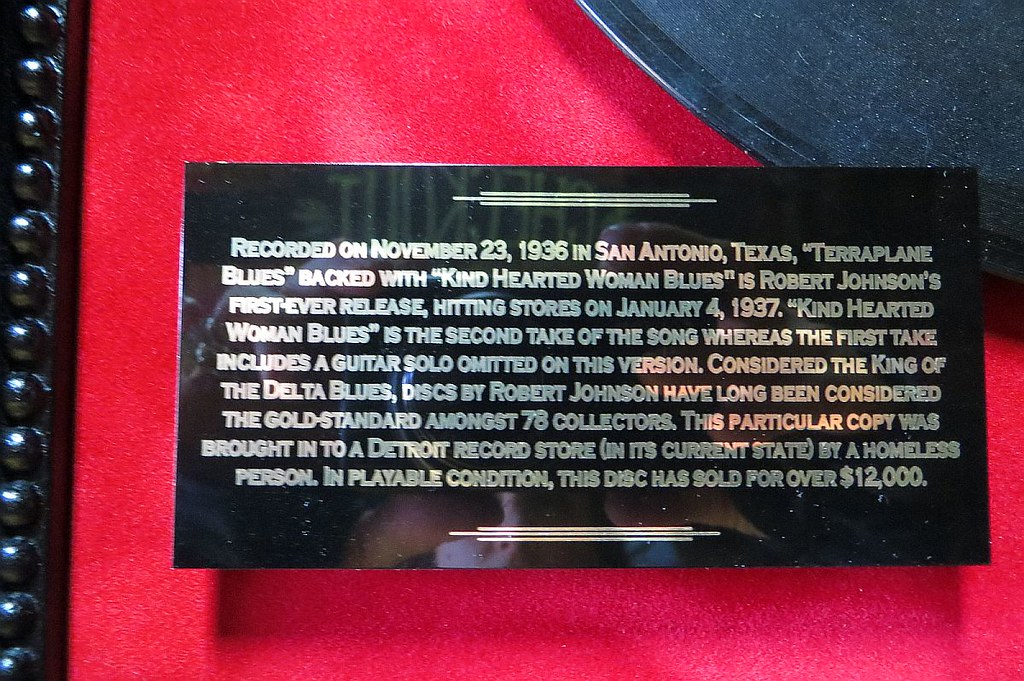
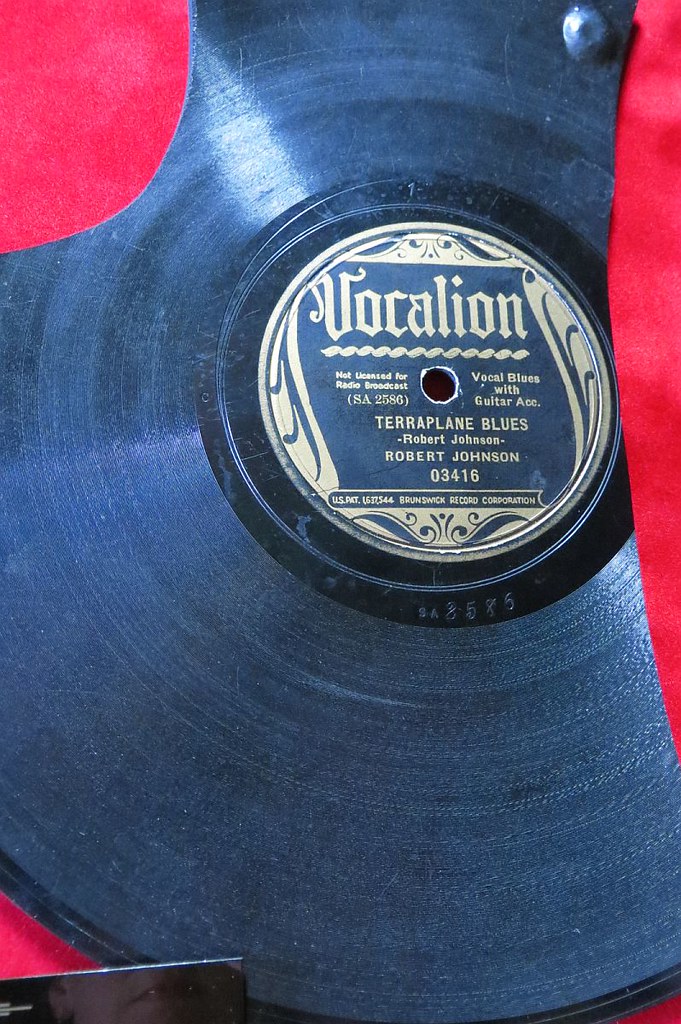
So much history on those premises in one day. As if the vibe at Third Man doesn't buzz enough on its own, they had go and add these other thrills, these reminders of how the human aspect goes hand in hand with music and the records that contain it. For the memories of that day that are attached to it, memories of time spent with friends, of stories told and history encountered, I'll always treasure my own My Happiness.
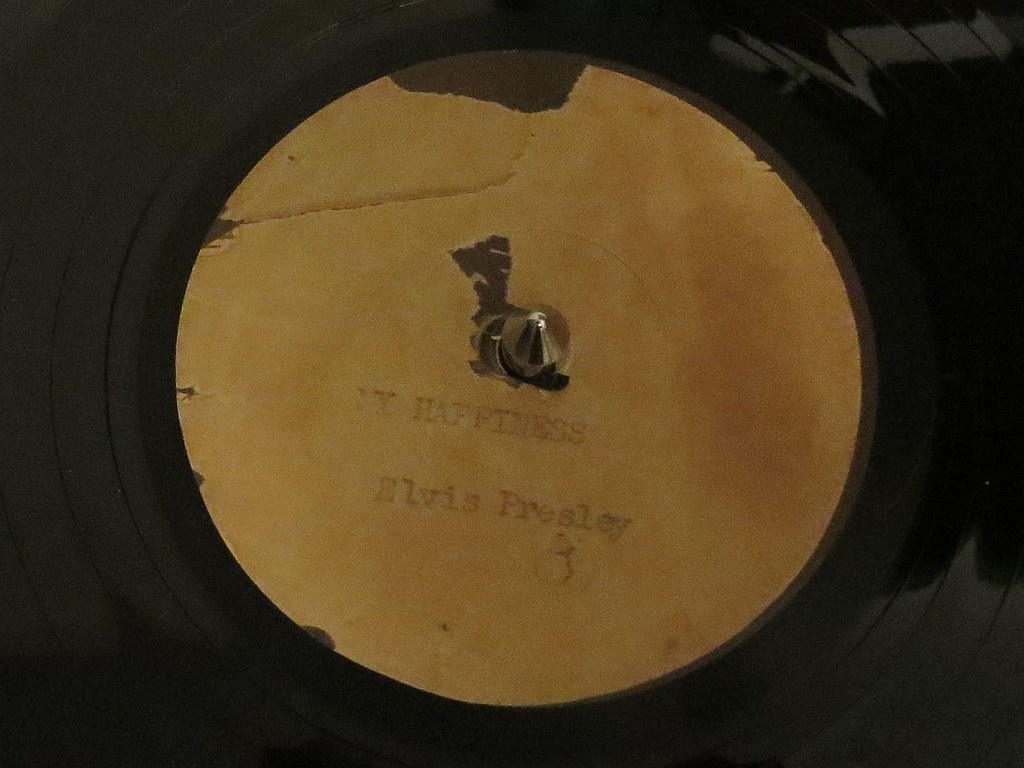
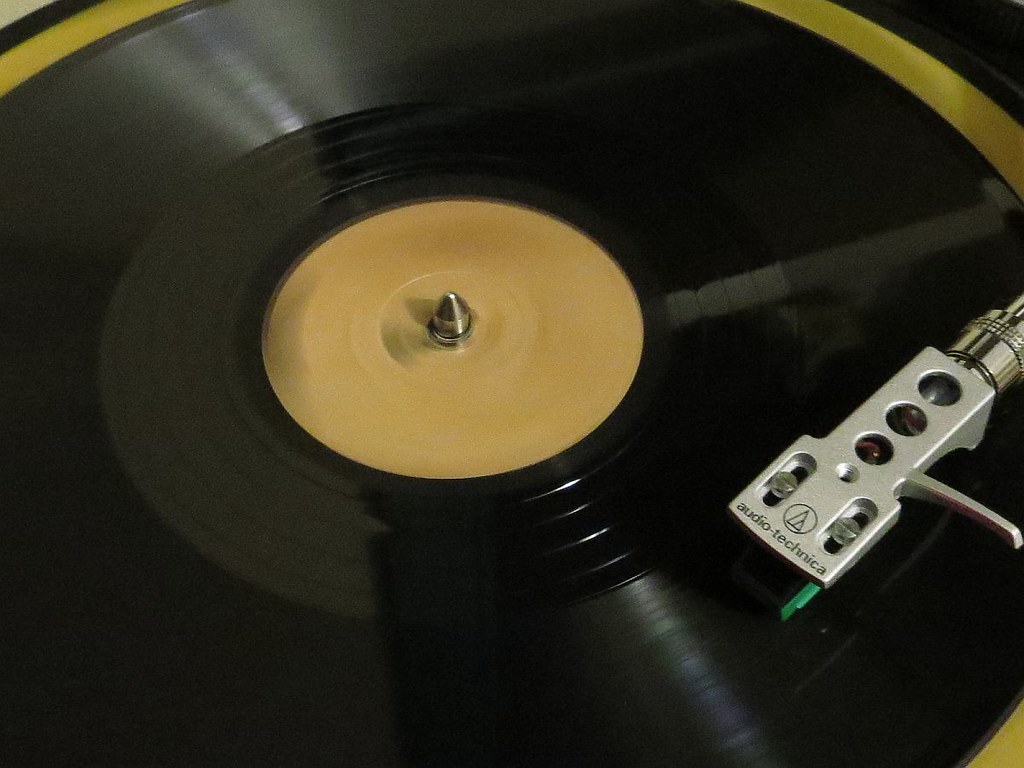
Few more photos from this trip (and previous ones) to Third Man, here.
Now that I'm older and make a semi-decent living, I have more liberty to spend hard-earned dollars on my tunes. But five years ago, I still thought twice about shelling out a bunch of bucks to make a big format switch again, this time going backwards, from listening to cds back to playing records again. Anyone who reads my babblings with any regularity knows why, of course. It's pretty much impossible to become a devotee of Jack White without learning his philosophy of musical formats by rote. Notwithstanding his latest venture of becoming involved in the Tidal digital streaming service, vinyl records have been and apparently always will be the way he prefers for music to be listened to. As recently as last month in Billboard magazine's vinyl revival issue, he broadened his usual focus to speak of an appreciation for cds, and went on to say "...when you respect music, it doesn't matter how we're getting it. We still know what the real deal is." And that 'real deal' is still records-- "It's the movie theater compared to the iPhone....You're reverential to it. With vinyl, you're on your knees. You're at the mercy of the needle. You watch the record spin and it's like you're sitting around a campfire. It's hypnotic."
So when I discovered Jack's music five years ago, taking that seemingly backward step of investing in a turntable and buying records again was the only way I could participate in one of the most exciting things he's created, the Third Man Records Vault subscription service. As soon as I began hearing about the sort of exclusive music the subscription provided, there wasn't much choice to make beyond "How much can I spend on a turntable (and a receiver, and speakers)?" Once I had the thing, it became a source of nostalgic delight well beyond what I got from Third Man-- The very first records that I went out to shop for on my own were all the old Bill Cosby comedy albums I loved so much as a kid. I wanted to laugh til my gut split while listening to that fucking Chicken Heart that ate Chicago again, dammit! And I wanted to do it the way I had as a kid, with a record on a record player. Of course, I've got some mixed feelings about those Cosby records these days, but up until recently they were an unadulterated joy, as are all of the other records I've accumulated over the past five years as I've explored the wide genre of blues music, picked up all of Jack's previous and continuing releases, and dived into the many artists I've been exposed to via Third Man Records and connections I've made radiating out from TMR.
As I began buying records more and more and cds less and less, I realized that there really is something that I prefer about vinyl. I'm no audiophile, so it's not necessarily the lows and highs or warmth and depth that serious vinyl purists go on about, though those elements are often very noticeable. And, unlike Jack White, I don't sit and watch my records spin around. I do enjoy admiring the sleeve art and taking the effort to drop the needle in just the right spot, there is a lot to be said for those rituals. But once the music begins, I either lie back to soak it in or bounce around the room dancing to it. So my reason for preferring records isn't based purely in the sound quality or in the ritual of listening, it's something more elemental, something I was only recently able to put into coherent thought, thanks to an episode of Marc Maron's WTF podcast in which he toured the plant at United Record Pressing in Nashville (it's a bonus episode only available to subscribers but, seriously, go and subscribe and then search for "Marc's vinyl factory tour", it's worth the couple of bucks even if you only sign up for a month).
Marc's conversation with URP's PR rep Jay Millar begins with them discussing that return to vinyl that I talked about above, and why so many people are doing it these days. In their conversation, Jay used two words that turned on a lightbulb for me-- He spoke about the "human aspect" of vinyl. I realized that's it, that's what encompasses the sound quality, the ritual, the art that accompanies record albums, the tangibleness and moving parts that so mesmerize Jack White, it's that there is a very human aspect to creating, handling, and listening to vinyl records. Of course cds and even digital music files are also ultimately created by human beings, someone has to push the buttons and flip the switches on the machines that manufacture the cds or the computer that turns the music into the 1s and 0s of an mp3 (or flac, if you're an audiophile purist), but there's more machine than human in those creations. And while vinyl records are pressed by massive machines, there are humans involved around those machines at every step along the way, there's a symbiosis between man and machine that gives records an organic feel that digital music just does not have.
In comparison, to me at least, cds and mp3s have come to feel robotic and a bit sterile. I mean, hell, there's no way you could create a work like Dario Robleto's Melancholy Matters Because of You from digital music formats, in which the generations of a family are conveyed through the varying rpms of ground-up vinyl records.
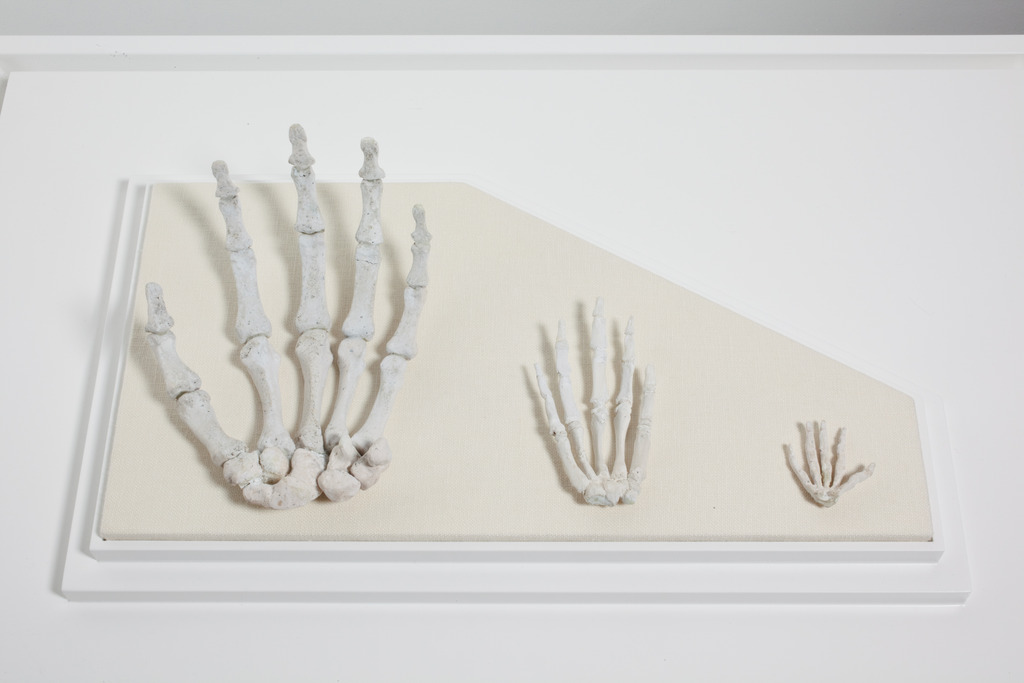 |
| Not my photo, snagged from the artist's website as linked above |
And this past weekend's Record Store Day event at Third Man Records confirmed all of that, it confirmed Jack White's commitment to vinyl records, and it confirmed the human element that keeps drawing me in. As described in the Billboard article linked above, Jack recently spent $300,000 to purchase the original acetate of Elvis Presley's very first record, My Happiness, which Elvis recorded at Sun Studios for $4. He then had it digitally transferred so that new copies could be pressed for a special Record Store Day 78rpm edition (and a less-limited 45rpm version to be released later this year).
Jack's motivation for spending all that money is surely based in the reverence he feels for music and its history. And the tangibleness of records is tied up in that history. You can listen to a digital recording of an historic song, as I did at another Dario Robleto exhibit, Setlists for a Setting Sun, but there's so much more impact in seeing an historic item, seeing the age and the wear and realizing that that thing has been around and represents something that happened in time. So seeing that original acetate of My Happiness that Jack bought displayed at Third Man like it was a shrine object gave me goosebumps.
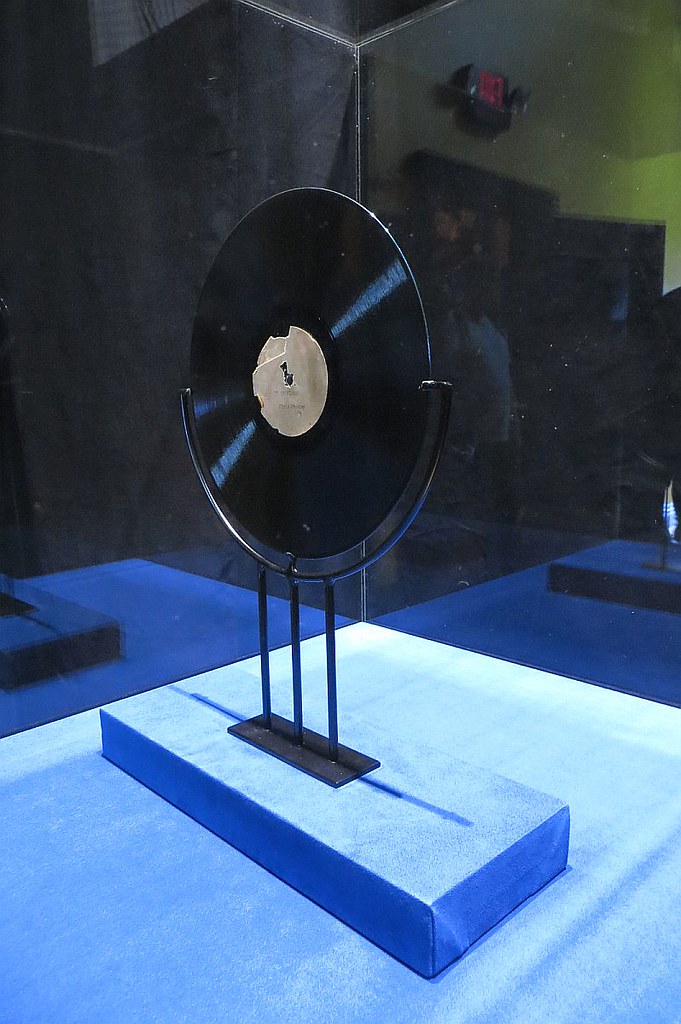 |
| Leaning around to glance at the back of the record, I was able to see the still-loose Prisonaires label on the b-side |
He then explained how they got the call from TMR early last week asking if it could be displayed for RSD. There were questions about things like insurance and such, but the biggest stumbling block was that the display case at the museum was built in, couldn't be moved with the machine. But then the very next day, the museum rep was out picking up a steel guitar that was to be added to the museum, and when he went to get it he found it was in a plexi case that was the perfect size for the Rek-O-Kut to be displayed in. He said it was as if it'd been meant to be for the machine to be displayed at TMR, because after that they worked everything out and all the pieces just fell into place within a day or so, just in time for Record Store Day.
Have to mention another little kick I got related to one of Elvis' predecessors-- A portion of an old, broken Robert Johnson Terraplane Blues 78 that was hanging on the wall in a frame with no glass and a little placard beneath it that read "Touch Me". Of course I did.
Subscribe to:
Posts (Atom)


 Posts
Posts


